How Much Beetroot Juice Before a Workout? A Cyclist's Dosing Guide: The Short Answer
For measurable performance gains, drink 500ml (about 16 oz) of standard beetroot juice 60 to 90 minutes before training. That dose delivers roughly 300 to 600 mg of dietary nitrate, the range supported in human clinical trials. Concentrated beet shots (70ml) hit the same nitrate target in a smaller volume. For training days, half that dose works. On race day, take the full dose 90 minutes before the start. A standardized beet powder delivers the same nitrate with no sugar load and far more consistent dosing per serving.
How Much Beetroot Juice Before a Workout? A Cyclist's Dosing Guide
The short answer: about 500ml (16 oz) of standard beetroot juice, 60 to 90 minutes before your workout, gets most endurance athletes into the clinical range of 300 to 600 mg of dietary nitrate. Concentrated beet shots reach the same target in 70ml. A standardized beet powder hits it in a single scoop with zero sugar. The exact volume depends on which form you use and how much nitrate is in your batch, which is the part nobody talks about and the part that decides whether the dose actually works.
I have raced and trained on dietary nitrate for years (LOTOJA, multi-day road blocks, century rides in the Wasatch, and a long string of midweek threshold sessions where the difference between a good day and a bad day comes down to small margins). What follows is the practical dosing protocol I use, grounded in the human clinical literature, with the trade-offs of juice versus shots versus powder explained the way I would explain them to a teammate.
The Clinical Target: 300 to 600 mg of Dietary Nitrate
Every credible study on beetroot for performance is built around dietary nitrate (NO3-), not the beet itself. The body converts nitrate to nitrite via oral bacteria, then to nitric oxide (NO) in working muscle, where it dilates blood vessels and improves oxygen delivery. The clinical sweet spot is 300 to 600 mg of nitrate per dose, roughly 5 to 8 mmol.
Below 300 mg, the published trials stop showing benefit. Above 600 mg, additional dose does not produce additional effect. This is the dose ceiling, not a recommendation to take more.
Where it gets messy: nitrate content in juice varies enormously by harvest, soil nitrate, growing conditions, and processing. Independent assays have measured commercial beet products from 4.3 mg to 495.7 mg per serving, a 100x range with no required labeling standard. If you are drinking unstandardized juice, you do not actually know your dose.
Timing: 60 to 90 Minutes, Not 20 and Not Three Hours
Plasma nitrite peaks 2 to 3 hours after ingestion, but the performance benefit window opens around 60 minutes and stays open for roughly 3 to 4 hours. The pragmatic window for athletes is 60 to 90 minutes before the start of work.
A dose taken 20 minutes pre-workout is too early in the pathway. A dose taken the night before is largely gone unless you are loading over multiple days.
This timing matters more than people think. The most common mistake I see is athletes drinking juice in the parking lot 10 minutes before a race start, then concluding "beets don't work for me." The pharmacokinetics gave them no chance.
My Pre-Race Protocol
For a target event (anything I am actually racing rather than training through), here is what I run:
- 3 days out: Begin loading. One serving morning, one serving evening. This saturates the nitrate pool and primes the oral bacteria that handle the first conversion step.
- Day before: Same. Two servings, morning and evening.
- Race morning: One serving 90 minutes before the start. I drink 8 oz of water with it. No food in the 30 minutes prior.
- Mouthwash rule: Skip the mouthwash and avoid chewing gum for at least 12 hours before the race. Antibacterial mouthwash kills the oral bacteria responsible for the nitrate to nitrite conversion. The whole pathway collapses without them.
For training days, I take a single serving 60 minutes before any session above threshold. Easy aerobic rides do not need it.
Dosing Table (Standardized Nitrate)
This assumes you are using a standardized beet powder where each scoop delivers a known, consistent nitrate dose. For raw juice, multiply by 2 to 3 because the per-serving nitrate is lower and more variable.
| Athlete Weight | Training Dose (daily) | Race Day Dose (90 min pre-race) | Race Week Loading (3 days) |
|---|---|---|---|
| Under 150 lbs | 1 scoop | 2 scoops | 1 to 2 scoops, 2x/day |
| 150 to 200 lbs | 1 to 2 scoops | 2 scoops | 2 scoops, 2x/day |
| Over 200 lbs | 2 scoops | 2 scoops | 2 scoops, 2x/day |
Larger athletes do not need proportionally more once you are in the 300 to 600 mg range. The dose ceiling holds.
Juice vs Beet Shots vs Powder
Three forms, three trade-offs.
Standard beetroot juice (250ml bottle). Typically 200 to 350 mg nitrate per bottle, but you have to read the label and trust the supplier. Plus 20 to 30 g of sugar per bottle, which is a real consideration if you are racing fasted or watching glycemic load. Volume is a logistics problem for race-day kit (you cannot easily carry 500ml of juice on a bike).
Concentrated beet shots (70ml). The most precisely-dosed liquid option. Usually 400 mg nitrate per shot. Easy to carry, easy to time. Cost per effective dose runs three to five dollars in the US. Not cheap if you are taking them daily during a build.
Standardized beet powder. Single scoop, mix with water, drink. No sugar, no refrigeration, no glass-bottle logistics. The form most endurance athletes I know have settled on after a year or two of trying everything. Look for products that use patented betaine nitrate or otherwise list dietary nitrate (NO3-) in milligrams on the label. Without the milligram number, you are guessing.
The honest comparison: juice is the original research substrate and works fine if you can stomach the sugar and verify the dose. Shots are convenient and precise but expensive. Powder is what wins on a per-effective-dose-per-dollar basis once you account for shipping and shelf life.
Common Mistakes
A few patterns I see repeatedly:
- Dosing too late. A beet shot in the start corral five minutes before the gun is theatre, not pharmacology. Plan for 60 to 90 minutes.
- Antibacterial mouthwash same morning. Kills the conversion. I have done this to myself and felt nothing from the dose.
- Stacking with PPIs (proton pump inhibitors). Drugs like omeprazole reduce stomach acid and impair the nitrate to nitrite conversion. If you take a PPI, expect a blunted response and discuss with your doctor.
- Drinking it cold and fasted in cold weather. I have seen athletes get GI distress from cold beet juice on cold mornings. Take it with a small amount of food (banana, oats) if you have a sensitive gut.
- Expecting a 10% boost. The realistic effect size in trained athletes is 1 to 3% reduction in oxygen cost of exercise, or roughly 1 to 2% improvement in time-trial performance. Real, repeatable, but not magic. The supplements promising more are lying.
What to Expect
Beeturia (red or pink urine and sometimes stool) is normal and harmless. It happens to roughly 10 to 14% of people due to incomplete metabolism of betalain pigments. The first time it catches you off guard. After that you ignore it.
Some athletes report a mild stomach warmth or a slight earthy aftertaste. Both fade within 20 minutes.
Effect on workout: not dramatic. You will not feel a stimulant kick because there is none. What you will notice, mostly during sustained tempo or threshold efforts, is that the same heart rate feels like slightly less work, or that you can hold a given power for slightly longer before fatiguing. Subtle. Real.
Stacking with Caffeine
Caffeine and dietary nitrate work through different mechanisms and stack well. Caffeine reduces perceived exertion via adenosine receptor blockade in the CNS. Nitrate reduces the oxygen cost of work via vasodilation in the periphery. They do not compete.
My typical race-morning stack: beet dose 90 minutes pre-race, caffeine 45 minutes pre-race (3 to 6 mg/kg, dose-tested in training). No GI conflict, no diminishing returns.
When Beetroot Will Not Help
Three situations where the evidence is weak or absent:
- Single-effort events under about 10 seconds. Pure neuromuscular efforts (a sprint start, a lift) do not draw on the aerobic system the nitrate pathway targets.
- Already at peak vasodilation. Very well-trained endurance athletes (elite VO2 max, high training age) sometimes show muted responses because their endothelial function is already optimized. The effect is real but smaller.
- Heat-limited days. When core temperature is the bottleneck, oxygen delivery is not the binding constraint, and nitrate cannot help with that.
The Bottom Line
If you want to actually use beetroot for performance, the math is straightforward:
- Target 300 to 600 mg of dietary nitrate per dose
- Take it 60 to 90 minutes before the work you want it for
- Load for 3 days before a target race, then take race-morning
- Skip mouthwash and PPIs around the dose
- Use a form that tells you the actual nitrate milligrams on the label
For most endurance athletes I know, that means a standardized powder with patented betaine nitrate, taken with water, in the routine pre-workout window. Juice and shots work the same way if you do the math, but the cost-per-dose and logistics rarely make sense beyond a few weeks.
Related Reading
How much beetroot juice should I drink before a workout?
The dose used in clinical trials is 300-500mg of inorganic nitrate, which is found in approximately 500ml (two 250ml shots) of commercial beet juice or 2 scoops of standardized beetroot extract. A single 70ml concentrated beet juice shot from most brands contains 100-150mg of nitrate, meaning you typically need 2-3 shots for a performance dose.
How long before exercise should I take beet juice?
For beet juice (raw or cold-pressed), allow 2-3 hours before exercise for adequate absorption. For standardized beetroot extract, 60 minutes is sufficient because the extract form absorbs faster without the digestion burden of whole-food fiber and sugar. The nitric oxide effect lasts 4-6 hours regardless of form.
Can I take too much beetroot powder?
At standard doses (300-500mg nitrate), beetroot is safe with no documented performance ceiling in the research. Very high doses do not meaningfully increase the effect and may cause beeturia (pink urine) and temporary digestive discomfort. The main risk of excess is with raw powder or juice, which also deliver oxalates at high doses.
Continue reading
Related Articles

Apr 13, 2026
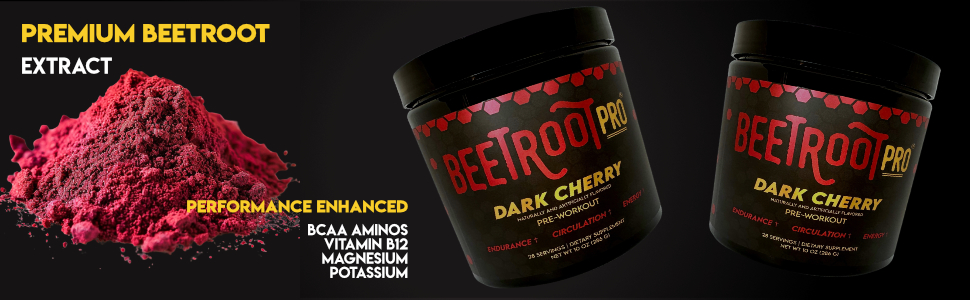
Beetroot Pre-Workout Guide: Timing, Dosing & Protocol
Master the 90-minute rule. Learn the clinical dosing and timing protocols for beetroot pre-workout supplementation.
May 15, 2026
Female-Specific Beetroot Nitrate Dosing: Less Is Not Less Effective
The standard 300-600 mg nitrate dose was validated in male cohorts. Body-weight-adjusted dosing may be more appropriate for female athletes. Heres what the research says.
Apr 13, 2026
Beetroot Powder vs Beet Juice: The 2026 Athlete's Guide
Beetroot powder vs beet juice: a head-to-head comparison for endurance athletes. Nitrate content, convenience, cost, GI tolerance, and which form delivers better performance results.
Technical
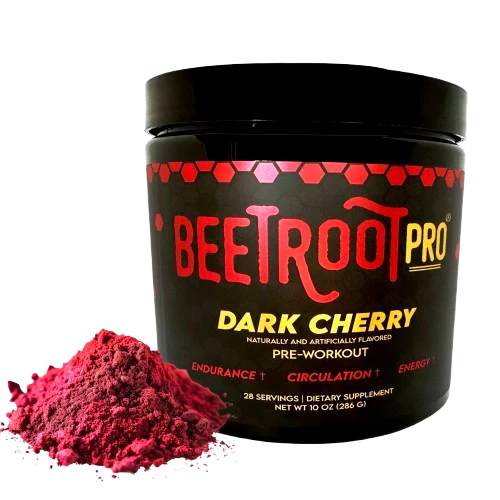
Beetroot Pro
- Patented betaine nitrate
- Acute Oxygen Efficiency
- Low Sugar / Oxalate Free
*Technical citations and PubMed references are provided for performance education only. These statements have not been evaluated by the FDA.