
What are the main benefits of beetroot for athletes?
The primary benefits are lower oxygen cost at a given pace or power (3-7% improvement documented in clinical trials), delayed fatigue at threshold intensity, faster phosphocreatine resynthesis between efforts, and improved cognitive function under fatigue. Secondary benefits include anti-inflammatory betalains that reduce DOMS, potassium for cramp prevention, and magnesium for energy production.
12 Proven Beetroot Benefits for Athletes: Performance, Recovery & Health
Beetroot is one of a short list of supplements with genuine, replicated clinical evidence behind it. For endurance athletes specifically, the benefits cluster around oxygen delivery, recovery, and cardiovascular efficiency -- outcomes that matter in every race and every training block. Here are the 12 benefits that the research supports.
1. Lower Oxygen Cost at a Given Pace or Power
The most well-documented benefit: dietary nitrate reduces the oxygen your muscles need to produce a given power output. Bailey et al. (2009) showed a 7% reduction in O2 consumption during moderate-intensity exercise after six days of nitrate loading. Lansley et al. (2011) demonstrated up to a 3% improvement in cycling time trial performance. This is not a marginal gain -- 3% at race pace is the difference between a podium and the field.
The mechanism: nitrate converts to nitric oxide in working muscle, improving mitochondrial efficiency and reducing the ATP cost of muscle contraction.
2. Higher Sustainable Threshold Power
Nitric oxide improves blood flow by relaxing arterial walls. More oxygen and nutrient delivery to working muscles means you can sustain higher power or pace before crossing into anaerobic territory. Athletes report a raised "ceiling" before the burn sets in.
3. Delayed Fatigue at Threshold Intensity
At the same absolute workload, beetroot-supplemented athletes reach exhaustion later. The reduced metabolic cost of each contraction means the same muscle fiber can sustain effort longer before accumulating enough fatigue byproducts to force backing off.
4. Faster Phosphocreatine Resynthesis
Between hard efforts -- intervals, climbs, repeated sprints -- the body resynthesizes phosphocreatine (PCr), the immediate energy currency used for maximal bursts. Nitric oxide speeds this resynthesis, which means you recover faster between hard efforts and arrive at the next one with more in reserve.
5. Improved Explosive Power Output
Nitric oxide has direct effects on fast-twitch muscle fiber contractile force, not just blood flow. Research shows that nitrate supplementation specifically benefits type II (fast-twitch) fibers, which are essential for sprint finishes, steep climbs, and any anaerobic effort within an aerobic event.
6. Lower Resting and Exercise Blood Pressure
Larsen et al. (2007) published in the New England Journal of Medicine that dietary nitrate intake significantly reduces both systolic and diastolic blood pressure in healthy adults. For Masters athletes and athletes training in heat or at altitude -- where cardiovascular strain is higher -- the arterial relaxation effect is a direct safety and performance benefit.
7. Faster Recovery Between Training Sessions
Betalains -- the pigments that give beets their deep red color -- are potent anti-inflammatory antioxidants. They neutralize the reactive oxygen species produced during high-intensity training, reducing post-exercise inflammation. The practical result: DOMS is less severe and recovery windows between hard sessions shorten.
8. Reduced Muscle Soreness
Connected to the betalain antioxidant effect: athletes using beet-based supplements consistently report reduced delayed-onset muscle soreness after eccentric loading efforts (downhill running, strength sessions). This is a direct training-volume enabler -- you can do more hard work before soreness becomes a limiter.
9. Improved Cognitive Function Under Fatigue
Nitric oxide increases cerebral blood flow, particularly to the prefrontal cortex. Late in a marathon or a long ride, decision-making, pacing judgment, and mental resilience degrade. Maintaining oxygen delivery to the brain blunts this cognitive decline. Athletes describe it as staying "clear" in the final hour rather than operating in a fog.
10. Potassium for Fluid Balance and Cramp Prevention
Beetroot is a meaningful source of dietary potassium, a critical electrolyte for maintaining fluid balance, regulating nerve impulses, and supporting muscle contraction. Potassium deficiency during prolonged sweating is a primary driver of cramping. Getting it from a whole-food-derived source alongside nitrate makes it a more complete endurance support.
11. Magnesium for Energy Production and Muscle Relaxation
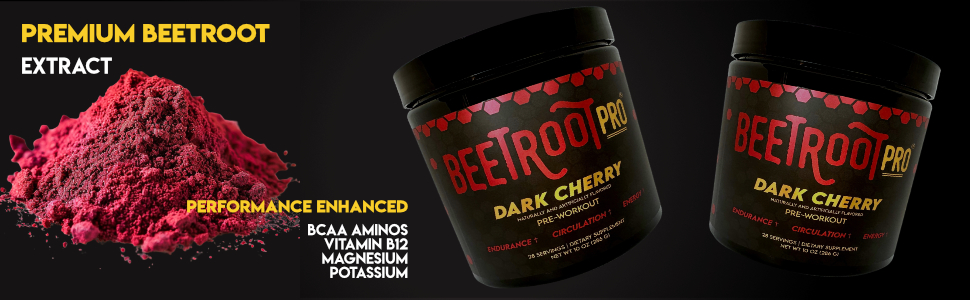
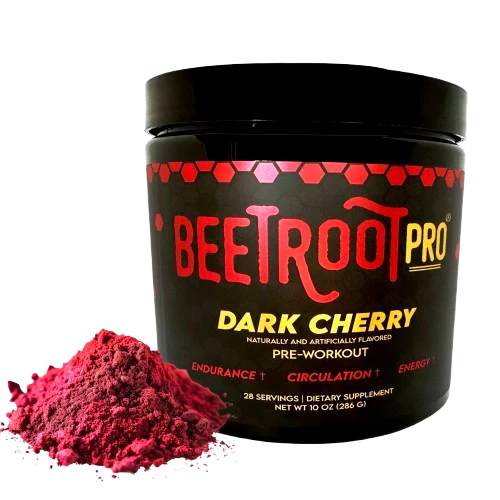
Magnesium participates in over 300 enzymatic reactions, including ATP production and muscle relaxation after contraction. Athletes routinely run deficient in magnesium through sweat loss. The magnesium in beetroot (and in standardized beetroot supplements like Beetroot Pro) supports both energy metabolism and recovery between contractions.
12. Folate and B12 for Red Blood Cell Function
Beets provide folate (B9), which is essential for red blood cell maturation and DNA synthesis. Combined with B12 (added in Beetroot Pro's formulation), these nutrients support the oxygen-carrying capacity that is the fundamental substrate for all endurance performance.
Standardized Extract vs. Raw Beetroot
The benefits above are achievable with any quality beet source, but the dose matters. Raw beets vary enormously in nitrate content depending on soil nitrogen levels, harvest time, and storage -- up to a 400% difference between batches. That makes consistent dosing difficult.
| Source | Nitrate Yield | Sugar Content | GI Tolerance | Portability |
|---|---|---|---|---|
| Standardized extract (Beetroot Pro) | Consistent | 0g | Excellent | Excellent |
| Raw beetroot (100g) | Highly variable | 6-8g | Good | Poor |
| Beet juice (250ml) | Variable (80-250mg) | 22-25g | Moderate | Requires refrigeration |
| Raw beet powder | Low, variable | 10-12g | Poor (high fiber) | Good |
Standardized extract removes the sugar, excess fiber, and oxalates that cause GI distress and delivers a measured nitrate dose. This is what makes race-day use reliable rather than a gamble.
Dosing Protocol
To get the benefits documented in the research:
- Acute use: Consume 60-90 minutes before training or racing. Blood nitrite peaks at 60-90 minutes and stays elevated for 6-8 hours.
- Loading: 3-6 days of daily supplementation before a target race raises baseline nitrite and amplifies the acute dose effect.
- Mouthwash warning: Avoid antibacterial mouthwash on days you supplement. Oral bacteria are essential to the nitrate-to-nitrite conversion step. Chlorhexidine mouthwash completely blocks the effect.
Bottom Line
The 12 benefits above span four performance categories: oxygen efficiency (benefits 1-4), power and explosiveness (5), cardiovascular health (6), recovery (7-9), and micronutrient support (10-12). That breadth is why beetroot has the strongest research profile of any whole-food endurance supplement.
Go deeper: Beetroot Powder vs Beet Juice compares all beet forms head to head on nitrate yield, GI tolerance, and race-day logistics.
Scientific Citations:
- Lansley KE, et al. (2011). Acute dietary nitrate supplementation improves cycling time trial performance. Journal of Applied Physiology.
- Bailey SJ, et al. (2009). Dietary nitrate supplementation reduces the O2 cost of low-intensity exercise. Journal of Applied Physiology.
- Larsen FJ, et al. (2007). Effects of dietary nitrate on blood pressure in healthy volunteers. New England Journal of Medicine.
- Jones AM. (2014). Dietary nitrate supplementation and exercise performance. Sports Medicine.
FDA Disclaimer: These statements have not been evaluated by the Food and Drug Administration. This product is not intended to diagnose, treat, cure, or prevent any disease.
What are the main benefits of beetroot for athletes?
The primary benefits are lower oxygen cost at a given pace or power (3-7% improvement documented in clinical trials), delayed fatigue at threshold intensity, faster phosphocreatine resynthesis between efforts, and improved cognitive function under fatigue. Secondary benefits include anti-inflammatory betalains that reduce DOMS, potassium for cramp prevention, and magnesium for energy production.
How much beetroot powder should an athlete take per day?
For performance use, the clinical dose is 300-500mg of standardized dietary nitrate, equivalent to 2 scoops of Beetroot Pro or roughly 6 whole raw beets. For general health, 1 scoop daily is sufficient. For race-week loading, 2 scoops morning and evening for 3 days pre-event.
Does beetroot improve VO2 max?
Beetroot does not directly increase VO2 max, but it reduces the oxygen cost of exercise at a given power output, which effectively raises the pace or wattage you can sustain at the same relative effort. This is called improved oxygen efficiency or mitochondrial efficiency. Bailey et al. (2009) showed a 7% reduction in oxygen cost during moderate-intensity exercise after six days of nitrate loading.
Is beetroot good for blood pressure?
Yes. Larsen et al. (2007, New England Journal of Medicine) demonstrated that dietary nitrate intake significantly reduces both systolic and diastolic blood pressure in healthy adults. The mechanism is nitric oxide-induced arterial relaxation. This is most relevant for Masters athletes and those training in heat or at altitude.
Continue reading
Related Articles
Apr 13, 2026
Why Endurance Athletes Need to Increase Their Carbohydrate Intake?
Learn more about Why Endurance Athletes Need to Increase Their Carbohydrate Intake? and how it impacts endurance performance on the Beetroot Pro® blog.
Apr 13, 2026
Why Beetroot Powder is the Best for Recovery
Learn more about Why Beetroot Powder is the Best for Recovery and how it impacts endurance performance on the Beetroot Pro® blog.
Apr 26, 2026
Rhodiola Rosea for Endurance Athletes: What the Research Actually Shows
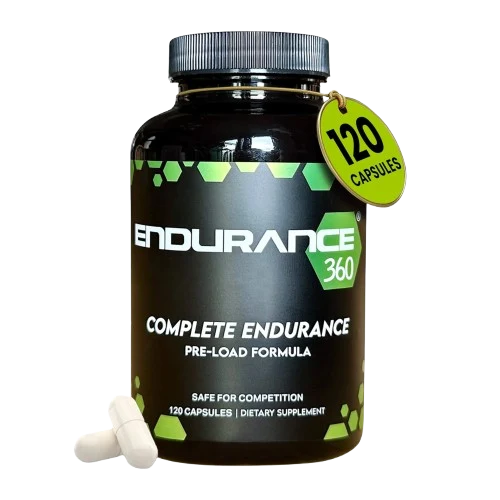
What rhodiola rosea actually does for endurance athletes, how it reduces RPE and cortisol during heavy training loads, the correct cycling protocol, and how it fits into Endurance360.
The Ultimate
VO2 Max Stack
- Acute Nitric Oxide Vasodilation
- Chronic Lactic Acid Buffering
- Stimulant Free, cGMP Certified Manufacturing
*Technical citations and PubMed references are provided for performance education only. These statements have not been evaluated by the FDA.