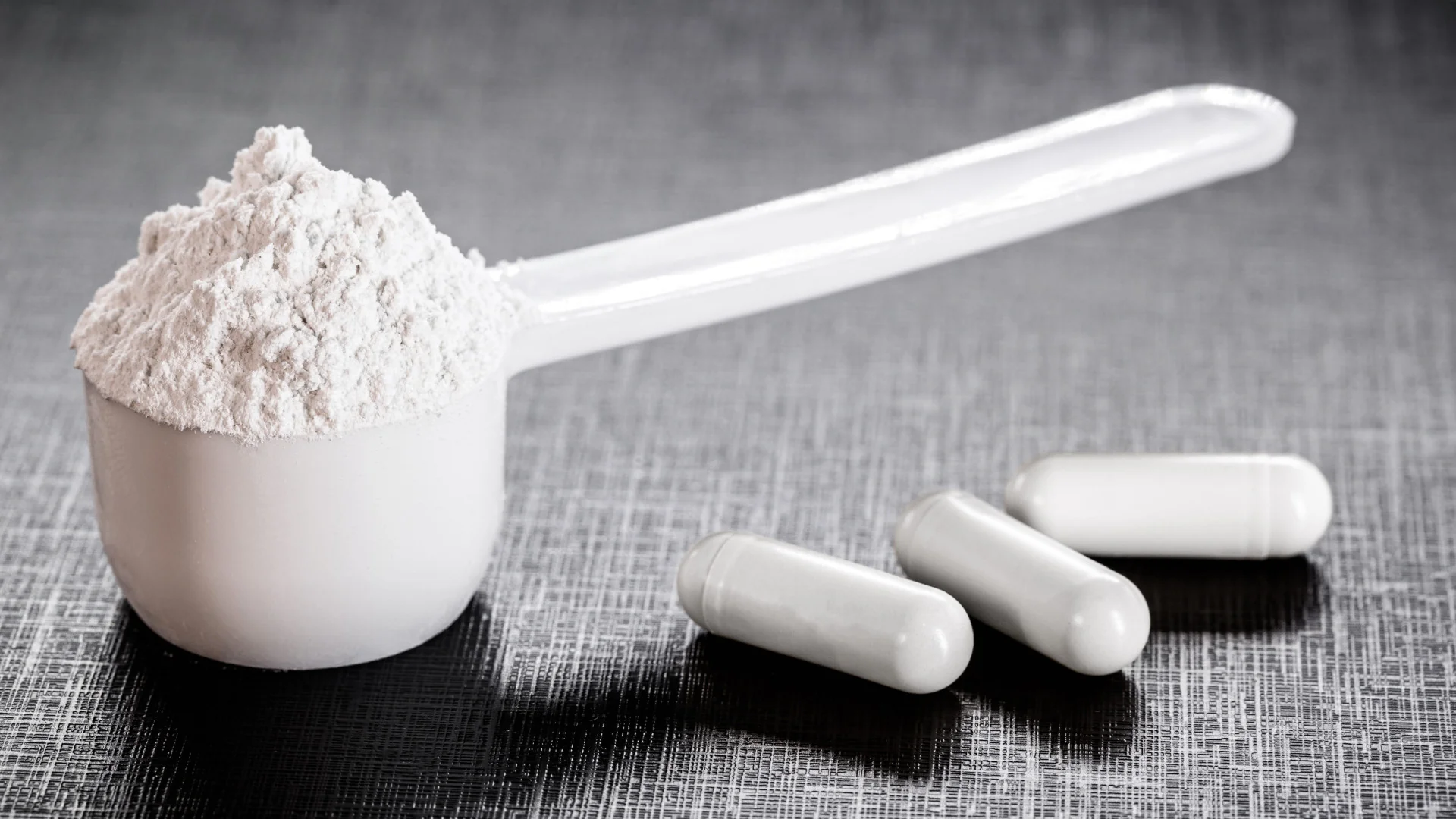
Creatine for Endurance Athletes and Cyclists (2026): The Short Answer
Creatine monohydrate is no longer just a strength supplement. For endurance athletes it regenerates ATP for surges and climbs, increases muscle glycogen storage by roughly 10 to 20 percent, buffers fatigue during repeated hard efforts, and reduces mental fatigue in long events. The effective dose is 3 to 5 grams daily, taken consistently; there is no need to load aggressively. The weight-gain concern is overstated: any change is intramuscular water that aids hydration and thermoregulation, not bulk. Cyclists, runners, and triathletes doing interval work, climbing, or multi-hour events benefit most.
For decades creatine was filed under "bodybuilder supplement." The assumption was that it only added bulk and water weight, neither of which helps a cyclist on a 10 percent gradient or a runner holding threshold pace in the final 5K.
Modern sports science has dismantled that assumption. Creatine is one of the IOC-recognized supplements for endurance athletes with strong evidence for performance, and a growing share of that evidence applies directly to endurance athletes. This guide covers what creatine actually does for runners, cyclists, and triathletes, the dose that matters, the myths worth ignoring, and where it fits in an endurance system.
Does Creatine Help Endurance Athletes?
Yes. Creatine benefits endurance athletes through four distinct mechanisms: faster ATP regeneration for surges and climbs, increased muscle glycogen storage (roughly 10 to 20 percent more stored fuel), improved performance in repeated high-intensity efforts, and reduced mental fatigue during long events. It is not only a strength supplement. The benefits are largest for athletes who do interval training, climb, sprint, or race events long enough for glycogen depletion and cognitive fatigue to matter.
The old framing treated endurance and creatine as mismatched: endurance is aerobic, creatine fuels the anaerobic ATP-CP system, therefore creatine is irrelevant. That logic ignores how real endurance racing works. No race is run at a perfectly even aerobic effort. Races are won and lost on the surges, the climbs, the bridge to a breakaway, and the final sprint, all of which draw on the exact energy system creatine supports.
The Science of ATP Regeneration
Creatine increases your stored phosphocreatine, the fuel for the ATP-CP system that powers efforts under about 10 seconds. Every time you stand on the pedals over a kicker, surge to close a gap, or kick for the line, you are spending phosphocreatine. Higher stores mean you recharge that system faster between efforts, so the tenth surge of a race feels closer to the first.
At the cellular level, creatine monohydrate raises the muscle's phosphocreatine pool. Phosphocreatine donates a phosphate group to rapidly resynthesize ATP, the molecule that actually powers muscle contraction. The three energy systems work on different timescales:
| Energy System | Fuel Source | Effort Duration | Amplified By |
|---|---|---|---|
| ATP-CP system | Phosphocreatine | 0 to 10 seconds | Creatine (Endurance360®) |
| Glycolytic system | Glucose (glycolysis) | 10 seconds to 2 minutes | Beta-alanine buffering |
| Aerobic system | Oxidative phosphorylation | 2 minutes and beyond | Dietary nitrate (Beetroot Pro®) |
For an endurance athlete, a larger phosphocreatine reserve does not change your aerobic ceiling. What it changes is your ability to repeat hard efforts without the dropoff. The benefit is not the single sprint; it is the twentieth interval, the third categorized climb, and the attack that comes after four hours in the saddle.
Creatine for Cyclists
Cyclists benefit from creatine specifically because road and gravel racing is a repeated-effort sport. Bridging gaps, covering attacks, surging over rollers, and sprinting all rely on the phosphocreatine system, and creatine speeds its recovery between efforts. Creatine also increases muscle glycogen storage, which matters in multi-hour events where running out of fuel ends races. The intramuscular water creatine draws in is a hydration and thermoregulation advantage on long hot rides, not dead weight.
The "creatine adds weight, weight is bad for climbing" objection deserves a direct answer. Any weight change from creatine is intramuscular water, typically one to two pounds, and it is held inside the working muscle cell where it improves cell hydration. For the vast majority of cyclists, the gain in repeatable power and glycogen capacity outweighs a one-pound water shift. Only at the extreme end of weight-sensitive climbing (elite grand tour GC riders) does the tradeoff become a real discussion, and even there many use creatine in training blocks and taper it before weight-critical events.
For criterium, road race, cyclocross, and gravel athletes, the repeated-surge demand is exactly the profile creatine supports best. Pair that with the glycogen storage benefit for events over two hours and creatine becomes one of the most evidence-backed additions a cyclist can make.
Glycogen Storage: The Underrated Endurance Benefit
Creatine supplementation increases the muscle's capacity to store glycogen, the primary fuel for endurance exercise, by roughly 10 to 20 percent when combined with carbohydrate intake. More stored glycogen means more available fuel before you hit the wall. This is a direct endurance mechanism that has nothing to do with strength or sprinting, and it is the reason creatine matters in marathons, long course triathlon, and century rides.
This is the benefit most athletes have never heard about. Research on creatine co-ingested with carbohydrate shows enhanced glycogen supercompensation, meaning your carb-loading is more effective when your muscles are creatine-saturated. In Roberts et al. (2016), men who took 20 g of creatine a day alongside a high-carbohydrate diet after exhausting exercise stored more glycogen than placebo within the first 24 hours, and the earlier studies that paper reviews put the gain at roughly 12 to 23 percent. Those trials used a 20 g loading dose to saturate muscle quickly; a 3 to 5 g daily dose reaches the same saturation more slowly. For any event long enough that glycogen depletion is the limiter, a bigger tank is a meaningful advantage, and it is independent of the ATP-CP mechanism entirely.
Creatine and Cognitive Endurance
Creatine supports brain energy metabolism, and studies show it reduces mental fatigue during cognitively demanding or sleep-deprived conditions. For endurance athletes, that translates to sharper pacing decisions, better focus on technical descents, and steadier judgment deep into long events when mental fatigue degrades performance as much as physical fatigue. The brain is one of the most energy-hungry organs, and creatine helps maintain ATP availability in neural tissue.
Endurance racing is a cognitive task as much as a physical one. Holding pace discipline when your legs are screaming, executing a nutrition plan at hour five, and reading a race tactically all require mental resources that erode as you fatigue. Creatine's role in replenishing ATP applies to brain cells the same way it applies to muscle, and the research on reduced mental fatigue, particularly under sleep deprivation, maps directly onto the reality of early race starts and multi-day events.
Dosing: How Much Creatine and When
Take 3 to 5 grams of creatine monohydrate daily, every day, taken at any time. The classic "loading phase" (20 grams a day for a week) reaches saturation faster but is not necessary and is more likely to cause GI discomfort and water-weight spikes. Consistent daily dosing reaches full muscle saturation in about three to four weeks. Timing within the day does not materially matter; consistency does. Monohydrate is the most studied and cost-effective form; exotic forms offer no proven advantage.
There are two valid approaches:
| Approach | Protocol | Time to Saturation | Best For |
|---|---|---|---|
| Standard daily | 3 to 5 g per day | 3 to 4 weeks | Most endurance athletes; minimal side effects |
| Rapid load | 20 g per day (split) for 5 to 7 days, then 3 to 5 g | About 1 week | Athletes with an event inside a month |
For endurance athletes there is rarely a reason to rapid-load. The standard daily dose avoids the GI upset and acute water-weight gain that give creatine its bad reputation, and you reach the same saturation point either way.
For the consumer-health view of the same compound, including dosing for women and what changes after 40 and 50, see Creatine for Women.
Complete
Endurance 360
Our product
- Chronic Lactic Acid Buffering
- ATP & Cellular Saturation
- Cordyceps & Adaptogen Matrix

Myth vs Reality: Water Retention and Weight Gain
The creatine bloating myth comes from old-school rapid loading (20 grams or more per day) and low-quality products. At a normal 3 to 5 gram daily dose, water retention is intramuscular, inside the muscle cell, where it improves cell hydration and thermoregulation. This is an advantage for endurance athletes training in heat, not a liability. There is no evidence creatine causes the subcutaneous bloat or fat gain athletes fear.
The number that scares endurance athletes is the one to four pounds sometimes reported in the first week of aggressive loading. Most of that is intracellular water in the muscle, not subcutaneous puffiness and not fat. Use the standard daily dose instead of rapid loading and the water shift is smaller and more gradual. For a hot-weather endurance athlete, better-hydrated muscle cells are a thermoregulatory positive.
How Creatine Fits an Endurance System
Creatine is the foundation layer of an endurance supplement system: it raises the ceiling on repeatable power and stores more fuel. It pairs naturally with beta-alanine (which buffers the lactic acid that creatine-fueled surges generate) and with dietary nitrate (which improves the aerobic oxygen economy creatine does not touch). The three target different energy systems and do not overlap.
A coherent endurance system assigns each ingredient to the energy system it serves:
- Creatine regenerates ATP for surges, climbs, and sprints, and increases glycogen storage.
- Beta-alanine raises muscle carnosine to buffer the hydrogen ions that cause the threshold burn. See our guide to beta-alanine for endurance athletes.
- Dietary nitrate improves oxygen efficiency in the aerobic zone. This is the Beetroot Pro® acute race-day layer.
- Adaptogens (cordyceps, rhodiola) support the chronic adaptation layer over weeks. See cordyceps for endurance and rhodiola for endurance athletes.
If you are deciding between creatine and beta-alanine, the honest answer is that they solve different problems and the strongest protocols include both. We cover the distinction in detail in creatine vs beta-alanine.
Three Blends, One Plan
Endurance360 targets three separate performance layers. Here is what each blend does and why you cannot replicate it by buying adaptogens alone.
Why 5 capsules: The three blends total 3,510 mg of active compounds. Standard capsule capacity is 500 to 700 mg. Fitting an effective dose requires 5 capsules. No filler.
Creatine in Endurance360®
Endurance360® was among the first endurance-specific formulas to include creatine monohydrate, at a time when the category treated creatine as a strength-only ingredient. It delivers creatine alongside beta-alanine in the Endurance Blend, so a single daily dose covers both the ATP regeneration pathway (creatine) and the lactic acid buffering pathway (beta-alanine). Take 5 capsules daily for 10 to 14 days to reach saturation, then maintain through your training block.
Most endurance supplements that include creatine today followed a trend. Endurance360® was built around the idea that endurance athletes need ATP regeneration and glycogen capacity well before that became the mainstream view. The creatine sits inside a broader formula that also handles beta-alanine buffering, adaptogen support (cordyceps and rhodiola), and electrolytes, which is the difference between a single-ingredient creatine tub and a complete endurance loading protocol.
If you want a milligram-specific standalone creatine dose, plain monohydrate powder is cheap and effective. The tradeoff is that you then assemble and time four or five separate products yourself instead of one daily 5-capsule dose. For athletes who want the full matrix in one place, see how Endurance360® compares to the category leader in Endurance360 vs Optygen HP, and use the 14-day loading plan to time your saturation window around a goal event.
Summary
Creatine monohydrate at 3 to 5 grams daily is one of the most evidence-backed additions an endurance athlete can make: it speeds ATP recovery between surges, increases glycogen storage by roughly 10 to 20 percent, and reduces mental fatigue late in a race. It targets a different energy system than beta-alanine and dietary nitrate, so the three combine without overlap.
Creatine is no longer a strength-sport exclusive. For endurance athletes it speeds ATP recovery between hard efforts, increases glycogen storage for longer events, and reduces the mental fatigue that erodes pacing and judgment late in a race. The effective dose is a simple 3 to 5 grams daily, the weight-gain concern is overstated, and the benefit is largest for athletes who climb, sprint, do intervals, or race long. Treat it as the foundation of your system, pair it with beta-alanine for buffering and dietary nitrate for oxygen economy, and you have covered all three energy systems.
References: The mechanisms and dosing guidance above are drawn from peer-reviewed sports nutrition research, cited below for athletes who want to verify the underlying studies.
- Kreider RB, et al. (2017). International Society of Sports Nutrition position stand: safety and efficacy of creatine supplementation in exercise, sport, and medicine. JISSN.
- Roberts PA, et al. (2016). Creatine ingestion augments dietary carbohydrate mediated muscle glycogen supercompensation. Amino Acids.
- Harris RC, et al. (2006). The absorption of orally supplied beta-alanine and its effect on muscle carnosine synthesis in human vastus lateralis. Amino Acids.
- Roschel H, et al. (2021). Creatine supplementation and brain health. Nutrients.
FDA Disclaimer: These statements have not been evaluated by the Food and Drug Administration. This product is not intended to diagnose, treat, cure, or prevent any disease.
Next steps: Time your loading window with the Endurance360® 14-Day Loading Plan, see the full VO2 Max Supplements Guide, or read creatine and brain fog for who actually gets a cognitive benefit from the same daily dose. Deciding between this and a nitrate-first approach? See Beetroot Pro vs Endurance360: Which First?. If you are subject to testing, what to check before taking a supplement as a tested athlete covers how to read a label and what certification does and does not prove.
Technical FAQ Extension
Should endurance athletes take creatine?
Yes, with specific caveats. Creatine monohydrate speeds phosphocreatine resynthesis between high-intensity efforts, providing measurable benefit for events that include surges, climbs, or sprint finishes. It also has documented cognitive benefits under prolonged fatigue. The concern about water weight (1 to 2 lbs of intramuscular water during loading) is real but typically offset by the power gains for athletes who race with surging efforts.
Does creatine help with endurance performance?
Creatine does not improve steady-state aerobic endurance directly. Its benefit in endurance sports is concentrated in three areas: faster phosphocreatine resynthesis between surges (attacks, climbs, sprints), improved performance in repeated hard efforts during long races, and cognitive resilience under prolonged fatigue. Athletes in pure aerobic events with no surging see minimal benefit; cyclists, gravel racers, and triathletes see more.
What is the creatine loading protocol for athletes?
Standard loading: 20 grams per day (4 doses of 5 grams) for 5 to 7 days, then 3 to 5 grams per day maintenance. Alternatively, skip the loading phase and take 3 to 5 grams daily for 3 to 4 weeks to reach equivalent saturation without the initial water weight spike. Endurance360 delivers creatine in the daily 5-capsule dose across a 10 to 14 day loading window.
Related Articles

Jan 30, 2023
Creatine vs Beta-Alanine for Endurance Athletes (2026)
Creatine and beta-alanine fuel different systems: creatine regenerates ATP for short bursts, beta-alanine buffers lactic acid. When to run each.

Apr 26, 2026
Rhodiola Rosea for Endurance Athletes: The Evidence
What rhodiola rosea does for endurance athletes: how it lowers RPE and cortisol under heavy load, a cycling protocol, and how it fits into Endurance360.

Jan 30, 2023
Magnesium for Endurance Athletes: Dose and Sweat Loss
How much magnesium endurance athletes need, why sweat losses create a deficit, and the daily dose shown to raise peak oxygen uptake in trained athletes.
*Technical citations and PubMed references are provided for performance education only. These statements have not been evaluated by the FDA.