Your eNOS Is
Declining.
Endothelial nitric oxide synthase activity drops roughly 50% between ages 25 and 60. That is the primary biological mechanism behind the VO2 max you keep losing.
Dietary nitrate does not depend on eNOS. It converts through a parallel bacterial pathway in your mouth, completely bypassing the impaired enzyme and restoring nitric oxide availability.
What You Are Actually Taking
Not a proprietary blend. Not “beet powder.”
Every serving delivers a fixed 8,000 mg of standardized beet extract, which at the 2% nitrate standardization documented on our Certificate of Analysis works out to roughly 160 mg of dietary nitrate. That is below the 300 to 600 mg used in published nitrate research, and it is the same in every batch. Third-party tested, every batch. The label discloses the extract weight, which is what makes the nitrate figure derivable at all.
Nitrate and nitric oxide precursors are not on the USADA prohibited list. Verify via USADA Supplement 411 before your next race.
Why Your VO2 Max Keeps Dropping
eNOS activity declines roughly 50% between ages 25 and 60, and VO2 max falls about 1% per year after age 35 in trained endurance athletes. Dietary nitrate restores nitric oxide through a bacterial pathway that does not depend on eNOS, reducing the oxygen cost of submaximal exercise by 1 to 2%.
Most masters athletes blame age or training load. The underlying mechanism is vascular. As eNOS declines, the blood vessels that supply working muscles dilate less, oxygen delivery falls, and the cost of any given pace rises. The result shows up as a higher heart rate at the same speed and a lower ceiling on how hard you can push.
Average reduction in endothelial nitric oxide synthase activity between ages 25 and 60 (Taddei et al., J Hypertens 2001)
Approximate annual VO2 max decline after age 35 in trained endurance athletes (Tanaka & Seals, J Physiol 2008)
Documented reduction in oxygen cost of submaximal exercise with dietary nitrate supplementation at clinical doses (Lansley et al., Med Sci Sports Exerc 2011)
L-Arginine to eNOS
The classical route: L-arginine is converted to nitric oxide by eNOS in the endothelial cells lining blood vessels. In athletes over 35, eNOS expression and activity are chronically reduced. Consuming more arginine (found in many pre-workouts) does not fix this; the enzyme itself is the bottleneck.
Nitrate to Nitric Oxide
Dietary nitrate is concentrated in saliva by the salivary glands. Oral bacteria reduce it to nitrite, which enters the bloodstream and is converted to nitric oxide in blood vessels and muscle tissue. This pathway is entirely independent of eNOS. The bacteria do not decline with age the same way enzymes do.
VO2 Max by Age Group
A trained 50-year-old man typically holds a VO2 max of 38 to 42 mL/kg/min, a 19 to 24% cumulative decline from the 25-29 baseline. Trained women in the same age band hold 31 to 35 mL/kg/min. The decline is progressive and tracks the age-related loss of nitric oxide-mediated vascular function.
Reference ranges for trained endurance athletes. Values represent mL/kg/min. Decline column is relative to the 25-29 baseline.
| Age Group | Men (mL/kg/min) | Women (mL/kg/min) | Cumulative Decline |
|---|---|---|---|
| 25-29 | 48-52 | 41-45 | Baseline |
| 30-34 | 47-50 | 39-43 | 2-4% |
| 35-39 | 45-48 | 37-41 | 5-8% |
| 40-44 | 43-46 | 35-39 | 9-13% |
| 45-49 | 41-44 | 33-37 | 14-18% |
| 50-54 | 38-42 | 31-35 | 19-24% |
| 55-59 | 36-40 | 29-33 | 25-30% |
| 60-64 | 33-37 | 27-31 | 31-37% |
Sources: American College of Sports Medicine fitness categories; Tanaka and Seals (2008), Journal of Physiology. Ranges represent aerobically trained adults and are approximate.
The 5-Day Masters Loading Protocol
Masters athletes load Beetroot Pro for 5 days before a key event: 1 serving on days 5 and 4, 2 servings on days 3 and 2, 1 serving on race eve, and 1 serving 60 minutes before the start. The extra 2 days compensate for lower baseline eNOS activity.
Standard 3-day loading was designed for younger athletes with intact eNOS. Masters athletes benefit from an extra 2 days to ensure plasma nitrate reaches full saturation despite lower baseline endothelial activity.
| Days Out | Dose | Timing | Goal |
|---|---|---|---|
| Days 5-4 | 1 serving | Morning | Begin plasma nitrate accumulation; oral bacteria start converting nitrate to nitrite |
| Days 3-2 | 2 servings | Morning + Evening | Double daily load for rapid plasma nitrate saturation |
| Day 1 (Race Eve) | 1 serving | Evening with dinner | Final top-up; supports overnight conversion while sleeping |
| Race Morning | 1 serving | 60 min before start | Plasma nitrite rising at the start and elevated for hours after |
What to Avoid During the Loading Block
- XAntibacterial mouthwash at any point in the loading block (kills the oral bacteria that do the nitrate-to-nitrite conversion)
- XProton pump inhibitors (PPIs) within 2 hours of each dose (reduce stomach acid needed for conversion)
- XAlcohol the evening before race day (suppresses nitric oxide synthesis)
- XHigh-fat meals within 2 hours of each dose (slow gastric emptying and reduce absorption rate)
- XL-arginine supplements during the loading block (elevated arginine can paradoxically suppress nitric oxide in the presence of arginase)
The Daily Baseline Plan
Between events, masters athletes take 1 serving of Beetroot Pro per day, in the morning 30 to 60 minutes before the key workout. High-volume weeks can add an optional second serving before the PM session. The daily dose continues through the off-season and does not require cycling.
Because eNOS activity is chronically reduced in masters athletes, maintaining a daily nitrate dose sustains baseline nitric oxide levels that the enzymatic pathway alone no longer provides. This is especially important during high-volume training blocks when recovery and oxygen delivery matter most.
Daily Training (Base)
1 serving
Sustains plasma nitrate above baseline; supports training adaptation
High-Volume Weeks
1-2 servings
Higher load supports recovery and oxygen delivery under training stress
Recovery Days
1 serving
Maintain plasma nitrate pool; do not skip even on easy days
Off-Season
1 serving
Consistency matters more than timing here; weeks without it let plasma nitrate fall back to baseline
Protocol Context by Decade
The loading math does not change with age, but the margin for skipping it does. As baseline eNOS output falls, the share of total nitric oxide that must come from the dietary pathway rises.
| Age Band | Pre-Race Load | Daily Baseline | Protocol Notes |
|---|---|---|---|
| 35-44 | 3 to 5 days | Optional | eNOS decline is underway but modest. The standard 3-day load still works; use the full 5-day version before A-races. |
| 45-54 | 5 days | Recommended | The decade where the enzymatic deficit becomes the limiter. Hold the daily serving through the training block, not just race week. |
| 55-64 | 5 days | Recommended | Add the optional second serving on high-volume days. Mouthwash avoidance matters most here: the bacterial pathway is now carrying the load. |
| 65+ | 5 days | Recommended | Check PPI timing (keep doses 2+ hours apart) since proton pump inhibitor use is more common in this band and blunts conversion. |
Female masters athletes face a second, estrogen-linked eNOS drop through menopause on top of the age-related decline. See the menopause and hormonal protocol for that adjustment.
Pair With Endurance360®
Beetroot Pro covers the acute race-day nitric oxide deficit; Endurance360 covers chronic adaptation with creatine, beta-alanine, cordyceps, and rhodiola loaded over 10 to 14 days. Masters athletes run Endurance360 through the training block and add the 5-day Beetroot Pro load before key events.
Beetroot Pro addresses the nitric oxide deficit. Endurance360 addresses the chronic cellular decline: creatine for ATP resynthesis, beta-alanine for lactic acid buffering, cordyceps for aerobic capacity, rhodiola for adaptogenic stress management. Masters athletes managing both oxygen delivery and lactate threshold have two different problems and need two different pathways.
Beetroot Pro
- Bypass eNOS via nitrate pathway
- Take 60-90 minutes before the start
- 5-day loading for masters
- Daily baseline dose between events
Endurance360
- Creatine for ATP regeneration (10-14 day load)
- Beta-alanine for lactic acid buffering at threshold
- Cordyceps for VO2 max and aerobic capacity support
- Rhodiola for adaptogenic recovery under high load
Save $19.90 vs. buying separately
Masters FAQ
Why do masters athletes need a 5-day loading protocol instead of 3 days?
What is a normal VO2 max for a masters athlete?
Does dietary nitrate actually compensate for eNOS decline?
Is Beetroot Pro effective for athletes over 60?
Should masters athletes take Beetroot Pro every day?
Does beetroot nitrate lower blood pressure in masters athletes?
Does dietary nitrate help brain health in aging athletes?
Should masters athletes cycle off nitrate or take breaks?
Can I pair Beetroot Pro with Endurance360 as a masters athlete?
Masters Race Hubs
Race-specific nitrate loading protocols, pacing plans, and nutrition playbooks for masters athletes.
Boston Marathon
The Original Marathon Major
Read playbookLeadville Trail 100 MTB
100 Miles at 10,000+ Feet
Read playbookWestern States 100
The Original 100-Mile Trail Race
Read playbookCalifornia International Marathon
The West Coast Boston Qualifier
Read playbookMasters and Endurance Articles

May 15, 2026
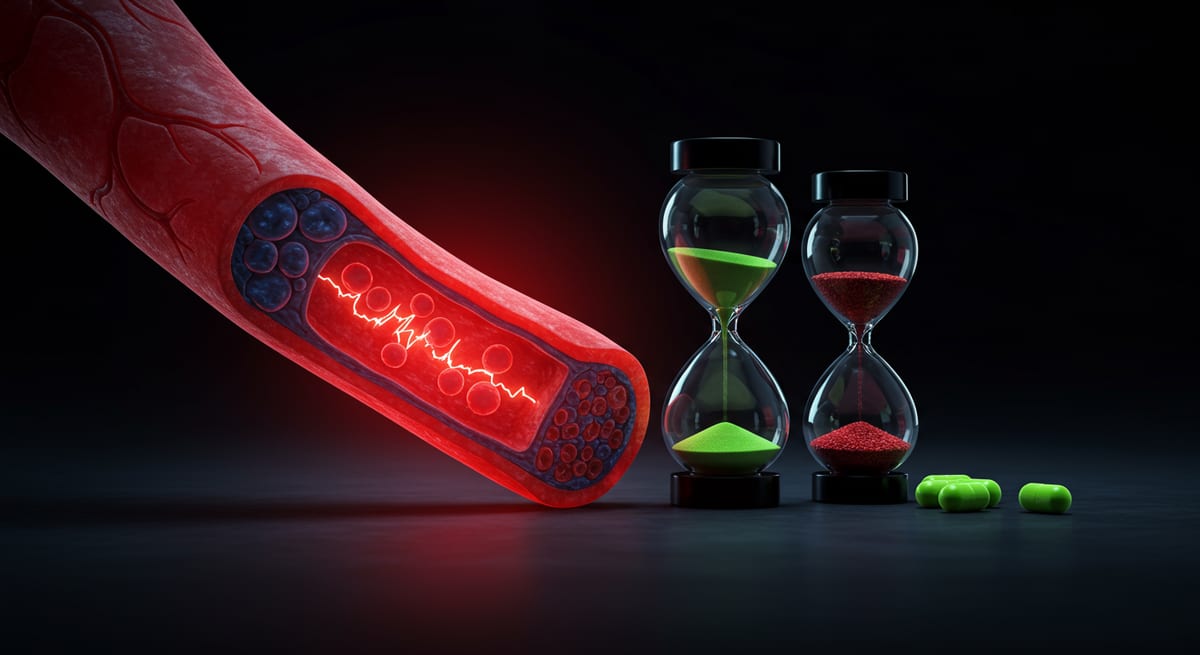
Beetroot and Brain Health in Aging Athletes
Nitric oxide regulates cerebral blood flow. As eNOS declines with age, beetroot nitrate supports cognition, focus, and reaction time for masters athletes.
Apr 13, 2026
How Aging Lowers Nitric Oxide (and How to Restore It)
Nitric oxide drops with age as eNOS activity declines, raising blood pressure and cutting blood flow. How dietary nitrate restores the pathway after 40.
Sep 27, 2026
Does Beetroot Lower Cholesterol? No. Here's What Does
Pooled trials found no significant effect of beetroot juice or powder on LDL or total cholesterol. What beetroot does help, and the fiber dose that lowers LDL.

Aug 20, 2026
Beta-Alanine Itch: Why It Happens and How to Stop It
The beta-alanine tingle starts near 800 mg in one dose, peaks around 20 minutes, and fades within an hour. Why it happens, and how to stop it.
The Ultimate VO2 Max Plan
Combine the chronic lactic-buffering of Endurance360 with the acute vasodilation of Beetroot Pro for complete physiological support.
Beyond Race Day
The eNOS decline that raises the oxygen cost of race pace also affects resting blood pressure, blood flow to the brain and recovery between sessions. Meta-analyses put the average systolic blood pressure reduction from dietary nitrate at about 3 to 5 mmHg, largest when baseline pressure is already elevated.
Blood Pressure
Larsen and colleagues (New England Journal of Medicine, 2007) showed dietary nitrate lowered blood pressure in healthy volunteers through nitric oxide mediated vasodilation. Pooled trials since put the average systolic reduction at about 3 to 5 mmHg, and elevated baseline pressure is more common after 50.
Blood Flow to the Brain
Nitric oxide regulates cerebral blood flow, and that flow falls as eNOS declines. Dietary nitrate has been shown to raise blood flow to the prefrontal cortex, especially during exercise. Whether that protects long-term brain health has not been tested in athletes.
Recovery Between Sessions
The post-exercise rise in nitric oxide that drives blood flow to recovering muscle is blunted with age, which is part of why masters athletes need longer between hard sessions. On double-session days, take one serving before each session.
On blood pressure medication? Monitor your pressure when you start a daily nitrate serving. The effect adds to the medication's and can run some people low, so talk to your healthcare provider first.