Is beet juice or beetroot powder better for endurance performance?
Standardized beetroot extract beats both. Beet juice works but nitrate content varies up to 400% between batches, sugar load is 22-25g per serving, and it requires refrigeration. Raw beet powder has low nitrate yield after drying and causes the most GI distress of any form. Standardized extract gives consistent dosing, zero sugar, no GI issues, and is shelf-stable.
Beetroot Powder vs Beet Juice: Which is Better for Athletes?
Both beetroot powder and beet juice increase nitric oxide, improve oxygen efficiency, and have legitimate clinical support. The question is not whether one works and the other does not -- both can work. The question is which form delivers a reliable, convenient, race-day-ready dose without the downsides that compromise performance or adherence.
Here is the complete comparison.
The Core Mechanism: Both Work Through Dietary Nitrate
Before comparing forms, it helps to understand what makes either one worth taking. Beets -- in any form -- are one of the richest dietary sources of inorganic nitrate (NO3-). Once ingested, nitrate is concentrated in saliva, reduced to nitrite by oral bacteria, and then converted to nitric oxide (NO) in working muscle tissue.
Nitric oxide is a vasodilator. It relaxes arterial walls, increasing blood flow and oxygen delivery to working muscles. The downstream effects for endurance athletes:
- Lower oxygen cost at a given pace or power output
- Delayed onset of fatigue at threshold intensity
- Faster phosphocreatine resynthesis between efforts
- Improved performance in events lasting 5 minutes to several hours
The question is which form gets that nitrate into your system most reliably, most consistently, and with the fewest side effects.
Head-to-Head Comparison
| Factor | Beet Juice | Raw Beet Powder | Beetroot Extract (standardized) |
|---|---|---|---|
| Nitrate content | Variable (80-250mg per 250ml) | Low and variable | Standardized per serving |
| Sugar per serving | 22-25g | 10-12g | 0g |
| GI tolerance | Moderate -- high sugar can cause distress | Poor -- high fiber, bloating | Excellent |
| Oxalate load | High (kidney stone risk with chronic use) | Very high | Removed in extraction |
| Portability | Requires refrigeration, glass bottle | Stable powder | Stable powder |
| Preparation | Ready to drink | Mix into liquid | Mix into liquid |
| Cost per serving | High ($3-6 per shot) | Low-moderate | Moderate |
| Dosing consistency | Unreliable (batch variation) | Unreliable (soil variation) | Consistent |
| Artificial color/staining | Strong (urine, stool) | Strong | Minimal to none |
Beet Juice: The Case For and Against
The Case For
Beet juice is the form used in most foundational nitrate research. The landmark Lansley et al. (2011) study used concentrated beetroot juice and demonstrated up to 3% improvement in time trial performance. The acute effect is well established and rapid -- blood nitrite peaks within 60-90 minutes.
For athletes who want a whole-food approach and are not concerned about sugar or portability, beet juice from fresh beets or quality cold-pressed shots is effective.
The Case Against
Nitrate variability is the biggest problem. Studies have measured nitrate concentrations in commercial beet juice ranging from 80mg to over 400mg per 250ml serving -- a 5x difference between brands and batches. You cannot dose-control a supplement that varies this much. Research that found performance benefits used precise, controlled doses. Replicating those results with an inconsistent product is unreliable.
Sugar load is significant. A standard 250ml beet juice contains 22-25g of sugar. For athletes on low-carbohydrate training protocols, managing blood glucose pre-race, or with GI sensitivities, this is a real cost. The sugar also contributes to GI distress in some athletes during high-intensity effort.
Oxalate content is high. Chronic beet juice consumption introduces significant oxalate load, which can contribute to kidney stone formation in susceptible athletes. This matters for athletes supplementing daily during multi-week loading protocols.
Refrigeration and logistics. Beet juice shots require cold storage and are impractical to pack for travel or race morning logistics at events without reliable cold storage.
Raw Beetroot Powder: The Case For and Against
The Case For
Raw beet powder (ground dehydrated beet) retains the full nutritional profile of the whole vegetable: fiber, betalains, folate, potassium, magnesium. It is shelf stable and lower cost per serving than juice. For general health use -- not performance optimization -- it delivers a wide range of beet-derived nutrients conveniently.
The Case Against
Low nitrate yield. The process of drying beets and grinding them into powder results in significant nitrate degradation. The nitrate content in raw beet powder is substantially lower per gram than fresh juice, and still varies with soil quality and harvest conditions.
GI tolerance is the worst of any form. The fiber content that stays in raw powder is exactly what gets removed in extraction. High-fiber beet powder before race-day effort is a well-known cause of GI distress, bloating, and urgency -- the last things you want in the final miles of a marathon or during a criterium.
Red stool and urine. Beeturia (red-tinged urine) and red stool occur with all beet forms but are most pronounced with raw powder due to the betalain pigment load. While harmless, it can be alarming and is worth knowing about before your first dose.
Beetroot Extract: The Performance Case
Standardized beetroot extract -- specifically patented betaine nitrate (NO3-T) -- solves the two core problems with juice and raw powder: variability and tolerability.
Standardized means consistent. Every serving delivers the same nitrate load, measured at the manufacturing level. The clinical dose is reproducible because the input is defined.
Extraction removes the problems. The sugar, excess fiber, and oxalates that cause GI issues and metabolic complications are removed in the extraction process. What remains is the nitrate plus the betalain antioxidant fraction.
Betaine adds a second mechanism. NO3-T pairs nitrate with betaine (trimethylglycine), which improves cellular hydration and has independent evidence for improving peak power and total work capacity. Beet juice and raw powder contain betaine naturally, but not in the concentrated doses shown to produce these effects.
Which Is Better for Athletes?
For general health and whole-food nutrition: Raw beet powder or whole beets in the diet. The fiber and full nutrient profile support general cardiovascular health.
For acute performance use (training and racing): Standardized extract. The consistency, GI tolerance, and absence of sugar make it the practical choice for athletes who need the performance effect without the risks of variability or GI distress on race day.
For athletes already using beet juice shots: A standardized extract provides the same mechanism with a known dose, no refrigeration requirement, and no 25g sugar hit before effort.
Practical Protocol
For performance use, the timing principle is the same regardless of form:
- Consume 60-90 minutes before effort. Blood nitrite peaks at 60-90 minutes and remains elevated for 6-8 hours.
- Avoid antibacterial mouthwash on days of use -- oral bacteria are essential to the NO3- to NO2- conversion.
- Loading amplifies the acute effect. Three to six days of daily supplementation before a target race raises baseline nitrite and enhances the acute dose effect.
- Do not use with high-dose vitamin C immediately post-consumption -- antioxidants can reduce nitric oxide bioavailability in the short window post-ingestion.
Bottom Line
Beet juice works. Raw powder is less reliable and harder on the stomach. Standardized beetroot extract is the form that removes the variables -- dose uncertainty, sugar load, GI risk, logistics -- while preserving and concentrating the active compound that produces the performance benefit.
For athletes who train and race with precision, matching your supplement to that standard of precision is the logical conclusion.
Go deeper: NO3-T Betaine Nitrate explained covers the specific chemistry and patent behind the extract in Beetroot Pro.
See the timing protocol: Beetroot Pre-Workout Guide covers the 60-90 minute rule and loading approach.
Scientific Citations:
- Lansley KE, et al. (2011). Acute dietary nitrate supplementation improves cycling time trial performance. Journal of Applied Physiology.
- Bailey SJ, et al. (2009). Dietary nitrate supplementation reduces the O2 cost of low-intensity exercise. Journal of Applied Physiology.
- Jones AM. (2014). Dietary nitrate supplementation and exercise performance. Sports Medicine.
- Hord NG, et al. (2009). Food sources of nitrates and nitrites: the physiologic context for potential health benefits. American Journal of Clinical Nutrition.
FDA Disclaimer: These statements have not been evaluated by the Food and Drug Administration. This product is not intended to diagnose, treat, cure, or prevent any disease.
Is beet juice or beetroot powder better for endurance performance?
Standardized beetroot extract beats both. Beet juice works but nitrate content varies up to 400% between batches, sugar load is 22-25g per serving, and it requires refrigeration. Raw beet powder has low nitrate yield after drying and causes the most GI distress of any form. Standardized extract gives consistent dosing, zero sugar, no GI issues, and is shelf-stable.
How much nitrate is in beet juice?
Commercial beet juice contains 80-400mg of nitrate per 250ml, a 5-fold range depending on the brand, growing conditions, and storage time. The lack of standardization is the core problem with using juice for performance. Research that found benefits used precisely controlled doses that are difficult to replicate with commercial products.
Does raw beet powder cause bloating?
Yes. Raw beet powder retains the high fiber content of the whole vegetable. The fiber that causes bloating in beet powder is exactly what gets removed during the extraction process for standardized beetroot extract. For pre-race use, raw powder is the worst choice for GI tolerance.
Continue reading
Related Articles
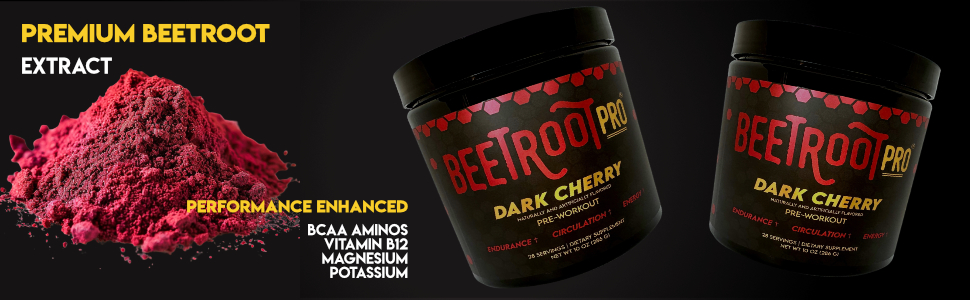
Jan 30, 2023
Boost Your Athletic Performance with Beetroot Powder: The Superfood for Endurance Athletes
Learn more about Boost Your Athletic Performance with Beetroot Powder: The Superfood for Endurance Athletes and how it impacts endurance performance on the Beetroot Pro® blog.
Apr 13, 2026
New Beet Juice Research with Well Trained Athletes
Learn more about New Beet Juice Research with Well Trained Athletes and how it impacts endurance performance on the Beetroot Pro® blog.

Jan 30, 2023
Beetroot Powder Benefits: What the Science Says for Endurance Athletes
The complete guide to beetroot powder benefits: nitric oxide production, VO2 max improvement, lower blood pressure, faster recovery, and optimal dosing. Research-backed.
Technical
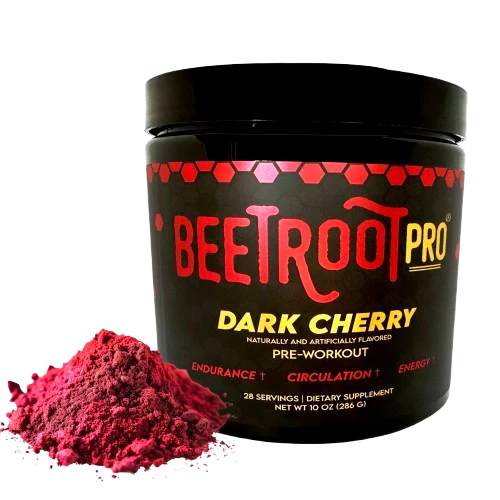
Beetroot Pro
- Patented betaine nitrate
- Acute Oxygen Efficiency
- Low Sugar / Oxalate Free
*Technical citations and PubMed references are provided for performance education only. These statements have not been evaluated by the FDA.