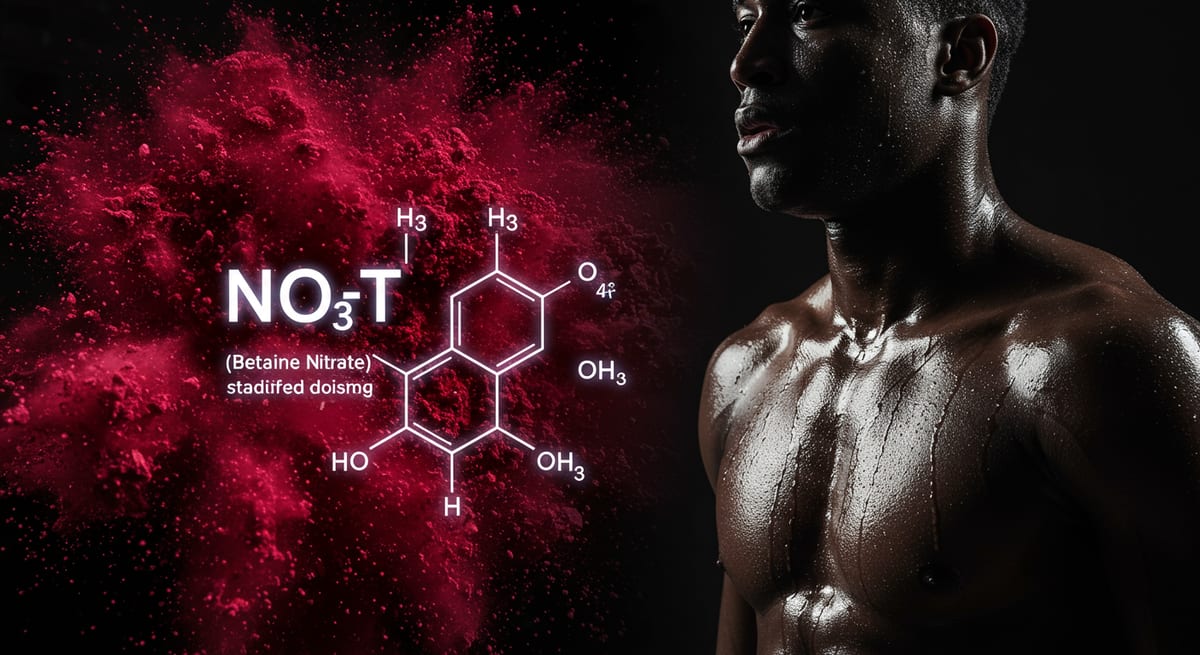
What Is Betaine Nitrate? How NO3-T Technology Works: The Short Answer
Betaine nitrate is a standardized compound that bonds betaine (trimethylglycine) to inorganic nitrate (NO3-) in a single salt. The nitrate fuels the nitrate to nitrite to nitric oxide pathway for vasodilation and oxygen delivery; the betaine independently supports cellular hydration and peak power. NO3-T is the patented betaine nitrate (ThermoLife) used in Beetroot Pro, delivering a fixed, standardized dose that raw beet juice and powder, which vary up to 400% by crop, cannot match.
Most athletes know that dietary nitrate boosts nitric oxide, improves oxygen delivery, and can meaningfully improve endurance performance. Fewer understand why the source and form of that nitrate matters as much as the dose. NO3-T is the reason Beetroot Pro delivers consistent performance results where standard beet products often fall short.
What Is NO3-T?
Betaine nitrate is a chemically defined salt that combines betaine (trimethylglycine) with inorganic nitrate (NO3-), giving you two performance mechanisms (nitric-oxide vasodilation and betaine cellular hydration) in one standardized compound. NO3-T is the patented betaine nitrate used in Beetroot Pro, which is why every serving delivers the same nitrate dose instead of the crop-dependent variability of raw beets.
NO3-T is a patented form of betaine nitrate developed by ThermoLife International. It combines two performance compounds:
- Betaine (trimethylglycine): A naturally occurring compound found in beets that supports cellular hydration, power output, and methylation pathways. Research links betaine supplementation to improved peak power, total work output, and reduced fatigue.
- Nitrate (NO3-): The inorganic nitrate that drives the nitric oxide pathway. Your body converts dietary nitrate to nitrite via oral bacteria, then to nitric oxide (NO) in the acidic environment of working muscles.
The combination is patented precisely because betaine nitrate produces a synergistic effect: the betaine supports muscle cell volume and osmotic balance while the nitrate drives vasodilation and oxygen delivery simultaneously. You get two distinct performance mechanisms from a single compound.
The Nitrate-Nitrite-Nitric Oxide Pathway
Dietary nitrate becomes nitric oxide through a three-step conversion chain: nitrate is absorbed and concentrated in saliva, oral bacteria reduce it to nitrite, and nitrite converts to nitric oxide in the acidic, low-oxygen environment of working muscle. This dietary pathway is why antibacterial mouthwash, which kills the oral bacteria in step two, blocks the effect entirely.
Understanding why dietary nitrate works starts with the conversion chain:
- NO3- (nitrate) is absorbed in the small intestine and concentrated in saliva by the salivary glands.
- Oral bacteria reduce salivary nitrate to nitrite (NO2-). This is why antibacterial mouthwash use before supplementation blocks the effect entirely.
- Nitrite is reduced to nitric oxide (NO) under the acidic, low-oxygen conditions found in working muscle tissue, exactly where you need it most during intense exercise.
Nitric oxide is a powerful vasodilator. It relaxes the smooth muscle in arterial walls, widening blood vessels and increasing oxygen and nutrient delivery to working muscles. The downstream effects:
- Lower oxygen cost for the same power output (improved efficiency)
- Delayed onset of fatigue at threshold intensity
- Faster phosphocreatine resynthesis during recovery between efforts
- Improved mitochondrial efficiency at low oxygen tensions
Clinical evidence:
| Study | Population | Dose | Result |
|---|---|---|---|
| Lansley et al. 2011, Medicine and Science in Sports and Exercise | 9 club-level male cyclists | 0.5 L beetroot juice (about 6.2 mmol nitrate), one dose 2.5 hours before testing | 4 km time trial 2.8% faster, 16.1 km time trial 2.7% faster |
| Bailey et al. 2009, Journal of Applied Physiology | 8 men aged 19 to 38 | 500 ml beetroot juice a day for 6 days | 19% lower oxygen cost gain in moderate exercise; time to exhaustion in severe exercise extended from 583 to 675 seconds |
Why Betaine Nitrate vs Standard Beet Nitrate
Betaine nitrate delivers a standardized, consistent nitrate dose at 30 calories per serving and with no oxalate load, while raw beet juice and powder vary by up to 400% in nitrate content depending on soil, growing conditions, and storage, and carry 10 to 25g of sugar per serving. That variability is why you cannot reliably dose a performance target from raw beets alone.
Standard beetroot products (juice, raw powder, concentrate) deliver nitrate, but with significant limitations:
| Factor | NO3-T Betaine Nitrate | Standard Beet Juice | Raw Beet Powder |
|---|---|---|---|
| Nitrate content | Standardized, consistent | Highly variable (soil, storage) | Low and variable |
| Additional benefit | Betaine for power + hydration | None | None |
| GI tolerance | Excellent | Moderate (high sugar) | Poor (high fiber) |
| Oxalate load | Removed | Present | High |
| Portability | Powder, stable | Requires refrigeration | Powder, stable |
The nitrate content of whole beets varies by up to 400% depending on growing conditions, soil nitrate levels, and storage time. A beet grown in nitrogen-rich soil in late summer contains dramatically more nitrate than one grown in poor soil in spring. You cannot standardize a dose from a variable input.
NO3-T resolves this by delivering a chemically defined, consistent amount of betaine nitrate per serving. Beetroot Pro uses a standardized extract so every scoop delivers the same nitrate load. The Supplement Facts panel prints the extract weight rather than a nitrate figure, but because the extract is standardized to 2%, the roughly 160 mg a serving yields is a number you can work out and check against the research yourself.
Beetroot Pro delivers standardized dietary nitrate to lower the oxygen cost of every effort.
What Betaine Does on Its Own
In a 2012 trial, about 2.5 g of betaine a day for one week raised average peak power by 3.4% and average mean power by 3.3% versus placebo across repeated 12-second cycling sprints, independent of any nitrate effect. A 2009 trial at the same daily dose found better squat endurance but no Wingate power change.
Betaine earns its place independent of the nitrate component. Two trials published in the Journal of the International Society of Sports Nutrition tested it directly:
| Study | Population | Dose | Result |
|---|---|---|---|
| Pryor et al. 2012 | 16 recreationally active men and women | About 2.5 g a day for 7 days | Average peak power up 3.4% and average mean power up 3.3% versus placebo across four 12-second cycling sprints |
| Hoffman et al. 2009 | 24 active college-aged men | 2.5 g a day (1.25 g twice daily) for about 2 weeks | More squat repetitions to exhaustion and more high-quality squat repetitions; no difference in vertical jump, bench throw or Wingate power |
The mechanism involves betaine's role as an osmolyte: it draws water into muscle cells, increasing cell volume. This cellular hydration is a known anabolic signal and also protects cells from dehydration-related performance loss during prolonged sweating.
Combined with nitrate-driven vasodilation, betaine nitrate addresses two simultaneous performance limiters: blood flow and intracellular fluid balance.
Dosing and Timing Protocol
Consume betaine nitrate 60 to 90 minutes before training or competition. Blood nitrite is rising by then; in published studies on beet juice it peaks about 2 to 3 hours after a dose and stays elevated for several hours. For race-week loading, 3 to 6 days of daily supplementation beforehand raises baseline nitrite and amplifies the acute effect; avoid antibacterial mouthwash on days of use.
The nitric oxide conversion pathway takes time. Plan accordingly:
- Acute use: Consume 60 to 90 minutes before training or competition. In published studies on beet juice, blood nitrite peaks about 2 to 3 hours after a dose and remains elevated for several hours, so a 60 to 90 minute dose covers the start and the hours after it. No study has measured this timing for betaine nitrate itself.
- Chronic loading: 3 to 6 days of daily supplementation elevates baseline nitrite concentrations and amplifies the acute effect. This is most valuable before target races or competition blocks.
- Avoid antibacterial mouthwash on days of use. Oral bacteria are essential to the NO3- to NO2- conversion step. Rinsing with a chlorhexidine mouthwash before a nitrate dose abolished the conversion to nitrite in saliva and markedly attenuated the rise in plasma nitrite (Govoni 2008, Nitric Oxide).
- Timing with food: Can be taken with or without food. Avoid high-nitrate foods (leafy greens, other beet products) within the same window to avoid saturation of the conversion pathway.
Why NO3-T Is Patented
ThermoLife holds a composition-of-matter patent on betaine nitrate because the specific salt form, betaine paired with nitrate as the counterion, produces reproducible effects that mixing generic betaine and nitrate separately cannot replicate. The patent covers the salt structure, not the individual naturally occurring ingredients.
ThermoLife holds a composition-of-matter patent on betaine nitrate specifically because the combination produces effects neither compound achieves alone to the same degree. The patent covers the specific salt form (betaine paired with nitrate as the counterion) rather than the individual ingredients, which are both naturally occurring.
Beetroot Pro licenses NO3-T for this reason: it provides reproducible results that cannot be replicated by mixing generic betaine and nitrate separately, which may not form the same bioavailable salt structure.
Bottom Line
NO3-T betaine nitrate is not a marketing ingredient. It is a patented, clinically studied compound that delivers two synergistic performance benefits (nitric oxide-driven vasodilation and betaine-driven cellular hydration) from a standardized, consistent dose, something raw beet products cannot reliably do. That is why it is the active compound in Beetroot Pro.
Ready to apply it: See the full loading and acute dosing protocol and the 60-minute pre-workout timing guide.
Understand the full picture: Beetroot Powder vs Beet Juice breaks down all beetroot forms head to head.
Compare finished products: Best Beetroot Supplement 2026 sets four beet supplements side by side on declared actives, format, taste and price per serving.
Scientific Citations:
- Lansley KE, et al. (2011). Acute dietary nitrate supplementation improves cycling time trial performance. Medicine and Science in Sports and Exercise.
- Bailey SJ, et al. (2009). Dietary nitrate supplementation reduces the O2 cost of low-intensity exercise. Journal of Applied Physiology.
- Hoffman JR, et al. (2009). Effect of betaine supplementation on power performance and fatigue. Journal of the International Society of Sports Nutrition.
- Pryor JL, et al. (2012). Effect of betaine supplementation on cycling sprint performance. Journal of the International Society of Sports Nutrition.
- Govoni M, et al. (2008). The increase in plasma nitrite after a dietary nitrate load is markedly attenuated by an antibacterial mouthwash. Nitric Oxide.
- Larsen FJ, et al. (2006). Effects of dietary nitrate on blood pressure in healthy volunteers. New England Journal of Medicine.
- Bescos R, et al. (2011). Acute administration of inorganic nitrate reduces VO2peak in endurance athletes. Medicine and Science in Sports and Exercise.
FDA Disclaimer: These statements have not been evaluated by the Food and Drug Administration. This product is not intended to diagnose, treat, cure, or prevent any disease.
Technical FAQ Extension
What is betaine nitrate?
Betaine nitrate is a chemically bonded compound that pairs betaine (trimethylglycine, TMG) with inorganic nitrate (NO3-) in a single standardized salt. The nitrate drives the nitric-oxide pathway for vasodilation and oxygen delivery, while the betaine independently supports cellular hydration and peak power. Because it is a defined compound, it delivers a fixed, standardized nitrate dose, unlike whole-beet products whose nitrate varies by crop and batch.
Is betaine nitrate better than beet juice?
For dose certainty, yes. Betaine nitrate (such as the patented NO3-T form) delivers a standardized nitrate amount per serving at 30 calories, while beet juice nitrate varies up to 400% by harvest and carries 22 to 25g of sugar per serving. Beet juice works, but you cannot reliably know your dose. Betaine nitrate also adds the betaine power and hydration benefit that plain nitrate does not.
Is betaine nitrate on the WADA banned list?
No. Betaine and dietary nitrate are not on the WADA or NCAA prohibited substance lists. Beetroot Pro is manufactured in a cGMP certified facility, but the finished product is not independently certified by WADA, NCAA, or USADA; only the ingredients are not prohibited. Drug-tested athletes should confirm with their governing body before use.
Related Articles
Apr 13, 2026
What Is Betaine Nitrate? How NO3-T® Works
Betaine nitrate bonds betaine (TMG) to nitrate: nitrate fuels nitric oxide for oxygen efficiency, betaine hydrates cells. How the patented NO3-T form works.

Apr 25, 2026
Beetroot Fasted vs. With Food on Race Morning
Does taking beetroot powder fasted improve absorption? What the pharmacokinetic data shows, and practical race-morning eating guidance for endurance athletes.
Sep 27, 2026
Does Beetroot Lower Cholesterol? No. Here's What Does
Pooled trials found no significant effect of beetroot juice or powder on LDL or total cholesterol. What beetroot does help, and the fiber dose that lowers LDL.
Technical
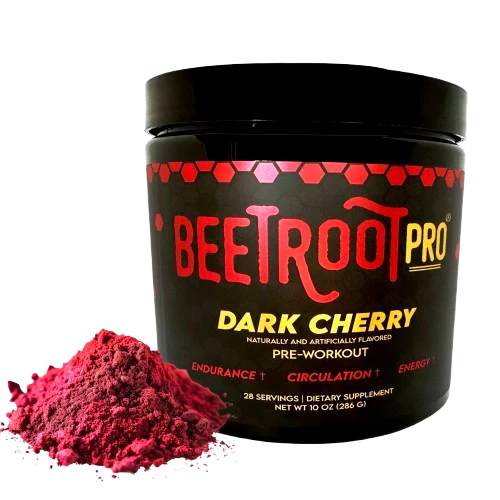
Beetroot Pro
Our product
- Patented betaine nitrate
- Acute Oxygen Efficiency
- 30 Calories Per Serving
*Technical citations and PubMed references are provided for performance education only. These statements have not been evaluated by the FDA.