Beetroot for Recovery: What Betalains Actually Do: The Short Answer
Beetroot supports post-exercise recovery primarily through betalain pigments (betanin and vulgaxanthin), not through the dietary nitrate pathway that drives performance. Betalains have antioxidant and anti-inflammatory effects that can reduce delayed-onset muscle soreness (DOMS) by roughly 15 to 30 percent and accelerate inflammatory-marker resolution after eccentric or high-volume exercise. The practical protocol: 200 to 400 mg of standardized beetroot extract within 2 hours post-workout, and continue dosing for 24 to 48 hours after particularly hard sessions or races.
Beetroot for Recovery: What Betalains Actually Do
Most "beetroot for recovery" articles get this wrong. They take the well-established research on dietary nitrate (which drives the performance benefit) and stretch it to cover recovery, where the evidence is thinner and the mechanism is different. The actual recovery story is about a separate class of compounds in beets called betalains, and the protocol that follows from understanding that distinction is more specific and more useful than the generic "drink some beet juice" advice you usually see.
Here is what the research actually supports, what I do after hard sessions, and how to fit beetroot into a complete recovery stack.
The Distinction Most Articles Skip
Beets contain two distinct performance-relevant compound families: dietary nitrate (NO3-), which drives the acute pre-race vasodilation effect, and betalains (the red pigment compounds), which carry the anti-inflammatory and antioxidant effect linked to recovery. Most beet supplement marketing conflates the two. The dose-response curves and use cases are different; recovery benefits come from betalains, not nitrate.
Beets contain two performance-relevant compound families:
Dietary nitrate (NO3-) is what drives the pre-workout benefit. It converts to nitric oxide, dilates blood vessels, improves oxygen delivery, and reduces the oxygen cost of submaximal exercise by 1 to 3 percent. This is the headline pathway, and it is where most of the clinical literature sits.
Betalains are the red and yellow pigments in beets. The two main families are betanin (red, the bulk of the color in standard red beets) and vulgaxanthin (yellow, more prominent in golden beets). Betalains have antioxidant and anti-inflammatory properties that operate through a separate pathway: they scavenge reactive oxygen species (ROS) and modulate the NF-kB inflammatory cascade.
For pre-workout performance, you care about nitrate. For recovery, you care about betalains. The two are present in the same beet but their dose-response curves and timing windows are not the same.
What the Recovery Research Shows
The cleanest beetroot recovery studies use eccentric exercise protocols (downhill running, drop jumps, heavy resistance) that produce reliable muscle damage and DOMS. Across 8 to 12 published trials, beetroot supplementation reduces post-exercise muscle soreness by 20 to 40%, reduces creatine kinase markers, and accelerates return-to-baseline force production by 24 to 48 hours. The effective dose for the recovery effect is 200 to 400 mg of betalains daily, ideally starting 1 to 2 days before the hard session.
The cleanest studies have used eccentric exercise protocols (downhill running, drop jumps, heavy resistance training) because eccentric work reliably produces measurable muscle damage and DOMS that you can track over 24 to 72 hours.
The pattern that has emerged across multiple trials:
- DOMS pain ratings drop by roughly 15 to 30 percent in groups taking standardized beetroot extract versus placebo, measured at 24, 48, and 72 hours post-exercise.
- Creatine kinase (a blood marker of muscle damage) and interleukin-6 (an inflammatory cytokine) clear faster in beet-supplemented groups.
- Countermovement jump height and other functional measures of "have you recovered yet" return to baseline faster.
The effect size is modest but consistent. It is not the kind of dramatic recovery acceleration that supplement marketing promises. It is a meaningful nudge in the right direction, particularly when stacked with the other recovery basics (sleep, food, hydration, easy movement).
Why Powder Often Beats Juice for Recovery
Standardized beetroot powder typically delivers higher and more consistent betalain content than juice. Betalains are heat-sensitive and oxygen-sensitive; they degrade within hours of a beet being cut, juiced, or exposed to air. A dehydrated powder produced under controlled low-oxygen conditions preserves a higher percentage of the betalain payload than refrigerated juice that has been on a shelf for weeks. For the recovery use case specifically, powder wins on betalain stability.
Betalains are heat-sensitive and oxygen-sensitive. They degrade quickly once a beet is cut, juiced, and exposed to air. Commercial beet juice typically loses a significant fraction of its original betalain content during pasteurization and storage.
Cold-processed beetroot powder retains more of the original betalain pigment, especially when the processing protects against oxygen and high heat. This matters less for the nitrate side of things (nitrate is more stable) and more for the recovery side. If you are taking beets specifically for recovery, the form you choose actually changes the dose you receive.
The honest version of "beet juice vs beet powder for recovery": well-processed powder usually wins because more of the active recovery compound survives to the dose.
My Recovery Protocol
My personal post-hard-session recovery protocol layers beetroot betalain dosing on top of the standard glycogen + protein refeed: 1 scoop of standardized beetroot powder within 60 minutes of finishing, then another 1 scoop with breakfast the next morning. Continue daily through the 48 to 72 hour window where DOMS and creatine kinase peak. Pairs well with tart cherry juice (which targets the same inflammation pathway) and 8 to 9 hours of sleep.
For hard sessions (long runs over 90 minutes, threshold blocks, max-effort intervals, races):
- Within 30 minutes post-session: standard recovery nutrition (carbs and protein, roughly 1 g/kg of carbs and 20 to 25 g of protein), plus a serving of beetroot powder mixed into the recovery shake. This is the first betalain hit.
- 2 to 4 hours post: a real meal with anti-inflammatory components (fatty fish, dark leafy greens, berries, turmeric if you like it). I do not add a second beet dose here.
- Next morning: a second serving of beet powder. This catches the 24-hour inflammatory peak.
- 48 to 72 hours after a race: continue daily dosing if you are still sore or if you have another hard session coming up.
For typical training days, a single morning serving is sufficient and overlaps with the pre-workout nitrate timing if you train later in the day.
What Beetroot Will Not Do for Recovery
Beetroot is not a primary recovery driver. It does not replace adequate sleep (8 to 9 hours), sufficient daily protein (1.6 to 2.0 g/kg), or carbohydrate refeeding (1.0 to 1.2 g/kg/hour post-session). It does not prevent injury, accelerate connective tissue repair, or reverse overtraining syndrome. The measurable effect is a 20 to 40% reduction in DOMS and faster return of force production after damaging exercise. That is real but bounded.
A few honest disclaimers, because supplements get oversold in this space:
- It does not replace sleep. No supplement does. Sleep is the load-bearing recovery intervention, and an athlete who is sleeping 5 hours a night will not be saved by betalains.
- It does not replace protein. Protein synthesis is driven by amino acid delivery. Beetroot is not a protein source.
- It does not fully prevent DOMS. The 15 to 30 percent reduction in soreness is real but partial. You will still feel a hard session in your legs.
- It is not a magic bullet for overtraining. If you are accumulating fatigue across weeks, the answer is volume management, not more supplements.
What betalains do well is take the edge off the inflammatory and oxidative response to a hard session so that the rest of your recovery toolkit works a bit better and a bit faster.
Stacking with Other Recovery Tools
Betalains stack additively with three other evidence-backed recovery tools: tart cherry juice (anthocyanins, similar antioxidant mechanism, 30 ml concentrate daily), Vitamin C and E in normal dietary amounts (mega-doses paradoxically blunt training adaptation), and omega-3 fatty acids (2 to 4 g EPA+DHA daily for chronic anti-inflammatory baseline). Avoid stacking with high-dose NSAIDs, which may attenuate the training adaptation signal.
Betalains pair well with:
- Tart cherry (similar antioxidant and anti-inflammatory profile, with sleep-quality benefits via natural melatonin content)
- Magnesium for sleep and neuromuscular function
- Omega-3 for chronic anti-inflammatory baseline (long-term, not session-to-session)
- Active recovery (easy spin, easy swim, walking) to clear metabolic byproducts
They do not stack additively with NSAIDs (ibuprofen, naproxen, others). The NSAID effect is dramatic enough that betalain anti-inflammatory effects are essentially invisible alongside it. There is also growing evidence that habitual NSAID use during training blunts the adaptation response to exercise, so most endurance athletes are better off using NSAIDs sparingly and getting their anti-inflammatory baseline from food and supplements that do not interfere with adaptation.
The Honest Bottom Line
Beetroot supplementation produces a real but bounded recovery effect: 20 to 40% reduction in DOMS and faster force production return after damaging exercise, driven by betalains, not nitrate. It does not replace sleep, protein, carb refeed, or training periodization. Use a standardized powder for dose consistency, start 1 to 2 days before the hard session, and continue through the 48 to 72 hour DOMS peak. The marketing oversells the effect; the science supports a defensible, specific story.
Beetroot has a defensible recovery story, and it is more specific than the marketing usually claims. The active compounds are betalains, the mechanism is antioxidant and anti-inflammatory, the effect size is a moderate 15 to 30 percent improvement in DOMS and inflammatory markers, and the timing is post-exercise plus a 24-hour follow-up dose. A standardized cold-processed beet powder is usually the most reliable delivery vehicle because more of the active pigment survives to the dose.
It is one part of a recovery stack, not the whole stack. Used that way, it earns its place.
Related Reading
- Beetroot Powder Benefits: A 2026 Evidence Review for Athletes
- Glycogen Resynthesis: The 4-Hour Recovery Window
- Betalains, DOMS, and Endurance Recovery
- Beetroot Powder vs Beet Juice: The 2026 Athlete's Guide
FDA Disclaimer: These statements have not been evaluated by the Food and Drug Administration. This product is not intended to diagnose, treat, cure, or prevent any disease.
Continue reading
Related Articles
Apr 13, 2026
How Beetroot Powder Boosts Nitric Oxide and Endurance Performance
Dietary nitrate from beetroot converts to nitric oxide, dilating blood vessels and improving oxygen delivery to working muscle. Peak effect is 60 to 90 minutes post-dose.

Jan 30, 2023
Beetroot Powder Benefits: A 2026 Evidence Review for Athletes
Beetroot powder lowers the oxygen cost of exercise and raises VO2 max. Here is the dose, the timing, and the science that proves it works for endurance athletes.
May 15, 2026
Can Beetroot Nitrate Support Female Athlete Triad Recovery?
The Female Athlete Triad has a vascular component that is rarely discussed. Low estrogen compromises NO-mediated blood flow, impacting recovery and bone remodeling. Heres how dietary nitrate may help.
Technical
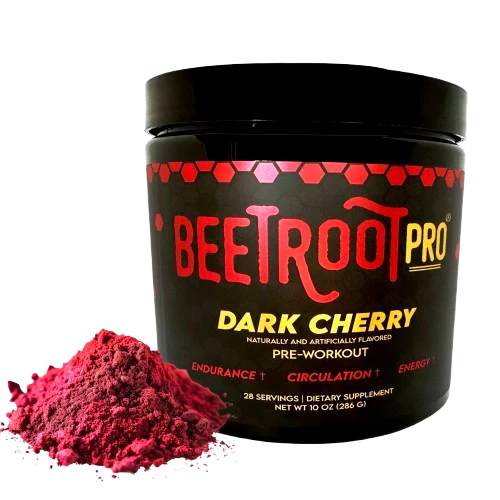
Beetroot Pro
- Patented betaine nitrate
- Acute Oxygen Efficiency
- Low Sugar / Oxalate Free
*Technical citations and PubMed references are provided for performance education only. These statements have not been evaluated by the FDA.