
Beetroot and Brain Health in Aging Athletes: The Short Answer
The brain uses about 20 percent of the body's oxygen, supplied through nitric oxide-regulated cerebral blood flow. Nitric oxide-dependent vasodilation declines steadily with age, measurably by the fourth decade, which likely reduces cerebral blood flow and is associated with slower cognition and reaction time. Dietary nitrate from beetroot increases cerebral blood flow to the prefrontal cortex through an oxygen-independent pathway, supporting focus, faster reaction times, and decision-making under fatigue for masters athletes.
The Brain-NO Connection
The brain uses about 20 percent of the body's total oxygen supply despite accounting for only 2 percent of body weight, and that demand is met through nitric oxide-regulated cerebral blood flow. Nitric oxide-dependent vasodilation declines steadily with age, measurably by the fourth decade in a forearm study (Gerhard et al., 1996), which likely reduces blood flow available to cognition.
The brain requires approximately 20 percent of the body's total oxygen supply despite accounting for only 2 percent of body weight. This high metabolic demand is met through cerebral blood flow, which is tightly regulated by nitric oxide-mediated vasodilation.
As eNOS activity declines with age, cerebral blood flow also decreases. This reduction is associated with slower cognitive processing, reduced executive function, and longer reaction times. For masters endurance athletes, these cognitive effects are as relevant as the physical performance decline. The mechanism behind this pathway, how dietary nitrate converts to nitric oxide independent of eNOS, is covered in full in the nitric oxide and athletic performance guide.
| Age range | Endothelium-dependent vasodilation (human forearm studies) | Practical effect |
|---|---|---|
| 25 to 40 | Decline already detectable by the fourth decade (Gerhard et al., 1996) | Minimal measurable cognitive change |
| 40 to 60 | Progressive further decline | Reduced cerebral blood flow, slower processing speed |
| 60+ | Continued decline, with oxidative stress adding to it (Taddei et al., 2001) | Compounding effect on executive function and reaction time |
Cerebral Blood Flow and Exercise
During exercise, working muscles compete with the brain for blood flow, and nitric oxide-mediated vasodilation is the mechanism that protects cerebral perfusion under that competition. When age-related eNOS decline weakens this regulatory system, dietary nitrate offers an oxygen-independent backup pathway. Clinical studies show dietary nitrate supplementation increases cerebral blood flow specifically to the prefrontal cortex.
During exercise, the brain's oxygen demand increases significantly. Working muscles compete for blood flow, and NO-mediated vasodilation is the mechanism that ensures the brain receives adequate perfusion. When eNOS is compromised by age, this regulatory mechanism becomes less efficient.
Dietary nitrate supplementation has been shown in clinical studies to increase cerebral blood flow, particularly to the prefrontal cortex. This region of the brain is critical for executive function (decision-making, impulse control, task switching) and is among the first areas to show age-related decline.
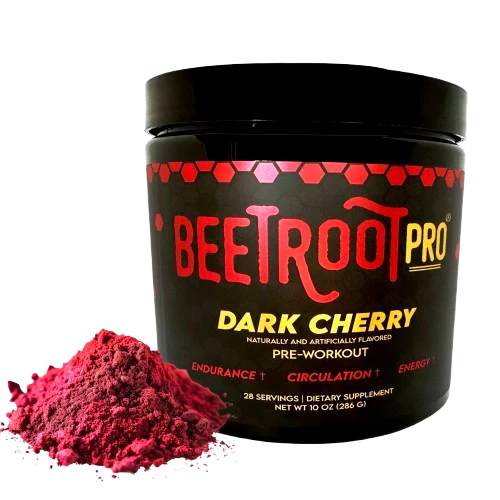
Beetroot Pro delivers standardized dietary nitrate to lower the oxygen cost of every effort.
Implications for Masters Athletes
Combining beetroot nitrate with exercise may compound the cerebral blood flow benefit for masters athletes, since exercise alone increases blood flow acutely and nitrate supplementation has been shown to amplify that effect. Athletes over 35 who use beetroot nitrate before training sessions report benefits across four practical domains: focus, reaction time, fatigue-state decision-making, and long-term cognitive support.
For masters athletes, the combination of beetroot nitrate and exercise may provide a compounded benefit for brain health. Exercise alone increases cerebral blood flow acutely, and nitrate supplementation has been shown to amplify this effect.
In practical terms, athletes over 35 who use beetroot nitrate before training sessions may experience:
- Focus and concentration: improved during complex, technical training sessions that demand sustained attention
- Reaction time: faster responses, particularly relevant for cycling and running in traffic or on variable terrain
- Fatigue-state decision-making: better judgment late in long events, when executive function typically degrades fastest
- Long-term cognitive health: potential support through consistent nitric oxide availability over a training year
Athletes who want to build this into a full-season plan rather than a single pre-workout dose can follow the masters daily baseline plan, which carries the daily serving through training blocks and the off-season, then switches to a 5-day load before key events.
The Long-Term View
The acute cognitive benefits of nitrate supplementation are well documented, while long-term brain health implications for aging athletes remain an active research area. The physiology is clear: nitric oxide availability supports cerebral vascular health through a pathway that bypasses the aging eNOS enzyme. For athletes training into their 40s, 50s, and beyond, that makes daily nitrate intake one of the most accessible available interventions.
For masters athletes who train and race into their 40s, 50s, and beyond, consistent daily nitrate supplementation may be one of the most accessible interventions for maintaining both physical and cognitive performance. The full dosing plan, including the 5-day pre-race load and the daily baseline schedule, is laid out on the masters athlete performance hub, alongside broader guidance on training and recovery after 35. Athletes looking for the full range of documented benefits beyond cognition, including cardiovascular and recovery effects, can also review the complete beetroot powder health benefits overview.
Nitrate is not the only brain-relevant compound in this formula. Where nitrate supports cognition through cerebral blood flow, creatine works through a separate mechanism, buffering the brain's phosphocreatine energy reserve, with its own research showing the clearest benefit in the sleep-deprived, vegetarians and vegans, and peri- and post-menopausal women.
To put this into practice, Beetroot Pro® delivers a standardized nitrate dose sized for the same pre-training and race-week timing referenced throughout this protocol.
References
The physiology and dosing claims above are drawn from peer-reviewed research on age-related nitric oxide decline, masters athlete performance, and dietary nitrate supplementation, cited below for verification.
- Gerhard M, et al. Aging progressively impairs endothelium-dependent vasodilation in forearm resistance vessels of humans. Hypertension. 1996.
- Taddei S, et al. Age-related reduction of NO availability and oxidative stress in humans. Hypertension. 2001.
- Tanaka H, Seals DR. Endurance exercise performance in Masters athletes. Journal of Physiology. 2008.
- Jones AM. Dietary nitrate supplementation and exercise performance. Sports Medicine. 2014.
Technical FAQ Extension
Does beetroot help brain function in older athletes?
Beetroot provides dietary nitrate, which the body converts to nitric oxide to regulate cerebral blood flow through vasodilation. Nitric oxide-dependent vasodilation declines steadily with age, measurably by the fourth decade in forearm studies (Gerhard 1996), which likely reduces blood flow to the brain. In adults with a mean age of 75, a high-nitrate diet increased blood flow to frontal lobe white matter (Presley 2011), though direct evidence of better cognition is still limited.
Why does the brain need so much blood flow?
The brain uses about 20 percent of the body's total oxygen supply despite being only 2 percent of body weight. That high metabolic demand is met through cerebral blood flow, which is tightly regulated by nitric oxide-mediated vasodilation. During exercise, brain oxygen demand rises further while working muscles compete for blood, making NO-mediated regulation more important.
What cognitive changes might a masters athlete notice from beetroot nitrate before training?
Athletes over 35 who use beetroot nitrate before training may experience improved focus and concentration during complex sessions, faster reaction times relevant for cycling and running in variable terrain, and better decision-making under fatigue in long events. These acute cognitive benefits are well documented, while the long-term brain-health implications remain an active research area.
Related Articles

Jun 19, 2026
Beetroot for Female Endurance Athletes: Dosing Guide
Female endurance athletes need 5-8 mmol dietary nitrate 2-3 hours pre-race, but iron deficiency cuts conversion efficiency up to 40%.

Jun 19, 2026
Beetroot for Menopause, Birth Control, and the Triad
Menopause reduces eNOS activity by 50 percent, and oral contraceptives suppress nitric oxide further. Beetroot nitrate dose guidance for each.

Jan 30, 2023
Beetroot Powder Benefits: 6 Backed by Trials (2026)
Beetroot powder cuts oxygen cost 1 to 3%, extends time to exhaustion by 15%, and lowers blood pressure 3 to 5 mmHg. See the studies, doses, and effect sizes.
Technical
Beetroot Pro
Our product
- Patented betaine nitrate
- Acute Oxygen Efficiency
- 30 Calories Per Serving
*Technical citations and PubMed references are provided for performance education only. These statements have not been evaluated by the FDA.