
Year-Round NO Maintenance Guide for Masters Athletes: The Short Answer
Masters athletes over 35 benefit from year-round dietary nitrate, not just race-week loading, because nitric oxide supports cardiovascular health, cognition, and recovery as well as performance. The base, build, and peak phases use one serving daily, taken 60 to 90 minutes before the key workout; race week shifts to a 5-day load (AM and PM) plus one serving 60 to 90 minutes before the start. The nitrate-nitrite-NO pathway does not develop tolerance, so no cycling is required.
Beyond Race Week: The Year-Round View
Most supplement protocols for nitrate focus on race-week loading: 3 to 5 days of elevated dosing before a key event. This makes sense for acute performance, but it misses the bigger picture for masters athletes.
For athletes over 35, the value of dietary nitrate extends beyond race-day performance. The same NO that supports vasodilation and oxygen delivery on race day also supports cardiovascular health, cognitive function, and recovery throughout the training year. The protocol should reflect this. For the specific case of cognitive and reaction-time benefits, see beetroot and brain health in aging athletes.
Training Phase Protocol
Base Building: One serving per day, taken 60 to 90 minutes before the key workout. The goal is consistent NO support for the long, steady miles that build the aerobic foundation. No loading needed.
Build Phase: Continue daily serving before the key workout. On days with intensity intervals or threshold work, the NO benefit is most noticeable. The reduced oxygen cost of submaximal exercise translates to better quality intervals.
Peak Phase: Maintain daily serving. Consider adding a second serving on days with double sessions (one before each session) to support recovery between workouts.
Race Week: Transition to the 5-day loading protocol: one serving AM and PM for 5 days before race morning, plus one serving 60 to 90 minutes before the start.
Off-Season Protocol
The off-season is where the longevity perspective differs most from a race-focused approach. Even when training volume drops, the cardiovascular and cognitive benefits of daily nitrate support remain relevant.
Off-Season Daily: One serving per day, taken in the morning. No need to time it to a workout unless you are doing one. The goal is maintaining baseline NO availability for general health.
Active Recovery: On recovery days, a PM serving can support overnight recovery processes by maintaining vasodilation during sleep.
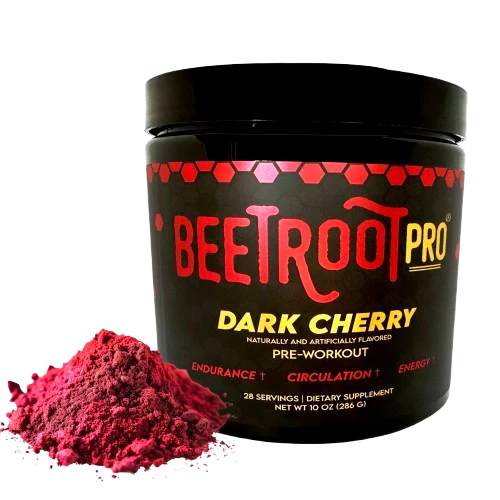
Beetroot Pro delivers standardized dietary nitrate to lower the oxygen cost of every effort.
Key Differences from Standard Protocols
No Cycling: Many supplements require cycling periods to maintain effectiveness or avoid tolerance. Nitrate does not. The nitrate-nitrite-NO pathway does not develop tolerance with consistent use. Daily use is safe and effective year-round.
No Upper Limit: There is no established upper limit for dietary nitrate at supplementation levels. The body efficiently processes and excretes excess nitrate. The benefit plateaus at the standard serving level; more is not better, but it is not harmful.
Consistency Over Timing: While timing matters for acute performance (60 to 90 minutes pre-exercise), the year-round approach prioritizes consistency. Missing a serving on a rest day does not matter. Missing weeks at a time means baseline NO availability drops.
Practical Schedule
- Morning: One serving with breakfast or 60 minutes before AM workout
- Training days: Time 60 to 90 minutes before the key session
- Recovery days: Take with breakfast for baseline
- High-volume days: Optional second serving before PM session
- Race week: 5-day loading (AM and PM)
- Race day: One serving 60 to 90 minutes before start
This year-round protocol uses Beetroot Pro®, standardized to a fixed nitrate dose so daily use stays consistent whether you are in base, build, peak, or race week.
References
- Taddei S, et al. Age-related reduction of NO availability and oxidative stress in humans. Hypertension. 2001.
- Wylie LJ, et al. Beetroot juice and exercise: pharmacodynamic and dose-response relationships. Journal of Applied Physiology. 2013.
- Jones AM. Dietary nitrate supplementation and exercise performance. Sports Medicine. 2014.
Technical FAQ Extension
Do I need to cycle off beetroot or take breaks from nitrate?
No. Unlike many supplements, dietary nitrate does not require cycling. The nitrate-nitrite-NO pathway does not develop tolerance with consistent use, so daily use is safe and effective year-round. Missing a serving on a rest day does not matter, but missing weeks at a time means baseline nitric oxide availability drops. For year-round support, consistency matters more than perfect timing.
How should masters athletes take beetroot year-round?
Match the dose to your training phase. During base, build, and peak phases, take one serving 60 to 90 minutes before your key workout (add a second serving on double-session days). In the off-season, take one serving each morning for baseline nitric oxide. For race week, switch to the 5-day loading protocol: one serving AM and PM for 5 days, plus one serving 60 to 90 minutes before the start.
Is there an upper limit for how much beetroot I can take?
There is no established upper limit for dietary nitrate at supplementation levels. The body efficiently processes and excretes excess nitrate. However, the benefit plateaus at the standard serving level, so more is not better, though it is not harmful. For masters athletes, daily nitrate also supports cardiovascular health, cognitive function, and recovery beyond race-day performance.
Related Articles

Jun 19, 2026
Beetroot for Female Endurance Athletes: Dosing Guide
Female endurance athletes need 5-8 mmol dietary nitrate 2-3 hours pre-race, but iron deficiency cuts conversion efficiency up to 40%.

May 15, 2026
Beetroot and Brain Health in Aging Athletes
Nitric oxide regulates cerebral blood flow. As eNOS declines with age, beetroot nitrate supports cognition, focus, and reaction time for masters athletes.

Apr 21, 2026
Clean Athlete's Guide: Nitric Oxide + Lactic Buffering
Clean sport credentials explained. How to boost nitric oxide without banned stimulants, and why beta-alanine replaced baking soda for lactic buffering.
Technical
Beetroot Pro
Our product
- Patented betaine nitrate
- Acute Oxygen Efficiency
- 30 Calories Per Serving
*Technical citations and PubMed references are provided for performance education only. These statements have not been evaluated by the FDA.