
Stacking Beetroot and Caffeine: Timing Protocol: The Short Answer
Beetroot and caffeine can be combined safely because they work through independent mechanisms and do not interfere. Take dietary nitrate (beetroot) 90 minutes before race start and caffeine 30 to 45 minutes before, so both are working in the early part of the race. The IOC-supported caffeine dose is 3 to 6 mg per kilogram of body weight. In the trials that combined them, caffeine reliably improved performance, while nitrate's added benefit on top was small or not detectable.
If you are already using dietary nitrate for endurance performance, the natural question is how it interacts with the other evidence-based supplements in your protocol. Caffeine is the most common one athletes ask about.
The short answer: they work through completely different mechanisms, they do not interfere with each other, and they can be timed to create an additive effect window that covers your race start.
This post covers the mechanism of each, the optimal timing protocol, and the common questions about whether they conflict.
Why Both Work
Dietary nitrate and caffeine improve endurance performance through two separate physiological pathways, so combining them does not create competition or diminishing returns. Nitrate lowers the oxygen cost of exercise through vasodilation, while caffeine reduces perceived effort through the central nervous system. Both are on the IOC's short list of supplements with good evidence of benefit (Maughan et al., BJSM 2018).
They earn that IOC status through entirely different pathways.
Dietary nitrate is converted through the nitrate-nitrite-nitric oxide pathway to nitric oxide, which relaxes vascular smooth muscle, dilates blood vessels, and improves oxygen delivery to working muscles. The result is reduced oxygen cost at sub-maximal intensities: the same aerobic power requires less oxygen to produce. The peak effect arrives 2 to 3 hours after ingestion and is sustained for 1 to 2 hours thereafter.
Caffeine acts primarily on the central nervous system by blocking adenosine receptors. Adenosine is a neuromodulator that accumulates during wakefulness and increases feelings of fatigue. By blocking adenosine uptake, caffeine reduces perceived effort, sustains attention, and maintains motor unit recruitment quality during prolonged exercise. Caffeine's peak plasma concentration arrives 30 to 60 minutes after ingestion and its half-life is approximately 5 hours.
There is no mechanistic competition between these two pathways. Nitric oxide vasodilation and adenosine receptor antagonism operate on completely separate physiological systems. Trials that combined the two found no sign that nitrate interferes with caffeine; whether nitrate adds anything on top of caffeine is less clear, as the table under Common Questions shows.
The Timing Protocol
The evidence-based timing protocol offsets the two supplements by roughly an hour: dietary nitrate 90 minutes before race start, caffeine 30 to 45 minutes before start. This offset accounts for nitrate's slower 2 to 3 hour peak versus caffeine's faster 30 to 60 minute peak: caffeine is near its peak at the gun, and plasma nitrite, still rising at the start, peaks in the first hour or so of racing. The caffeine timing tool calculates the exact clock times for your own start time and body weight rather than making you do the math by hand.
Given the different onset curves, the optimal protocol requires a small timing offset:
| Time before start | Action | Why |
|---|---|---|
| T minus 90 minutes | Take dietary nitrate (one serving of Beetroot Pro, dissolved in water) | Gives nitrate time to enter the nitrate-nitrite-NO conversion cycle; with a 2 to 3 hour peak, plasma nitrite peaks in the first hour or so of racing |
| T minus 30 to 45 minutes | Take your caffeine source (coffee, caffeine capsule, or caffeinated gel) | Matches caffeine's peak plasma window to the starting effort |
| At start | Caffeine near peak, plasma nitrite rising | Peripheral vasodilation from NO overlaps with the central stimulant effect of caffeine |
For athletes using caffeinated gels during a race (common for marathon runners and cyclists in events over 90 minutes), the late-race caffeine doses extend stimulant effect without conflicting with the dietary nitrate taken pre-race. Runners building a full race-day fueling plan around this timing can layer it into a complete race blueprint that sequences nitrate, caffeine, and carbohydrate intake together.
Common Questions
No trial has shown caffeine blunting dietary nitrate, though the trials that combined them found most of the measurable gain came from caffeine. The two can be mixed in the same drink, though offset timing gives a cleaner overlap window for A-races. The five questions below cover the interaction concerns athletes ask most often.
Does caffeine reduce the effect of dietary nitrate?
There was concern in the early literature that caffeine's vasoconstrictive tendency (caffeine at high doses causes mild vasoconstriction in some vascular beds) might counteract dietary nitrate's vasodilatory effect. Subsequent research did not confirm a meaningful interaction at typical athlete doses, but it did not confirm an additive gain either. Three trials have tested the pair directly:
| Study | Population | Dose | Result |
|---|---|---|---|
| Handzlik and Gleeson, 2013, ISRN Nutrition | 14 trained male cyclists | About 8 mmol nitrate (beet juice) plus 5 mg/kg caffeine | Time to exhaustion 18% longer with both than with nitrate alone and 27% longer than with caffeine alone, but not statistically significant |
| Lane et al., 2014, Applied Physiology, Nutrition, and Metabolism | 12 male and 12 female competitive cyclists | 8.4 mmol nitrate plus 3 mg/kg caffeine gum | Caffeine raised time trial power 3 to 4%; nitrate had no effect alone or on top of caffeine |
| Glaister et al., 2015, Journal of Strength and Conditioning Research | 14 competitive female cyclists | 0.45 g nitrate plus 5 mg/kg caffeine | Caffeine raised 20 km time trial power; nitrate had no effect and added nothing to caffeine |
Both supplements are commonly combined by elite athletes.
Can I mix them in the same drink?
Practically yes, but the timing consideration argues against it if your goal is to maximize the performance overlap window. If you mix them and drink them simultaneously 60 minutes before the start, the caffeine peaks slightly before the nitrate reaches full effect. For most training sessions this is fine. For key races where you want everything dialed, the offset timing (nitrate 30 minutes before caffeine) is worth the added complexity.
What about caffeine tablets versus coffee?
Caffeine absorption from coffee is sometimes slightly slower than from anhydrous caffeine capsules, partly due to the other compounds in coffee that affect gastric emptying. For training runs and rides, your normal coffee ritual is entirely appropriate. For an A-race where you want precise timing, a measured caffeine capsule allows more confidence in the timing.
Does dietary nitrate affect heart rate like caffeine does?
No. Dietary nitrate reduces the oxygen cost of exercise, which often translates to a lower heart rate at the same power output. Caffeine typically raises resting heart rate slightly. Athletes using both together frequently observe that the caffeine-elevated resting heart rate normalizes faster during warm-up, which they attribute to the vasodilatory effect of dietary nitrate improving blood flow efficiency.
What is the right caffeine dose to pair with Beetroot Pro?
The IOC-supported dose for caffeine performance benefit is 3 to 6 mg per kilogram of body weight:
- IOC-supported range: 3 to 6 mg per kg of body weight
- 70 kg athlete: 210 to 420 mg total caffeine
- Practical sweet spot: 200 to 300 mg (lower end of range), full effect without the anxiety or GI distress that can occur at higher doses in a pre-race context
The caffeine timing tool converts this range into a specific milligram target and clock time based on your own body weight and start time.
Caffeine Tolerance and Nitrate
Daily caffeine use builds tolerance to its mood and alertness effects, but dietary nitrate does not develop tolerance the same way. This asymmetry matters here: a habitual coffee drinker who feels little stimulant kick from caffeine is still getting the full peripheral, oxygen-cost benefit from their beetroot dose. The two supplements age differently over a training block.
Athletes who consume caffeine daily develop tolerance to its acute effects, particularly the mood and alertness benefits. Performance benefits are partially preserved with tolerance but are stronger in caffeine-naive users.
Dietary nitrate does not develop tolerance in the same way. Daily beetroot supplementation maintains effectiveness because nitric oxide is actively metabolized and the pathway requires continuous dietary nitrate input to stay saturated. There is no ceiling effect or tolerance development documented with consistent dietary nitrate use.
This means that even if you have stopped getting a noticeable stimulant kick from caffeine due to habitual use, you are still getting the peripheral performance benefit from your dietary nitrate. The two tolerance profiles are independent.
The Full System
Dietary nitrate and caffeine are the acute, race-day layer of a broader endurance protocol; chronic loading compounds like creatine and beta-alanine are taken daily for 4 to 6 weeks beforehand to build the underlying physiological baseline. Together the acute and chronic layers form the complete IOC-supported system.
For athletes who want the complete IOC-supported endurance supplement protocol, dietary nitrate and caffeine are typically paired with chronic loading supplements (creatine and beta-alanine from Endurance360) that are taken daily for 4 to 6 weeks before a key race. The chronic loading compounds establish a physiological baseline; the acute-dose compounds (nitrate and caffeine) provide the race-day performance layer on top.
Read about the IOC-recognized supplements for the full picture of how all five fit together, or start with how dietary nitrate improves athletic performance for the underlying mechanism. For dose transparency on the dietary nitrate component, see the comparison guide, and check the FAQ for more protocol-specific questions.
FDA Disclaimer: These statements have not been evaluated by the Food and Drug Administration. This product is not intended to diagnose, treat, cure, or prevent any disease.
Technical
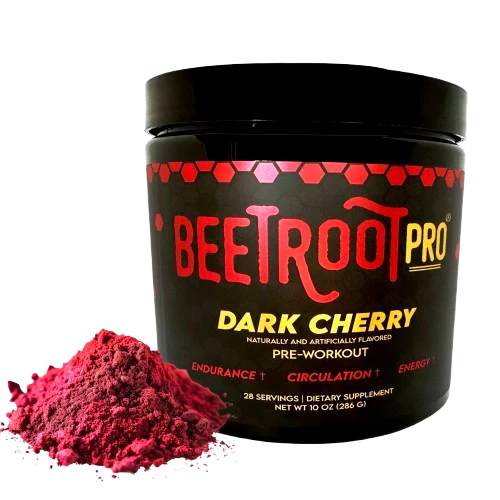
Beetroot Pro
Our product
- Patented betaine nitrate
- Acute Oxygen Efficiency
- 30 Calories Per Serving
Technical FAQ Extension
Can you take beetroot and caffeine together?
Yes. Dietary nitrate and caffeine work through completely different mechanisms and do not interfere with each other. Nitrate converts to nitric oxide for vasodilation and oxygen delivery, while caffeine blocks adenosine receptors in the central nervous system to reduce perceived effort. In trained cyclists, trials that tested both together (Lane 2014, Glaister 2015) found caffeine improved time-trial power and adding beetroot neither helped nor harmed that effect.
When should I take beetroot and caffeine before a race?
Take dietary nitrate (one serving of Beetroot Pro in water) at 90 minutes before the start, then caffeine at 30 to 45 minutes before. Plasma nitrite is rising at the start (in published studies on beet juice it peaks about 2 to 3 hours after a dose), while caffeine peaks 30 to 60 minutes after ingestion. This timing offset puts both compounds to work in the early part of the race.
Does caffeine cancel out the benefit of beetroot?
No. Early concern that caffeine vasoconstriction might counteract nitrate vasodilation was not confirmed at typical athlete doses. In Lane et al. (2014), 24 competitive cyclists given both caffeine and beetroot juice performed no worse than on caffeine alone, and Glaister et al. (2015) found the same in 14 female cyclists, although in both trials beetroot added no benefit on top of caffeine. The two also have independent tolerance profiles: caffeine tolerance builds with daily use, but dietary nitrate does not develop tolerance.
Related Articles
May 10, 2026
Beetroot Powder for Ironman: 5-Day Loading Protocol
Dietary nitrate loading for Ironman and 70.3 triathlon: the 5-day protocol, second-dose timing for events over 5 hours, and why betaine nitrate matters.

Apr 21, 2026
When to Take Beetroot Powder Before a Race
We recommend beetroot extract 60 to 90 minutes before a race. Here is why, what the timing research actually measured, and what nobody has tested yet.
Sep 27, 2026
Does Beetroot Lower Cholesterol? No. Here's What Does
Pooled trials found no significant effect of beetroot juice or powder on LDL or total cholesterol. What beetroot does help, and the fiber dose that lowers LDL.
*Technical citations and PubMed references are provided for performance education only. These statements have not been evaluated by the FDA.