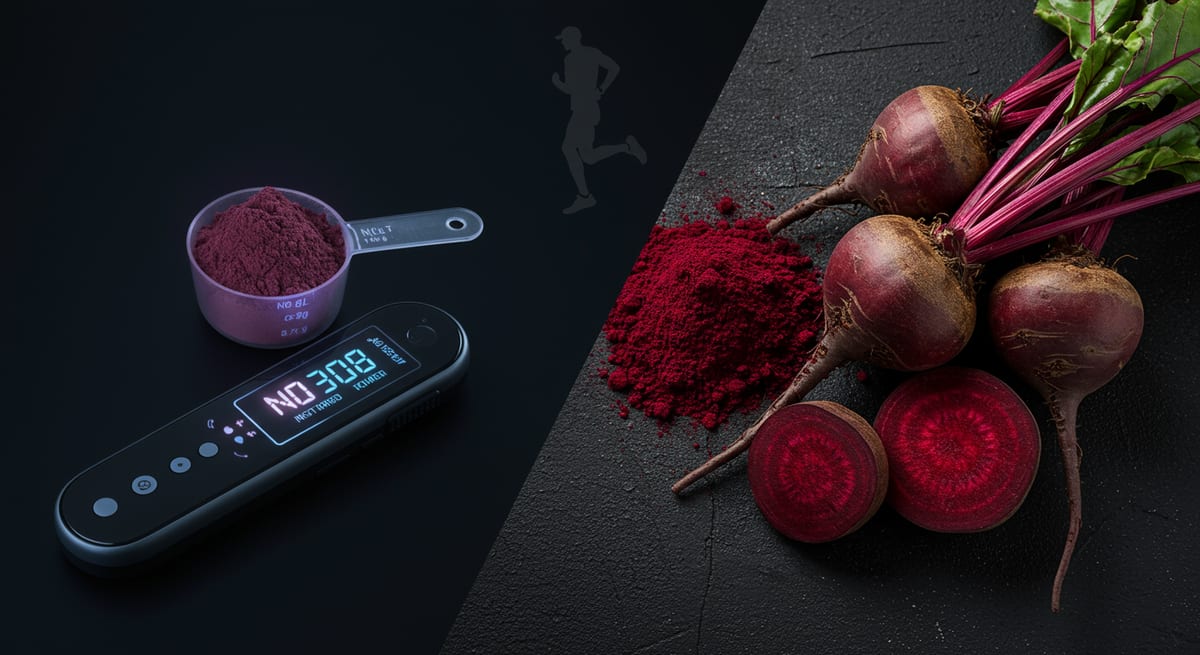
Beetroot Pro vs Momentous Beet: Which One Delivers?
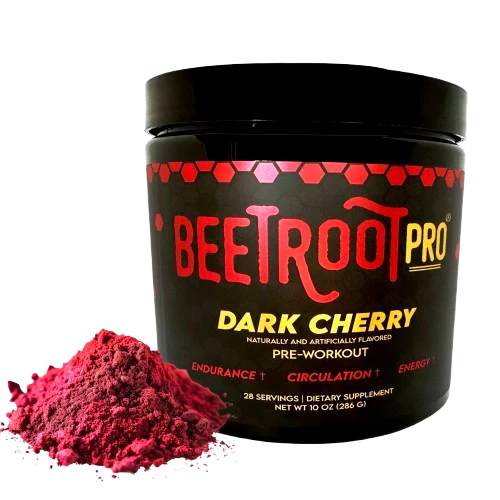
Beetroot Pro and Momentous Beet target the same nitric oxide pathway but make different bets. Beetroot Pro uses patented betaine nitrate (NO3-T) in a disclosed 8,000 mg standardized extract, which at 2% works out to roughly 160 mg of dietary nitrate per serving, removes the fiber for race-day GI tolerance, and prints 30 calories and 8 g of total carbohydrate per serving. Momentous Beet is a whole-food beet concentrate carrying NSF Certified for Sport, with the fiber present and no stated nitrate milligram amount. Choose Momentous if your sport mandates NSF certification; choose Beetroot Pro for a derivable nitrate figure and GI tolerance at long-course race intensity.
Two beet supplements, both positioned at serious endurance athletes, both priced at the premium tier. But the science behind standardized betaine nitrate and raw beet concentrate diverges significantly when you get to clinical dosing, consistency, and race-day reliability.
This is a direct comparison of Beetroot Pro® and Momentous Beet based on ingredients, dosing mechanism, and what each product actually asks you to trust.
The Mechanism: What Matters in a Beet Supplement
Beet supplements raise nitric oxide through the nitrate to nitrite to nitric oxide pathway: dietary nitrate is concentrated in saliva, reduced to nitrite by oral bacteria, absorbed into the bloodstream, then converted to nitric oxide in blood vessels and muscle. The variable that actually decides whether that pathway produces a measurable effect is milligrams of dietary nitrate per serving, not the beet source itself.
Before comparing labels, it helps to understand what you are actually buying. Beet supplements work through the nitrate-to-nitrite-to-nitric-oxide conversion pathway described in nitric oxide and beetroot powder's effect on athletic performance. Dietary nitrate is concentrated in saliva, reduced to nitrite by oral bacteria, absorbed into the bloodstream, and converted to nitric oxide in blood vessels and muscle tissue.
The critical variable is how much dietary nitrate you are actually ingesting. Raw beet concentrate varies batch to batch depending on growing conditions, soil nitrate levels, beet variety, and processing temperature. Standardized betaine nitrate delivers a fixed nitrate dose regardless of crop variation.
This distinction is not cosmetic. Clinical studies on nitrate and exercise performance (Lansley et al. 2011, Cermak et al. 2012) used defined nitrate doses to establish effects. When a supplement cannot guarantee that dose is consistent, translating those study results to your race day becomes a bet.
Ingredients: Label Comparison
Beetroot Pro lists a specific dietary nitrate dose (an 8,000 mg standardized beet extract, yielding about 160 mg of dietary nitrate) and removes the fiber; Momentous Beet is a whole-food beet concentrate that carries NSF Certified for Sport but does not state a nitrate milligram amount on the label. The table below lays the two labels side by side on the factors that decide a race-day outcome.
| Factor | Beetroot Pro | Momentous Beet |
|---|---|---|
| Nitrate source | Patented betaine nitrate (NO3-T®) | Concentrated beet root powder |
| Nitrate standardization | Yes, standardized per serving | Not standardized on label |
| Nitrate dose per serving | About 160 mg dietary nitrate (derived) | Variable (concentration listed, not nitrate mg) |
| Carbohydrate per serving | 8 g total carbohydrate, sweetened with xylitol | Varies by formulation |
| Fiber content | Removed (refined extract) | Present in concentrate |
| Stimulants | None | None |
| Form | Powder (mix with water) | Powder (mix with water) |
| Serving size | 2 scoops | Per label |
| Certifications | cGMP certified facility | NSF Certified for Sport |
| Price per canister | $40 to $50 | $40 to $50 |
The Standardization Argument
NSF Certified for Sport verifies that a product contains what its label says and no prohibited substances; it does not verify that the nitrate dose is clinically effective. Standardized betaine nitrate verifies the nitrate dose by chemistry. These are two different guarantees, and an athlete should know which one they are buying.
Momentous holds an NSF Certified for Sport certification, which is a genuine credential for drug-tested athletes. It certifies the product contains what the label says and no prohibited substances. What it does not certify is that the nitrate content is clinically effective, only that the listed ingredients are present.
Beetroot Pro uses NO3-T (patented betaine nitrate), a compound that delivers a defined nitrate dose by chemistry rather than by relying on natural beet concentration. Betaine nitrate is a salt of betaine and nitric acid: the nitrate content is fixed and verifiable because it is a synthetic compound, not a concentrated food.
For athletes who care about consistency, this matters on race day when stakes are high. The beet you consumed six months ago had a different soil history than the beet in your canister today.
GI Tolerance at Race Intensity
Whole-food beet concentrate retains insoluble fiber; a refined extract removes it. At race intensity, blood flow shifts away from the gut, and undigested fiber sitting in the stomach is a known trigger of GI distress over long-course events. This is the single biggest practical difference between the two formats for marathon and Ironman-distance racing.
Raw beet concentrate contains insoluble fiber. At race intensity, gut blood flow decreases as blood redirects to working muscles. Fiber that sits undigested in the gut at threshold pace is a known cause of GI distress in endurance racing.
Beetroot Pro removes the fiber during processing, retaining the nitrates without the insoluble bulk. Momentous Beet is a concentrated whole-food beet product and retains the fiber naturally present in beet. The full formulation is detailed on the Beetroot Pro nitric oxide pre-workout powder product page.
For a 5K this may be irrelevant. For a 70.3 or a marathon, GI tolerance at race intensity is a first-order concern, not a footnote.
Price and Value
Both products sit in the $40 to $50 range per canister, so price is not the deciding factor. The real question is what the premium buys: NSF lot-level certification with Momentous, or a standardized, fiber-free nitrate dose with Beetroot Pro. They are different value propositions at the same price.
Both products sit in the $40 to $50 range for a canister. At that price point, the differentiation comes down to what you are paying for: NSF certification (Momentous) vs. standardized nitrate dosing (Beetroot Pro). They are not the same value proposition.
If you compete in a sport with mandatory drug testing under NSF standards, Momentous's NSF certification is relevant protection. Beetroot Pro is manufactured in a cGMP certified facility with no prohibited stimulants, but has not pursued NSF Certified for Sport status.
If you compete in an age-group or amateur context where NSF certification is not required, the question becomes: do you want a standardized nitrate dose or a concentrated whole-food source?
Which Athletes Should Choose Each
The choice comes down to two questions: does your sport require NSF Certified for Sport, and does GI tolerance at race intensity matter for your event distance? NSF-tested athletes and whole-food purists lean toward Momentous Beet; long-course racers who need a defined, fiber-free nitrate dose lean toward Beetroot Pro.
Choose Momentous Beet if:
- You compete in a tested sport that specifically requires NSF Certified for Sport products
- You prefer whole-food sourcing over standardized compounds
- The GI impact of fiber is not a concern at your typical race intensity
Choose Beetroot Pro if:
- You want guaranteed nitrate consistency across every canister and every serving
- GI tolerance at race intensity is a priority (long-course racing, marathons, Ironman)
- You want to follow the 3-day or 5-day loading protocol with a defined dose each time
- You pair it with Endurance360 for the complete acute plus chronic system (see which to start first)
The Loading Protocol Question
Both products perform better with a loading protocol rather than a single race-morning dose. The nitrate pool in muscle tissue builds over 2 to 3 days of consistent dosing and peaks with a 3 to 5 day loading window, so timing matters as much as the source. A standardized nitrate dose lets you calculate how much nitrate is in your beet supplement at each stage of loading; a variable-concentration source makes that math a guess.
Both products work better with loading. The nitrate pool in muscle tissue saturates over 2 to 3 days of consistent dosing. A single serving on race morning is less effective than 3 to 5 days of accumulation.
With a standardized nitrate product, the loading math is straightforward: each dose delivers X mg nitrate, and you can calculate saturation timing accordingly. With variable-concentration beet concentrate, loading is more of an estimate.
Masters athletes (35+) in particular benefit from the extended 5-day loading protocol because eNOS activity declines with age. A defined dose makes that protocol reliable.
Summary
Beetroot Pro and Momentous Beet both target the nitrate to nitric oxide pathway, but they ask you to trust different things: a standardized 8,000 mg beet extract dose with the fiber removed (Beetroot Pro), or a whole-food beet concentrate with NSF Certified for Sport verification and no stated nitrate milligram amount (Momentous). Neither claim is disqualifying; the right pick depends on your certification requirements and GI tolerance at race pace.
Both Beetroot Pro and Momentous Beet target the same nitric oxide pathway and serve similar athletic populations. The key difference is what you are trusting: standardized chemistry with a defined nitrate dose (Beetroot Pro) or whole-food concentration with NSF certification (Momentous).
Neither is a wrong choice. But they are different bets, and understanding which bet aligns with your racing context and gut tolerance is worth the 5 minutes it takes to read the label.
Want the full field, not just these two? The best beetroot supplement buyer's guide ranks the leading options by disclosed nitrate dose, sugar per serving, certification, and price. The product comparison hub has additional head-to-head breakdowns if you are still deciding.
Technical
Beetroot Pro
Our product
- Patented betaine nitrate
- Acute Oxygen Efficiency
- 30 Calories Per Serving
Frequently Asked Questions
The most common questions on this comparison cover NSF certification status, nitrate dose disclosure, and drug-testing eligibility, answered directly below.
Is Momentous Beet NSF certified? Yes, Momentous Beet carries NSF Certified for Sport certification, which verifies the product contains listed ingredients and no prohibited substances.
Is Beetroot Pro NSF certified? No. Beetroot Pro is manufactured in a cGMP certified facility, which is an FDA-regulated manufacturing standard, but the product has not pursued NSF Certified for Sport certification. Drug-tested athletes should confirm requirements with their governing body before use.
Which has more nitrate: Beetroot Pro or Momentous Beet? Beetroot Pro specifies an 8,000 mg standardized beet extract per serving. Momentous Beet lists beet root concentrate but does not specify a mg nitrate amount on the label. The actual nitrate content of beet concentrate varies by batch.
Can I use Beetroot Pro if I am drug tested? The active ingredients in Beetroot Pro are not on the WADA or NCAA prohibited substance lists. The product is stimulant-free and manufactured in a cGMP certified facility. The product itself has not been independently certified by WADA, NCAA, or USADA. Drug-tested athletes should always confirm with their governing body before use.
Technical FAQ Extension
What is the difference between Beetroot Pro and Momentous Beet?
The key difference is what you trust for your nitrate dose. Beetroot Pro uses patented betaine nitrate (NO3-T) standardized to 160 mg dietary nitrate per serving. Momentous Beet uses concentrated beet root powder that lists concentration but not a standardized nitrate mg amount, so actual nitrate content varies by batch with growing conditions and processing. Both target the same nitric oxide pathway.
Is Momentous Beet NSF certified and is Beetroot Pro?
Momentous Beet carries NSF Certified for Sport certification, which verifies listed ingredients and no prohibited substances. Beetroot Pro is manufactured in a cGMP certified facility but has not pursued NSF Certified for Sport status. NSF certification confirms what is in the product, not that the nitrate content is clinically effective. Drug-tested athletes should confirm requirements with their governing body.
Which beet supplement is better for long-course racing?
For long-course events like marathons, 70.3, or Ironman, GI tolerance at race intensity is a first-order concern. Beetroot Pro removes the fiber during processing, retaining nitrates without insoluble bulk that can cause GI distress when gut blood flow drops at threshold pace. Momentous Beet is a whole-food concentrate that retains the fiber naturally present in beet. For a 5K this distinction may be irrelevant.
Related Articles
Apr 13, 2026
Beetroot Powder vs Beet Juice: Which Wins? (2026)
Compared head to head: nitrate dose reliability, sugar content, GI tolerance, and cost. See which form, beet powder or beet juice, wins for athletes.
Sep 27, 2026
Does Beetroot Lower Cholesterol? No. Here's What Does
Pooled trials found no significant effect of beetroot juice or powder on LDL or total cholesterol. What beetroot does help, and the fiber dose that lowers LDL.

Aug 9, 2026
Beetroot Benefits for Women: BP, Iron, Menopause
What beetroot does for women and what it does not. The blood pressure evidence, the iron interaction that gates it, menopause, dosing, and pregnancy safety.
*Technical citations and PubMed references are provided for performance education only. These statements have not been evaluated by the FDA.