Why Your Beet Supplement Isn't Working: 5 Fixes: The Short Answer
Beet supplements usually fail from protocol errors, not bad science. The five most common: a dose below the 300 to 600 mg nitrate clinical threshold; dosing too close to the start (we recommend 60 to 90 minutes before); antibacterial mouthwash on race morning, which blunted the rise in plasma nitrite by roughly a third to a half in one trial; skipping the 3-day loading protocol; and elite athletes (VO2max over 65) expecting the larger gains seen in recreational athletes.
The r/cycling and r/AdvancedRunning forums are full of posts that go something like this: "I tried beet supplements for three months and saw zero difference. The science must be overhyped."
The science is not overhyped. But the protocol is almost always wrong.
Dietary nitrate supplementation has one of the strongest evidence bases in endurance sports science. Meta-analyses find a clear benefit for how long you can hold a hard fixed effort, and a smaller, less certain one for time trials:
| Study | Scope | Dose | Result |
|---|---|---|---|
| Hoon et al., 2013 | 17 studies, healthy individuals | 300 to 600 mg nitrate | Moderate benefit for time to exhaustion (effect size 0.79); small, non-significant effect on time trials (0.11) |
| McMahon et al., 2017 | 47 studies (76 trials), healthy adults | Varied | Small to moderate benefit for time to exhaustion (0.33); time-trial effect not significant |
That is real, and Hoon et al. noted the benefits showed up more often in recreationally active people and with several days of loading, which is exactly where most protocols go wrong.
But that evidence is based on specific protocols. Deviation from those protocols produces weak or no results. Here are the five most common deviations.
Failure 1: Your Dose Is Below the Clinical Threshold
Underdosing is the single most common reason a beet supplement fails to work. The performance research is built on 300 to 600 mg of dietary nitrate per acute dose, but a significant share of commercial beet products deliver only 5 to 100 mg per serving, well below the therapeutic range. See how much nitrate is actually in a beet supplement for a full label-reading breakdown.
The problem: The performance research is based on 300 to 600 mg of dietary nitrate per acute dose. A significant portion of commercial beet supplements contain 5 to 100 mg per serving, well below the therapeutic range.
How to diagnose it: Check your supplement label for a specific milligram amount of dietary nitrate (not just the total weight of beet powder). If the label does not list "mg of nitrate" or "mg NO3," you do not know your dose.
The fix: Switch to a product that discloses its nitrate content and delivers 300 mg or more in each dose. Or calculate how many servings of your current product would be needed to reach 300 mg and adjust accordingly (though this often makes the per-dose cost substantially higher).
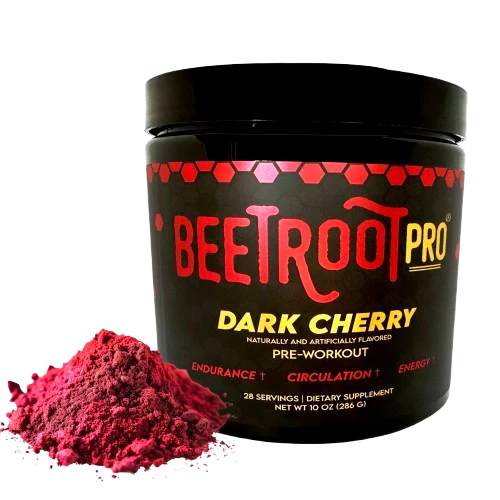
For reference, one 2-scoop serving of Beetroot Pro yields about 160 mg of dietary nitrate, below that figure.
Failure 2: Your Timing Is Off
A nitrate dose taken right at the start line is too late: plasma nitrite has barely begun to rise. In published studies on beet juice it peaks about 2 to 3 hours after a dose and stays elevated for several hours, so we recommend a dose 60 to 90 minutes before the start, which covers the start and the hours of racing after it. A full walkthrough is in the 60 minute timing rule for beetroot extract.
The problem: Nitrate is not a stimulant. Oral bacteria have to convert it to nitrite before it does anything, so a dose taken 10 or 15 minutes before the gun has barely started that conversion when the race begins.
No study has measured plasma nitrite timing for a standardized extract, so we do not claim extract and juice need different timing. The published kinetics come from beet juice and sodium nitrate.
The fix: Take Beetroot Pro 60 to 90 minutes before the gun. Dosing 2 to 3 hours out, as the IOC consensus protocol does, is also reasonable.
Why Is Your Beet Supplement Not Working?
Question 1 of 5
How much nitrate are you actually getting per serving?
Failure 3: You Used Mouthwash on Race Morning
Antibacterial mouthwash on race morning can blunt the rise in plasma nitrite, the precursor to nitric oxide, by roughly a third to a half. The nitrate-to-nitric-oxide conversion depends on oral bacteria in saliva, and chlorhexidine, cetylpyridinium chloride, and alcohol-based rinses suppress those bacteria for 1 to 5 hours. Full detail in the race-morning mouthwash rule.
The problem: The nitrate-to-nitric-oxide conversion requires oral bacteria in your saliva. Antibacterial mouthwash (chlorhexidine, cetylpyridinium chloride, alcohol-based rinses) suppresses these bacteria for 1 to 5 hours.
| Study | Population | Dose | Result |
|---|---|---|---|
| Kapil et al., 2013 | 19 healthy volunteers | No supplement; 7 days of chlorhexidine mouthwash | Oral nitrite production down 90%, plasma nitrite down 25%, blood pressure up 2 to 3.5 mmHg |
| McDonagh et al., 2015 | 12 healthy volunteers | Beetroot juice, 6.2 mmol nitrate twice daily for 6 days, with mouthwash 3 times daily | Rise in plasma nitrite blunted by about half with chlorhexidine and by about 30% with a weaker rinse |
The fix: Skip antibacterial mouthwash on race morning. Brush normally, do not rinse with any antibacterial product. Full explanation in: The Race-Morning Mouthwash Rule.
Failure 4: You Skipped the Pre-Loading Protocol
A single acute dose of dietary nitrate produces a meaningful nitric oxide spike, but skipping the 3-day loading protocol leaves performance on the table. Loading two servings daily for the 3 days before a race saturates the tissue nitrate pool and extends the vasodilation window beyond what a single race-morning dose can achieve.
The problem: A single acute dose produces a meaningful nitric oxide spike. But a 3-day loading protocol saturates the nitrate pool in your tissues, extending the vasodilation window and potentially compounding the acute dose effect.
Athletes who take beet supplements only on race day may still see a benefit, but they are leaving performance on the table.
The fix: For key events, use the 3-day loading protocol: two servings daily (morning and evening) for the 3 days before your race, then the acute dose on race morning. Use the race week training and nutrition plan tool to generate the exact timeline for your race date.
Failure 5: You Are an Elite Athlete Expecting the Same Effect as the Studies
Elite athletes see smaller acute performance gains from dietary nitrate than recreational athletes, not because the supplement fails but because a highly trained cardiovascular system has less room to improve. A 2014 review found benefits in sub-elite cyclists (VO2max about 53 to 63) but several null results at 60 to 70, and a 2015 trial found gains shrank as fitness rose.
The problem: Jones's 2014 review in Sports Medicine found improved time-trial performance in trained but sub-elite cyclists (VO2max roughly 53 to 63), while several studies in highly trained athletes (VO2max 60 to 70) found no effect. Porcelli et al. (2015) tested 21 people spanning a VO2peak of 28 to 82 and found that both the drop in oxygen cost and the 3 km time-trial gain shrank as fitness rose. The reason is physiological: elite athletes already have highly optimized cardiovascular and muscular oxygen systems. There is less low-hanging fruit for nitric oxide to improve.
This does not mean beet supplementation does nothing for elite athletes. It means the acute nitric oxide mechanism produces smaller percentage gains in already-efficient systems.
The fix: Calibrate your expectations to your training level.
- Recreational to moderate athletes (VO2max 45 to 60): expect measurable improvements in time-trial performance and oxygen economy.
- Highly trained athletes (VO2max 65+): the primary benefit may be recovery (betalains reduce oxidative stress and DOMS) rather than acute performance. Focus on the loading and recovery protocol rather than solely race-day performance metrics.
The Diagnostic Checklist
Five factors explain nearly every case of a beet supplement producing no measurable result: dose below 300 mg of nitrate, dosing too close to the start, antibacterial mouthwash on race morning, no 3-day loading protocol, and expectations uncalibrated to training level. Working through them in order isolates the actual cause instead of guessing.
If your beet supplement is not working, run through these in order:
- Does the label list a specific milligram amount of dietary nitrate? Is it 300 mg or more?
- Are you taking it early enough (we recommend 60 to 90 min before the start, not at the start line)?
- Did you use antibacterial mouthwash within 3 hours of taking it?
- Did you use the 3-day loading protocol before key events?
- Are your expectations calibrated to your fitness level?
Fix the first failure you find. Test for 3 to 4 weeks with the corrected protocol before making further adjustments.
Technical
Beetroot Pro
Our product
- Patented betaine nitrate
- Acute Oxygen Efficiency
- 30 Calories Per Serving
FDA Disclaimer: These statements have not been evaluated by the Food and Drug Administration. This product is not intended to diagnose, treat, cure, or prevent any disease.
Technical FAQ Extension
Why is my beet supplement not working?
The five most common failures: (1) using antibacterial mouthwash on supplement days, which kills the oral bacteria needed for nitrate conversion; (2) underdosing -- most whole-food products contain too little nitrate per serving; (3) taking it too close to exercise -- allow 60 minutes for extract or 2-3 hours for juice; (4) inconsistent use without a loading plan; (5) high-dose antioxidant supplements (vitamin C, E) taken at the same time, which can blunt nitric oxide availability.
Does vitamin C interfere with beetroot powder?
High-dose antioxidants taken immediately after beetroot supplementation can reduce nitric oxide bioavailability in the short window post-ingestion. The evidence specifically concerns doses above 1g of vitamin C taken within 30-60 minutes of nitrate consumption. Normal dietary vitamin C from food is not a concern. Separate your vitamin C supplement from your beetroot dose by at least 1-2 hours.
How do I know if my beetroot supplement has enough nitrate?
The clinical performance dose is 300-500mg of inorganic nitrate. Most commercial beet products do not disclose nitrate content on the label, making it impossible to verify the dose. Look for products that specify nitrate content (mg) per serving, not just the weight of the beet extract. Standardized extracts with third-party nitrate certification are the only reliable way to ensure you are hitting the clinical dose.
Related Articles

Apr 24, 2026
How Much Nitrate Is In Your Beet Supplement?
Commercial beet products deliver 4 to 496mg of nitrate per serving, a 100x range with no labeling standard. The clinical dose is 300 to 600mg. Check yours.
Apr 13, 2026
Beetroot Powder vs Beet Juice: Which Wins? (2026)
Compared head to head: nitrate dose reliability, sugar content, GI tolerance, and cost. See which form, beet powder or beet juice, wins for athletes.
Apr 30, 2026
Beetroot Pro vs Momentous Beet: Which One Delivers?
Beetroot Pro vs Momentous Beet on nitrate dose, standardization, sugar, fiber, and NSF certification. Betaine nitrate vs whole-food beet concentrate.
*Technical citations and PubMed references are provided for performance education only. These statements have not been evaluated by the FDA.