Beta-Alanine for Endurance: Lactic Acid Buffering: The Short Answer
Beta-alanine is the most effective supplement for buffering the lactic acid that causes the burn during threshold and VO2 max efforts. It works by raising muscle carnosine, a pH buffer, over a loading period of 10 to 14 days minimum (4 to 8 weeks for maximum saturation). The effective dose is 3.2 to 6.4 grams daily. It is not an acute supplement: taking it before a race does nothing. The harmless tingling (paresthesia) only tells you the dose crossed the threshold that irritates skin nerves, not that it is working: carnosine loads perfectly well at doses too small to tingle. Benefits are largest in efforts lasting 1 to 4 minutes: intervals, climbs, breakaways, and final sprints.
For cyclists and runners, the burn in the legs during a threshold interval or a final sprint is the body reaching a metabolic limit. That burn is the accumulation of hydrogen ions, which lower the pH of your muscle tissue and shut down contraction. Beta-alanine is the most effective nutritional tool for delaying that fatigue by increasing your natural buffering capacity.
How Does Beta-Alanine Work?
Beta-alanine is an amino acid that combines with histidine to produce carnosine, which is stored in skeletal muscle and acts as a primary pH buffer. During high-intensity exercise your muscles flood with hydrogen ions; carnosine soaks them up, keeping pH stable so the muscle can keep firing at high power. More carnosine means more buffering capacity, which means you reach the failure point later. Beta-alanine supplementation is the proven way to raise muscle carnosine.
The limiting factor on muscle carnosine is the availability of beta-alanine, not histidine, which is why supplementing beta-alanine directly raises carnosine while eating more protein does not. This is the entire mechanism: more beta-alanine in, more carnosine stored, more hydrogen ions buffered before the muscle quits.
Beta-Alanine for Cyclists and Runners
Beta-alanine delivers its biggest benefit in efforts lasting roughly 1 to 4 minutes, which is exactly the threshold and VO2 max zone that decides endurance races. For a cyclist that means holding power through a sustained climb or covering a 2-minute attack; for a runner it means the final kick and repeated hard intervals. Meta-analyses show 2 to 3 percent performance improvements in this duration window, which is the difference between holding a wheel and getting dropped.
The endurance-specific value shows up in three race situations:
- Interval performance: Hold target power for the entire set, not just the first three reps. Carnosine buffering keeps later intervals from collapsing.
- The final sprint: After hours of racing, beta-alanine provides the pH buffer for a 30-second maximal effort when it counts.
- Sustained climbs and time trials: Maintain a higher critical power across the duration of the effort instead of fading as acidity builds.
This is why beta-alanine, often dismissed as a bodybuilding supplement, is arguably more valuable for endurance athletes than for strength athletes.
The "Endurance Tingles" (Paresthesia)
The tingling sensation on the skin after a beta-alanine dose is called paresthesia. It is harmless, caused by beta-alanine binding to nerve receptors near the skin, and is not an allergic reaction. It typically appears 20 to 60 minutes after dosing and fades over the first week or two as your body adapts. Splitting the dose into smaller amounts through the day reduces it. It is not a sign the dose is working: the tingle threshold and the carnosine-loading threshold are different things, which is why sustained-release forms load muscle carnosine without producing it.
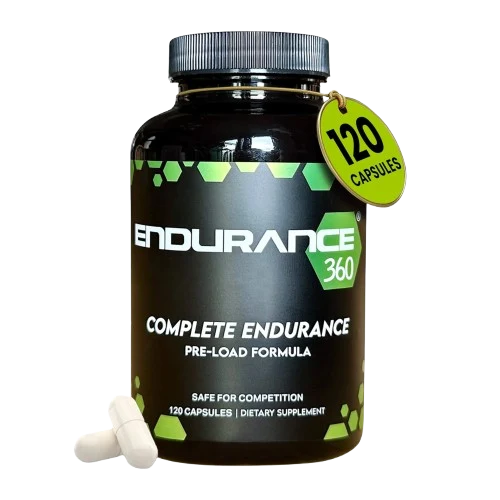
Clinical research has confirmed the sensation is benign, and it fades with continued use. Worth being straight about where our own product sits here: Endurance360® contains beta-alanine inside its 2,000 mg Endurance Blend, which it shares with creatine, so it is not a substitute for a full standalone loading dose. If your goal is specifically to saturate muscle carnosine, take beta-alanine on its own at the researched amount and treat Endurance360® as something you take alongside it, not instead of it. See how much beta-alanine actually causes the tingle for the dose thresholds.
Dosing: Why Loading Is Mandatory
Beta-alanine is a loading supplement, not an acute one. Taking it 30 minutes before a race produces no benefit because carnosine is built up in muscle tissue over weeks. The effective dose is 3.2 to 6.4 grams daily. Significant performance benefits appear after 10 to 14 days, and carnosine levels keep rising for up to 4 to 8 weeks of continued supplementation. Daily consistency, not pre-race timing, is what matters.
| Goal | Protocol | Effect |
|---|---|---|
| Saturation | 10 to 14 day loading | Initial increase in buffering capacity |
| Maintenance | Daily intake | Prevents carnosine washout |
| Peak race | 4 to 8 week loading | Maximal carnosine storage |
The practical implication: start your beta-alanine loading at least two weeks before a goal event, and ideally four or more. If you start the week of the race, you have missed the window.
Endurance360® includes beta-alanine alongside creatine in a disclosed 2,000 mg Endurance Blend. Taking 5 capsules daily contributes toward carnosine build across the loading window without measuring powder or managing paresthesia spikes from high single doses. The label does not publish the beta-alanine and creatine split inside that blend, so treat it as a daily contribution rather than a standalone loading dose.
Shop Endurance360®Beta-Alanine vs Creatine: Do You Need Both?
Beta-alanine and creatine solve different problems and the strongest endurance protocols include both. Creatine regenerates ATP for short, explosive efforts and stores more glycogen; beta-alanine buffers the lactic acid that builds during the sustained 1 to 4 minute efforts that follow. Creatine raises the power ceiling, beta-alanine extends how long you can hold near it. They are complementary, not interchangeable.
If you are choosing where to spend your supplement budget, the answer depends on your event, but most endurance athletes doing interval and threshold work benefit from running both. We break the comparison down fully in creatine vs beta-alanine and cover the creatine side in creatine for endurance athletes and cyclists.
The Verdict
Beta-alanine is a non-negotiable part of an endurance system for threshold and VO2 max work, but only if you load it correctly: 3.2 to 6.4 grams daily for at least 10 to 14 days, ideally 4 to 8 weeks, before the effect matters on race day. Skip the loading window and you skip the benefit entirely, no matter how good the single-dose timing is.
If you want to delay the burn and extend your threshold capacity, beta-alanine is a non-negotiable part of an endurance system, provided you load it properly and start early enough. Use the threshold zones calculator to confirm you are training in the 1 to 4 minute intensity window where beta-alanine's buffering effect actually shows up, then build the loading window backward from your goal race date.
Endurance360® pairs beta-alanine with creatine in a disclosed 2,000 mg Endurance Blend, alongside cordyceps, covering the buffering, ATP regeneration, and oxygen-efficiency pathways in one daily dose. The label does not publish the split between beta-alanine and creatine inside that blend, so treat it as a daily contribution toward the 4 to 6 week carnosine build rather than a standalone loading dose. See how it compares against the category leader in Endurance360 vs Optygen HP, and time your loading window with the 14-day loading plan.
References:
- Harris RC, et al. (2006). The absorption of orally supplied beta-alanine and its effect on muscle carnosine synthesis.
- Hill CA, et al. (2007). Influence of beta-alanine supplementation on skeletal muscle carnosine concentration and high intensity cycling capacity.
- Hobson RM, et al. (2012). Effects of beta-alanine supplementation on exercise performance: a meta-analysis. Amino Acids.
- Saunders B, et al. (2017). Beta-alanine supplementation to improve exercise capacity and performance: a systematic review and meta-analysis. British Journal of Sports Medicine.
FDA Disclaimer: These statements have not been evaluated by the Food and Drug Administration. This product is not intended to diagnose, treat, cure, or prevent any disease.
Maximize your results: Learn how to build your nutrition system for peak performance in our VO2 Max Supplements Guide.
Technical FAQ Extension
How does beta-alanine help endurance athletes?
Beta-alanine raises muscle carnosine concentrations, which buffer hydrogen ions produced during high-intensity exercise. Carnosine acts as an intramuscular pH buffer, delaying acidosis at threshold intensity. A 3 to 6 gram daily loading plan over 10 to 14 days saturates muscle carnosine by 40 to 80%. Meta-analyses show a 2 to 3% improvement in exercise capacity for sustained high-intensity efforts lasting 1 to 4 minutes and meaningful benefits in threshold work during endurance events.
Does beta-alanine cause tingling?
Yes. The pins-and-needles sensation (paresthesia) is a benign, temporary side effect of beta-alanine supplementation. It typically begins 15 to 30 minutes after ingestion and subsides within an hour. It does not indicate harm. Splitting the dose (2g morning, 2g afternoon) or using sustained-release forms reduces paresthesia significantly without affecting carnosine loading efficacy.
How long does it take for beta-alanine to work?
Full muscle carnosine saturation from beta-alanine loading requires 4 to 12 weeks at 3 to 6 grams per day. Meaningful performance benefits begin around week 2 to 3 but peak gains require consistent daily use for 6 to 12 weeks. Maintenance after saturation requires 1.5 to 3 grams per day.
Related Articles

Jan 30, 2023
Creatine vs Beta-Alanine for Endurance Athletes (2026)
Creatine and beta-alanine fuel different systems: creatine regenerates ATP for short bursts, beta-alanine buffers lactic acid. When to run each.
Aug 20, 2026
Beta-Alanine Itch: Why It Happens and How to Stop It
The beta-alanine tingle starts near 800 mg in one dose, peaks around 20 minutes, and fades within an hour. Why it happens, and how to stop it.
Aug 17, 2026
Best Supplements for Lactic Acid: What Actually Works
Ranked by evidence: beta-alanine, sodium bicarbonate, and exogenous lactate salts, plus the physiology mistake some lactic acid products are built on.
Complete
Endurance 360
Our product
- Chronic Lactic Acid Buffering
- ATP & Cellular Saturation
- Cordyceps & Adaptogen Matrix
*Technical citations and PubMed references are provided for performance education only. These statements have not been evaluated by the FDA.