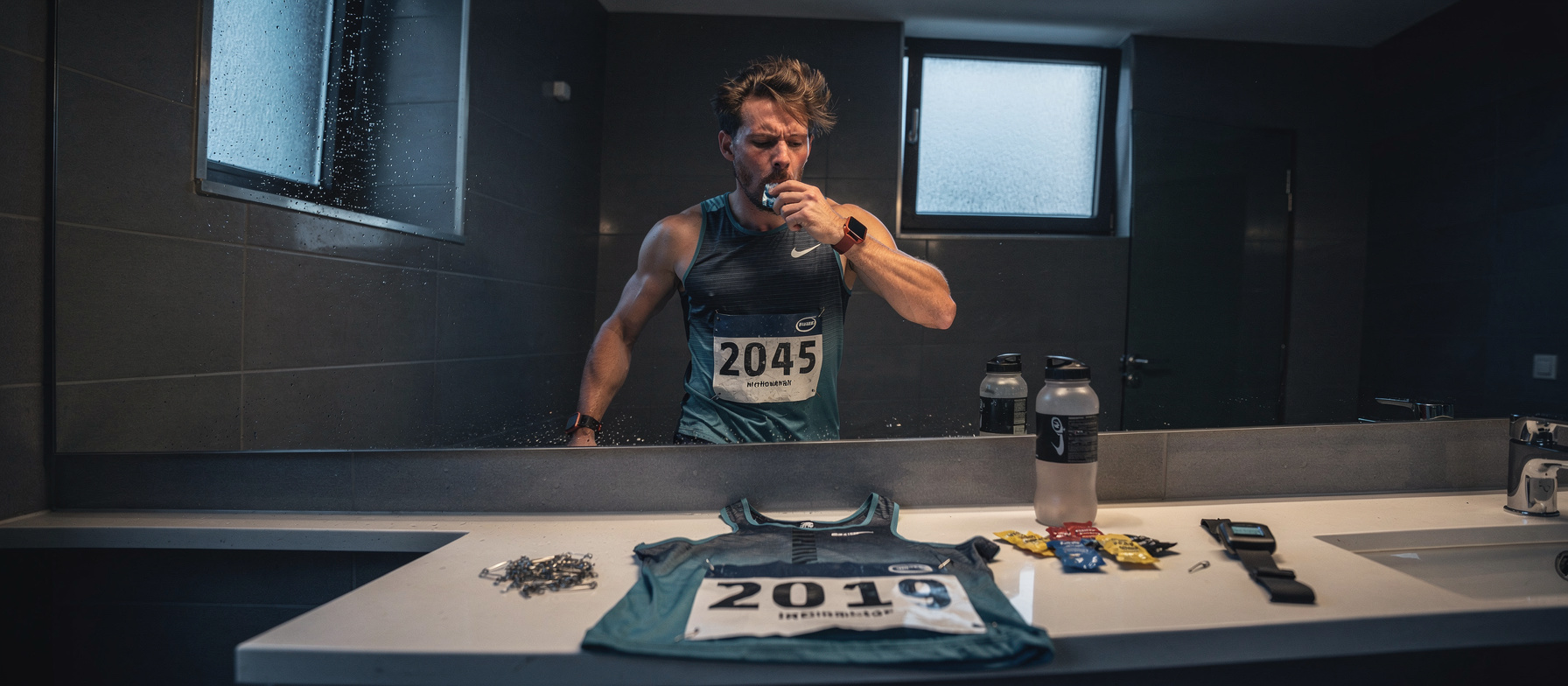
The Mouthwash Mistake That Kills Your Beet Dose: The Short Answer
Antibacterial mouthwash kills the oral bacteria (Streptococcus salivarius, Veillonella) responsible for converting dietary nitrate to nitrite, the first step in the nitrate to nitric oxide pathway. In human trials, a chlorhexidine rinse abolished nitrite formation in saliva and markedly blunted the rise in blood nitrite after a nitrate dose. The fix is simple: skip antibacterial rinses on key training and race mornings. Brush normally with fluoride toothpaste, do not rinse. Plain saltwater or fluoride-only rinses are fine. Most athletes have never been told this.
You took your beet supplement 60 minutes before the start. You followed the loading protocol. You feel hydrated, you slept well, your power numbers in the warmup were sharp. The gun goes off and somewhere into the second hour you realize the dose did nothing.
There is a good chance you used mouthwash that morning.
This is not a fringe edge case. Antibacterial mouthwash is part of the morning routine for a large share of adults. If you are in that group and you race in the morning, your nitrate supplement is almost certainly underperforming, possibly delivering close to zero benefit. I learned this the hard way after a few inexplicably flat race mornings and one afternoon spent in PubMed.
Here is the mechanism, the evidence, and the fix.
The Two-Step Conversion That Makes Beetroot Work
Dietary nitrate is converted to nitric oxide via a mandatory two-step pathway: first, commensal bacteria living on the dorsal surface of the tongue reduce nitrate (NO3-) to nitrite (NO2-) in saliva over 1 to 2 hours; second, nitrite is converted to nitric oxide in working muscle tissue under acidic, low-oxygen conditions. The oral bacteria step is non-negotiable; without it the supplement does nothing.
Dietary nitrate (NO3) from beet juice or beet powder does not become nitric oxide directly. The conversion takes two steps, and the first one happens in your mouth.
Step one (mouth): Oral bacteria, primarily Streptococcus salivarius and several Veillonella species, reduce nitrate (NO3) to nitrite (NO2) in your saliva. This starts within 15 to 30 minutes of swallowing a beet dose and continues as long as the bacteria are alive and active.
Step two (stomach and bloodstream): Gastric acid converts the nitrite into nitric oxide (NO). The nitric oxide enters circulation, dilates blood vessels, and improves oxygen delivery to working muscle.
Without step one, step two barely happens. The conversion rate of nitrate to nitric oxide through non-oral pathways is dramatically lower. The stomach is not equipped to do the job your mouth bacteria do. Cut the bacteria, and the pipeline collapses upstream.
What Mouthwash Does to This Process
Antibacterial mouthwash, chlorhexidine above all, kills the oral bacteria that convert nitrate to nitrite. In human trials, a chlorhexidine rinse abolished salivary nitrite formation after a nitrate dose (Govoni 2008), and a week of chlorhexidine use cut oral nitrite production by 90% and plasma nitrite by 25% (Kapil 2013). In rats, mouthwash abolished nitrate's blood-pressure-lowering effect (Petersson 2009).
Antibacterial mouthwash works by killing bacteria. That is the entire mechanism. The problem is it does not distinguish between the cavity-causing bacteria you want to suppress and the performance-relevant nitrate-reducing bacteria you absolutely need.
Most of that evidence measures the first step, nitrite in saliva and blood, rather than performance. We know of no published trial that has measured endurance performance after mouthwash on a nitrate-dosing day; the study table below shows what each trial actually found.
The type of rinse matters. When one trial had men rinse hourly with three commercial products after a beet juice dose, chlorhexidine and a cetylpyridinium chloride (CPC) rinse cut plasma and salivary nitrite, while an alcohol-based antiseptic rinse behaved much like water (Woessner 2016):
- Chlorhexidine (prescription rinses, Peridex, some periodontal washes): the strongest suppression in every trial that tested it
- Cetylpyridinium chloride (many over-the-counter Crest and Colgate rinses): grouped with chlorhexidine in the one head-to-head comparison
- Alcohol-based antiseptic rinses (most generic "antiseptic" mouthwashes): the weakest effect in that comparison, though still not worth the risk on race morning
If you rinse at 6:30 AM and take your beet supplement at 7:00 AM for an 8:00 AM start, you are asking the dose to work with part of its conversion machinery switched off. No trial has put a percentage on the performance cost, but the nitrite data leave little reason to take the chance.
| Product type | Oral bacteria impact | Safe before beetroot? |
|---|---|---|
| Antibacterial mouthwash (CPC) | Strongly suppressed nitrite formation in a head-to-head test | No - avoid entirely on race day |
| Chlorhexidine mouthwash | Strongest suppression; cut oral nitrite production by 90% | No - avoid 24 hours before |
| Alcohol-based mouthwash | Weakest of the three in a head-to-head test | No - avoid race morning |
| Fluoride toothpaste | Negligible effect on oral flora | Yes - use normally |
| Oil pulling | Removes some bacteria | Caution - use well before race |
| Water rinse only | No effect | Yes - safe anytime |
| Study | Population and protocol | Nitrite effect | Outcome measured |
|---|---|---|---|
| Govoni et al. (2008), Nitric Oxide | 7 healthy adults, chlorhexidine rinse before a sodium nitrate dose | Abolished salivary nitrite formation, markedly blunted the plasma nitrite rise | Nitrite only; blood pressure not measured |
| Petersson et al. (2009), Free Radical Biology and Medicine | Rats on nitrate-supplemented water, antiseptic mouthwash twice daily | Markedly reduced circulating nitrite | Nitrate's blood-pressure-lowering and gastroprotective effects abolished |
| Kapil et al. (2013), Free Radical Biology and Medicine | 19 healthy adults, 7 days of chlorhexidine, no nitrate supplement | Oral nitrite production down 90%, plasma nitrite down 25% | Systolic and diastolic blood pressure up 2 to 3.5 mmHg |
| McDonagh et al. (2015), International Journal of Sports Medicine | 12 adults, beet juice twice daily for 6 days, rinsing 3 times a day | Plasma nitrite rise blunted by chlorhexidine and, less so, by a weaker rinse | Resting blood pressure unchanged; blood pressure during walking higher with chlorhexidine |
| Woessner et al. (2016), Nitric Oxide | 12 men, beet juice (8.4 mmol nitrate) then hourly rinses for 4 hours | Stepwise drop in nitrite; chlorhexidine and CPC strongest, alcohol antiseptic weakest | Blood pressure response differed by rinse; performance not measured |
Beetroot Pro delivers standardized dietary nitrate to lower the oxygen cost of every effort.
What Is Safe
Most non-antibacterial oral hygiene is safe to use on dosing days: regular fluoride toothpaste, dental floss, water flossers, alcohol-free fluoride mouthwash (e.g. ACT, Listerine Total Care Zero Alcohol), and mechanical tongue scrapers used gently. The active ingredient to avoid is chlorhexidine, cetylpyridinium chloride (CPC), or alcohol concentrations above 20%, all of which kill the oral nitrate-reducing bacteria population.
Things that do not kill the conversion:
- Plain fluoride toothpaste, brushed and spit, no rinsing. The bacteria live primarily in the crypts of your tongue, not on tooth surfaces, so mechanical brushing does not significantly disrupt them.
- Saltwater rinse. Fine. No antibacterial effect on the relevant species at typical concentrations.
- Fluoride-only rinses with no chlorhexidine, no CPC, no alcohol antiseptic. Read the active ingredients label.
- Xylitol rinses specifically marketed as non-antibacterial. Confirm on the label.
- Tongue scraping (sometimes recommended for breath): unclear, but probably mild and short-lived suppression. I avoid it on race morning to be safe.
My Race-Morning Oral Hygiene Routine
My race-morning oral hygiene routine: regular fluoride toothpaste, gentle tongue brushing (no aggressive scraping), no mouthwash of any kind for 3 days before the race, and a quick water rinse 30 minutes after the pre-race beetroot dose to clear any residue without disturbing the bacterial population. The same protocol applies to A-priority training sessions where I want the full nitrate effect.
For target events:
- Night before: normal brushing and flossing. No antibacterial mouthwash. If you want a rinse, plain water or fluoride-only.
- Race morning, on waking: brush with fluoride toothpaste, spit, do not rinse.
- Beet dose: 90 minutes before start, with 8 oz of water. A standardized dose, like the measured serving in Beetroot Pro's disclosed-dose beet powder, removes the guesswork of eyeballing beet juice concentration, so the only variable left to protect on race morning is your oral bacteria. See our 60-minute timing guide for how dose timing and mouthwash timing interact.
- No coffee or caffeine source between brushing and the beet dose (acidic coffee on a freshly-brushed mouth is mostly aesthetic, but very hot or very acidic drinks can transiently affect the oral environment). Caffeine itself, 45 minutes before start, is fine.
For daily training, this is less strict. I skip antibacterial mouthwash within 4 hours of any threshold or interval session, but I am not paranoid about easy aerobic days.
What If You Need Antibacterial Rinse for Dental Reasons
If your dentist has prescribed chlorhexidine for periodontal treatment, follow the dental protocol; the medical need outweighs the supplement effect. During chlorhexidine use, expect the beetroot performance benefit to be partial or absent. Once the dental treatment ends, allow 4 to 5 days for the oral bacterial population to repopulate before resuming pre-race nitrate dosing for a key event.
If your dentist has you on chlorhexidine for periodontal treatment, that is a real medical need and you should not skip it. Two options:
- Schedule the rinse for the evening on rest days, not race or hard-session mornings. An evening rinse leaves the longest possible gap before a morning dose.
- Cycle your beet supplementation around your rinse schedule if both are non-negotiable. The bacteria recover within 24 to 48 hours of stopping antibacterial rinse.
Adjacent Things That Also Hurt the Conversion
Beyond mouthwash, four other inputs disrupt the nitrate-to-nitric-oxide conversion: high-dose vitamin C taken within the same window (over 500 mg blunts the nitrite step), proton pump inhibitors (omeprazole and similar reduce stomach acidity which the nitrite step depends on), recent antibiotic courses (5 to 7 days post-course is the bacterial recovery window), and aggressive tongue scraping that physically removes the bacterial layer.
Mouthwash is the most common culprit, but not the only one.
- Proton pump inhibitors (omeprazole, esomeprazole, others) reduce stomach acid and impair the nitrite to nitric oxide step. Athletes on long-term PPIs typically see a blunted nitrate response. If you can manage your reflux with diet or H2 blockers instead, you will likely get more out of beet supplementation. Discuss with your doctor before changing any prescription.
- Smoking disrupts the oral microbiome and lowers nitrate-reducing capacity. This is a long list of reasons to not smoke, and a small additional one for endurance athletes.
- Frequent antibiotic courses can temporarily reduce nitrate-reducing bacteria. The effect resolves on its own within a few weeks of stopping.
The Takeaway
The oral bacterial microbiome is a required intermediate in the dietary nitrate mechanism. Skip antibacterial mouthwash for 3+ days before A-races, avoid chlorhexidine entirely during nitrate-dosing protocols, and treat the bacterial population on the dorsal tongue as a performance-relevant resource worth protecting. Without it, the supplement is inert. With it, you get the full 1 to 3% oxygen-cost reduction.
The oral microbiome is a required part of the dietary nitrate mechanism. Anything that disrupts it disrupts your performance. Most supplement brands never mention this, which is a quiet way of helping their customers waste money.
Skip the antibacterial rinse on training and race mornings. Brush normally. Let the bacteria do their job.
Related Reading
These four guides cover the rest of the beetroot dosing picture: how much to take, when to take it, and which format delivers the most usable nitrate.
- How Much Beetroot Juice Before a Workout? A Cyclist's Dosing Guide
- How Much Nitrate Is Actually In Your Beet Supplement?
- Beetroot Powder vs Beet Juice: The 2026 Athlete's Guide
- Beetroot Pre-Workout Guide
FDA Disclaimer: These statements have not been evaluated by the Food and Drug Administration. This product is not intended to diagnose, treat, cure, or prevent any disease.
Technical FAQ Extension
Why should I avoid mouthwash before taking beetroot powder?
Antibacterial mouthwash kills the oral bacteria (mainly Veillonella and Streptococcus species) that reduce dietary nitrate to nitrite in your saliva. This conversion is the essential first step in the nitric oxide production pathway. In studies, chlorhexidine mouthwash abolished the conversion of a nitrate dose to nitrite in saliva and markedly blunted the rise in plasma nitrite (Govoni 2008), and a week of daily use cut oral nitrite production by 90% and raised resting blood pressure by 2 to 3.5 mmHg (Kapil 2013). Its effect on the performance benefit has not been directly tested.
How long before taking beet powder should I avoid mouthwash?
Avoid antibacterial mouthwash for at least 2 hours before taking beetroot supplement. For race morning, the safest approach is to skip mouthwash entirely that day. Brush your teeth with fluoride toothpaste (which does not kill oral bacteria the way chlorhexidine does) and rinse with plain water.
Does regular toothpaste affect beetroot supplement absorption?
Standard fluoride toothpaste does not meaningfully affect oral bacteria populations or nitrate conversion. The concern is specifically with antibacterial agents like chlorhexidine (found in prescription mouthwash and some OTC brands like Corsodyl and Peridex). Check your mouthwash ingredient list: if it contains chlorhexidine, avoid it on training and race days.
Related Articles
Apr 30, 2026
Beetroot Pro vs Momentous Beet: Which One Delivers?
Beetroot Pro vs Momentous Beet on nitrate dose, standardization, sugar, fiber, and NSF certification. Betaine nitrate vs whole-food beet concentrate.

Apr 25, 2026
Beetroot Fasted vs. With Food on Race Morning
Does taking beetroot powder fasted improve absorption? What the pharmacokinetic data shows, and practical race-morning eating guidance for endurance athletes.
Apr 13, 2026
Beetroot Powder vs Beet Juice: Which Wins? (2026)
Compared head to head: nitrate dose reliability, sugar content, GI tolerance, and cost. See which form, beet powder or beet juice, wins for athletes.
Technical
Beetroot Pro
Our product
- Patented betaine nitrate
- Acute Oxygen Efficiency
- 30 Calories Per Serving
*Technical citations and PubMed references are provided for performance education only. These statements have not been evaluated by the FDA.