
Clean Athlete's Guide: Nitric Oxide + Lactic Buffering: The Short Answer
For drug-tested athletes: the active ingredients in Beetroot Pro and Endurance360 are not on the WADA or NCAA prohibited substance lists, and both are made in a cGMP facility with ISO 17025 lab testing, though neither carries NSF Certified for Sport or Informed Sport lot-level certification. For lactic acid buffering, a 2012 meta-analysis found beta-alanine improved exercise outcomes by a median 2.85 percent after a median total intake of 179 g (about four weeks at 6.4 g a day), with benefits in efforts of 60 to 240 seconds, and it avoids the GI distress of sodium bicarbonate.
Drug-tested athletes face two questions that most supplement brands do not answer honestly: Is this product actually clean? And is it actually effective?
This guide answers both.
Part 1: What Clean Sport Credentials Actually Mean
Before you put anything in your body pre-competition, you need to understand what supplement certifications do and do not guarantee. The certification landscape is fragmented, the marketing language is often aspirational rather than precise, and the differences between credential tiers matter enormously for athletes subject to testing.
cGMP Certified Manufacturing (Current Good Manufacturing Practice) cGMP certification means the manufacturing facility follows FDA-mandated standards for identity testing, potency, sanitation, equipment calibration, and batch records. It guarantees the product is what the label says it is, manufactured consistently. Both Beetroot Pro and Endurance360 are made in a cGMP certified US facility.
ISO/IEC 17025 Lab Testing ISO 17025 is the international standard for calibration and testing laboratories. An ISO 17025 accredited lab has been audited for technical competence: its equipment is calibrated, its methods are validated, and its results are traceable. Beetroot Pro and Endurance360 undergo ISO 17025 testing for identity, potency, and purity screening.
NSF Certified for Sport and Informed Sport These are the gold standard for anti-doping assurance. They test finished product batches specifically for WADA prohibited substances (290+ in NSF's program) and issue lot-level certificates. Beetroot Pro and Endurance360 are NOT currently certified by these programs.
Credentials at a glance
| Credential | Scope | What it tests | What it does NOT guarantee |
|---|---|---|---|
| cGMP | Manufacturing facility | Identity, strength, quality, purity of ingredients | That the finished product was batch-tested for banned substances |
| ISO/IEC 17025 | Testing laboratory | The lab's own competence to produce valid analytical results | That every batch of the product was tested against WADA prohibited list |
| NSF Certified for Sport | Finished product | Lot-level screening for 290+ WADA prohibited substances | Nothing relevant to performance; only identity + absence of banned substances |
| Informed Sport | Finished product | Lot-level screening for banned substances, plus quality audit | Same as NSF; orthogonal to performance claims |
| USP Verified | Finished product | Identity, strength, ingredient composition, and absence of contaminants | Not a sport-specific certification; primarily consumer trust |
The honest bottom line: cGMP + ISO 17025 lab testing is rigorous and meaningful. It is not a substitute for NSF or Informed Sport lot-level testing for athletes in elite drug-tested competition. Many athletes at the amateur, masters, collegiate, and age-group level use Beetroot Pro with confidence. Elite professional athletes in programs with zero tolerance for risk should weigh the distinction and may want to seek out NSF/Informed Sport certified alternatives for the most conservative possible approach.
Beetroot Pro is used by competitive athletes in tested sport. It is not independently certified by NSF Certified for Sport or Informed Sport. Always confirm with your governing body before use.
What we can say with confidence: The active ingredients in both products are not on the WADA or NCAA prohibited substance lists. Beetroot Pro contains no higenamine, no stimulants, and no masking agents. Many elite drug-tested athletes have used both products and passed testing. Always confirm the current prohibited list and your governing body's requirements before competition.
What to Check on a Supplement Label
If you are evaluating any performance supplement for clean-sport compatibility, run through this checklist before purchase:
- Read the full ingredient list, not just the Supplement Facts panel. Flavors, colors, and "proprietary blends" can hide problematic ingredients. A transparent label lists every ingredient with its exact quantity.
- Scan for stimulants by name. Common offenders: higenamine, synephrine, methylhexanamine (DMAA), 1,3-DMAA, octopamine, octodrine, acacia rigidula. Any of these appearing on a label should trigger immediate discard if you are drug-tested.
- Look for "natural flavoring" without specification. This is usually safe but can hide banned compounds in low-quality supplements. Brands that use third-party certifications will tend to disclose flavor sources.
- Confirm the facility claim. "Made in a cGMP facility" is baseline. "NSF Certified for Sport" or "Informed Sport certified" is lot-level. "Third-party tested" without a specific certifying body is marketing language, not a credential.
- Cross-reference with your governing body's prohibited list. The current WADA Prohibited List updates annually on January 1. Never assume last year's list applies.
- Confirm with your team doctor or sport dietitian. For professional athletes especially, any pre-competition supplement should be cleared through the team's medical staff before use.
What Breaks First in Your Races?
Pick the failure mode you know best:
Part 2: Stop Drinking Baking Soda
For decades, cyclists and runners chasing a lactic acid buffer used sodium bicarbonate (baking soda). The science is real: pre-loading with baking soda does shift blood pH in a direction that delays acidosis onset.
The side effects are also real.
Baking soda ingestion reliably causes:
- Severe bloating and gas within 30 minutes
- Nausea, sometimes vomiting
- Diarrhea in a significant percentage of users
- Urgency at exactly the wrong time in a race
The mechanism works. The delivery is catastrophic for race-day performance. Athletes have been abandoning baking soda mid-protocol for as long as it has existed. A 2026 systematic review of 101 sodium bicarbonate studies (Winter et al., European Journal of Sport Science) found that common acute doses of 0.2 to 0.4 g/kg produce mild to severe GI symptoms that likely rise with the dose, which means the ergogenic effect is unreliable even when the pharmacology is valid.
Part 3: The Modern Lactic Acid Protocol
The science of lactic acid buffering has advanced considerably. The current evidence-based approach uses carnosine synthesis, not baking soda.
How carnosine buffering works:
- Carnosine is a dipeptide found in high concentrations in skeletal muscle.
- It acts as a hydrogen ion buffer, directly absorbing the acid produced during anaerobic effort.
- Beta-alanine is the rate-limiting precursor to carnosine synthesis. Supplementing with 3.2 to 6.4 g of beta-alanine a day raised muscle carnosine by roughly 40 to 65 percent over 4 weeks (Harris 2006).
- Higher carnosine levels mean a larger buffer capacity, which delays the burning sensation that forces pace reduction.
The critical difference from baking soda: Beta-alanine works by building carnosine stores chronically over weeks. There is no acute GI bolus. No emergency bathroom stop. The buffer is already in your muscle fibers when you line up.
The research backing is deep:
| Study | Population | Dose | Result |
|---|---|---|---|
| Harris et al. 2006, Amino Acids | Healthy volunteers | 3.2 or 6.4 g a day for 4 weeks | Muscle carnosine up about 42% and 64% |
| Hoffman et al. 2008, Nutrition Research | College football players | 4.5 g a day for about 30 days | Higher bench press training volume and lower subjective fatigue; no significant change in sprint fatigue rate |
| Hobson et al. 2012, Amino Acids (meta-analysis) | 15 studies, 360 participants | Median total of 179 g | Median 2.85% improvement; benefit in efforts of 60 to 240 seconds and over 240 seconds, none under 60 seconds |
| Saunders et al. 2017, British Journal of Sports Medicine (meta-analysis) | 40 studies, 1,461 participants | Chronic daily intake | Small overall effect (effect size 0.18), largest for exercise capacity tests of 0.5 to 10 minutes |
The trials behind these numbers loaded for four weeks or longer.
Part 4: The Two-Vector Performance Protocol
Elite endurance performance is limited by two distinct physiological ceilings:
- Oxygen delivery: How much O2 reaches working muscle (addressed by nitric oxide vasodilation)
- Metabolic buffering: How long muscle can sustain threshold effort before acid accumulation forces a pace reduction (addressed by carnosine buffering)
Most supplements address only one. The Beetroot Pro and Endurance360 system addresses both.
| Performance Goal | Old Approach | Pro Protocol | Mechanism |
|---|---|---|---|
| Vasodilation (oxygen delivery) | Raw beet juice shots | Beetroot Pro | Standardized betaine nitrate, 60-min onset, 4-5 hr window |
| Lactic acid buffering | Baking soda | Endurance360 beta-alanine | Carnosine synthesis, 10-14 day load, no GI effects |
| ATP resynthesis | Nothing | Endurance360 creatine | Phosphocreatine regeneration during repeated hard efforts |
| Safety and testing | Generic, unverified | cGMP + ISO 17025 | Identity and potency verified, no prohibited substances |
The Protocol
10 to 14 days before your event: Start taking Endurance360 daily (5 capsules per day). This is the loading phase for beta-alanine and creatine. Do not skip days during loading.
3 days before your event: Add Beetroot Pro loading: 1 serving morning and evening to saturate the nitrate pool. See the full timing protocol for details.
Race morning: Take Beetroot Pro 60 minutes before the start. Continue Endurance360 as usual. Avoid antibacterial mouthwash within 2 hours of the serving. See the GI distress guide if you are transitioning from juice.
Race day: For events over 4 hours, take a second serving of Beetroot Pro at hour 3 to 4 to maintain vasodilation.
This protocol applies to cyclists, runners, and triathletes. The loading timelines are independent, so if you are 14 days out from a key event, start Endurance360 today and begin Beetroot Pro loading at day 11.
Closing FAQ
Are the individual ingredients in Beetroot Pro and Endurance360 on WADA's prohibited list? No. Dietary nitrates (NO3-T® Betaine Nitrate), beta-alanine, creatine monohydrate, cordyceps, rhodiola, BCAAs, and electrolytes are all approved. None is on the WADA or NCAA prohibited lists as of the 2026 revisions.
Has Beetroot Pro been tested against the WADA prohibited list? Not at a lot-level certified standard (NSF Certified for Sport or Informed Sport). ISO 17025 purity screening does cover common contaminants, but the certification model is different. For professional drug-tested athletes, a lot-level certified product is the most conservative choice.
Can I combine Beetroot Pro with a pre-workout that contains caffeine? Yes. Beetroot Pro is caffeine-free and does not antagonize caffeine. Verify your pre-workout does not contain higenamine, octopamine, synephrine, or other stimulants flagged on WADA's list.
Does beta-alanine cause the "tingling" (paresthesia) sensation on the WADA list? No. Beta-alanine can cause paresthesia at single doses over roughly 800 mg; this is a pharmacological curiosity, not a banned effect. Beta-alanine itself is fully approved.
Is creatine monohydrate a banned substance? No. Creatine has been approved under WADA and NCAA rules for decades and is one of the most-studied supplements in sports science.
Do I have to stop using these supplements during a drug-testing window? No. Neither product contains anything that would cause a positive test. The caveat is that any supplement carries small residual contamination risk from the manufacturing environment, which is why NSF/Informed Sport lot-level certification exists. For athletes in high-stakes testing programs, consider a lot-certified alternative for the final 30 to 60 days before a key test window.
Related reading: Why Beet Supplements Cause GI Distress | When to Take Beetroot Powder Before a Race | What is NO3-T Betaine Nitrate? | Frequently Asked Questions | Cyclist Performance Protocol | Runner Performance Protocol | Triathlete Performance Protocol
Technical
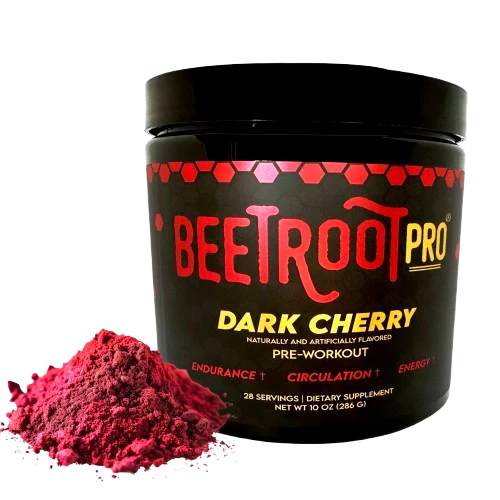
Beetroot Pro
Our product
- Patented betaine nitrate
- Acute Oxygen Efficiency
- 30 Calories Per Serving
The Ultimate
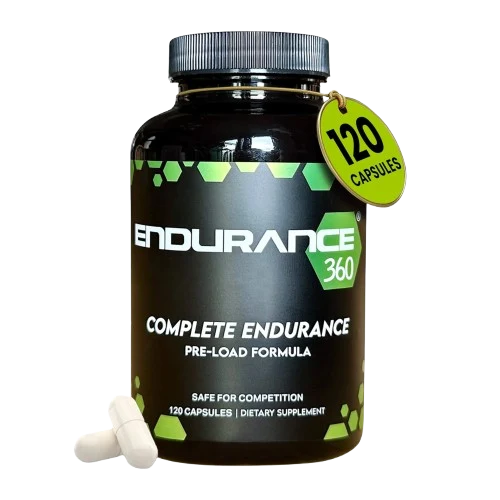
VO2 Max System
Our product
- Acute Nitric Oxide Vasodilation
- Chronic Lactic Acid Buffering
- Stimulant Free, cGMP Certified Manufacturing
Technical FAQ Extension
Is Beetroot Pro safe for drug-tested athletes?
Beetroot Pro is manufactured in a cGMP certified facility and undergoes ISO 17025 lab testing for identity, potency, and purity. The active ingredients are not on the WADA or USADA prohibited lists. The product itself has not been independently certified by NSF Certified for Sport or Informed Sport. Always confirm with your governing body before use.
What supplement buffers lactic acid for endurance athletes?
Beta-alanine, found in Endurance360, increases muscle carnosine levels which buffer hydrogen ions produced during intense exercise. This is the scientifically validated alternative to sodium bicarbonate, without the severe GI side effects. A 10 to 14 day loading plan is required for full saturation.
Can I combine beetroot powder with beta-alanine?
Yes. Beetroot Pro and Endurance360 are designed as a system. Beetroot Pro provides acute nitric oxide on race day. Endurance360 provides chronic lactic acid buffering through beta-alanine and creatine loading. Use Endurance360 for 10 to 14 days before an event, then add Beetroot Pro 60 minutes before the start.
Related Articles

Jun 2, 2026
Nitric Oxide Foods: Top Sources to Boost Your Levels
The best foods for nitric oxide are beetroot (1,500+ mg/kg nitrate), arugula, spinach, and dark chocolate. They convert to NO via oral bacteria.

Apr 13, 2026
How Beetroot Powder Boosts Nitric Oxide for Endurance
Nitrate from beetroot converts to nitric oxide, widening blood vessels for better oxygen delivery. Take it 60 to 90 minutes before exercise.
Apr 13, 2026
How Aging Lowers Nitric Oxide (and How to Restore It)
Nitric oxide drops with age as eNOS activity declines, raising blood pressure and cutting blood flow. How dietary nitrate restores the pathway after 40.
*Technical citations and PubMed references are provided for performance education only. These statements have not been evaluated by the FDA.