How to Build the Perfect Sports Drink Powder for Races: The Short Answer
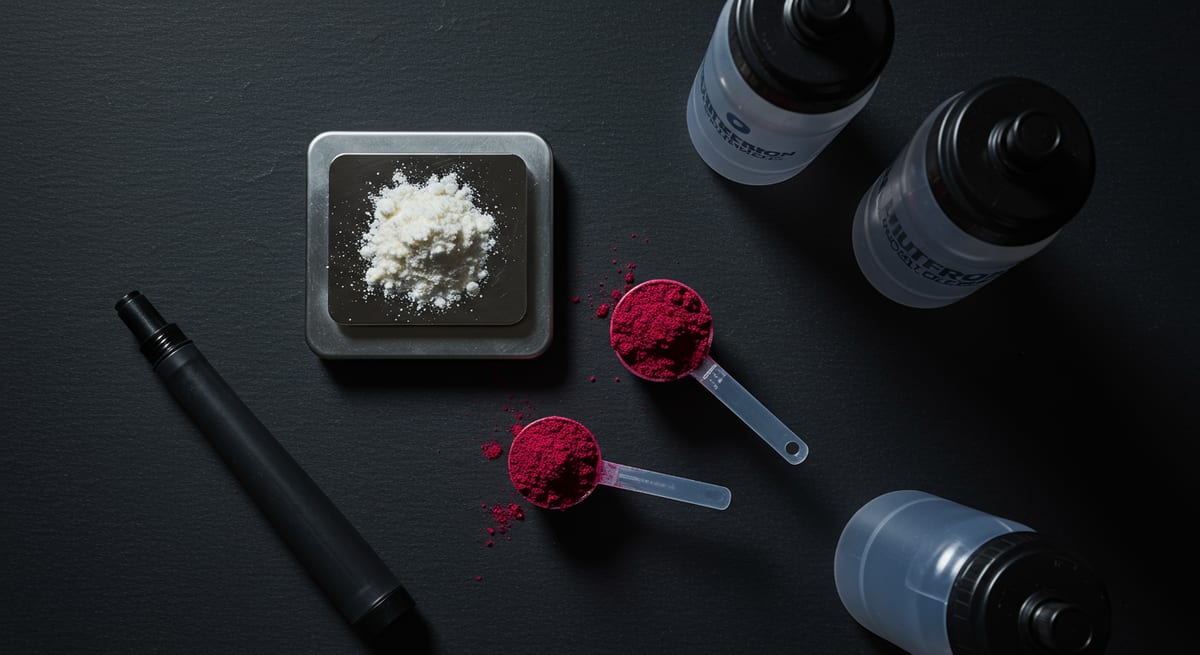
The optimal DIY endurance sports drink uses a 2:1 maltodextrin-to-fructose ratio at 60-90g carbs per hour, 500-1000mg sodium per hour from sodium citrate, and a 6-8% concentration to stay in the isotonic zone. Mix dry, measure by weight not volume, shake with 500-750ml of water per bottle. Adding 1 scoop of Beetroot Pro per bottle layers a nitrate-driven oxygen efficiency boost that commercial drinks skip entirely.
I was standing in front of the nutrition wall at a running store, building out my fuel plan for a 12-week training block. I grabbed three bags of Maurten 320, did the math in my head, and put two of them back. For what I needed to get through one serious training cycle, I was looking at close to $300 in sports drink alone. Not race day. Not supplementation. Just the stuff I pour into a bottle on a Tuesday threshold ride.
So I pulled out my phone, looked up the ingredient label on Maurten 320, and started searching for each component individually on Amazon. Maltodextrin. Fructose. Sodium citrate. Within 15 minutes I had a cart with enough bulk ingredients to last four months for under $35.
That was the beginning of two years of testing and refining my own race fuel. What follows is everything I learned, distilled into the system I use now, including the one upgrade that commercial drinks will never offer.
The Four Ingredients Every DIY Sports Drink Needs
A complete DIY endurance sports drink requires four components: a fast-absorbing primary carb source, a secondary carb source that uses a different gut transporter, sodium for electrolyte replacement, and water at a precise concentration. Every commercial endurance drink is built from these same four categories. The only difference is the markup.
Before I found the right combination I was essentially mixing expensive sugar water. It sat in my stomach for the first 30 to 45 minutes of every long ride, sloshing around while I tried to maintain tempo. Getting these four categories right was the fix.
- Primary carb source: maltodextrin or cluster dextrin. Maltodextrin is a glucose polymer with a high glycemic index and near-zero sweetness. It absorbs fast, empties from the stomach quickly, and does not compete for the same gut transporters as fructose. Cluster dextrin (also called highly branched cyclic dextrin) is a premium alternative with lower osmolarity and even faster gastric emptying. Most athletes start with maltodextrin and switch to cluster dextrin if GI issues persist on high-carb sessions.
- Secondary carb source: fructose or isomaltulose. Fructose is absorbed via the GLUT5 transporter, which is completely separate from the SGLT1 transporter that handles glucose and maltodextrin. Running both transporters simultaneously doubles your theoretical absorption ceiling. Isomaltulose is a slower-releasing alternative derived from beet sugar, better for gut-sensitive athletes or ultra-distance events where a steadier energy curve matters more than peak carb delivery.
- Sodium source: sodium citrate (preferred) or table salt. Sodium is not a flavor agent. It is the primary electrolyte you lose in sweat, and replacing it is what keeps your muscles firing, your blood pressure stable, and your fluid volume where it needs to be. Sodium citrate dissolves cleanly, has no harsh taste at high doses, and provides a mild alkaline buffer that may help offset lactic acid accumulation. Table salt works in a pinch but the chloride ion adds a briny taste at the doses long-course athletes actually need.
- Water at the right concentration. How much powder you put in how much water determines whether your drink fuels you or fights you. More on this in the osmolarity section below.
Once you have sourced the four ingredients, the DIY Fuel Chef calculator converts them into gram-exact amounts per bottle based on your event type and gut sensitivity. Prefer a gel or flask over a bottle for the same session? The DIY Energy Gel calculator applies the identical dual-transport carb math to a concentrated gel or soft-flask recipe. For the full kitchen method including the sodium alginate hydrogel matrix that lets you clone the Maurten texture at home, see the Homemade Maurten Gel Recipe.
How to Get Your Carb Ratio Right
The ideal carb ratio for a DIY sports drink is 2:1 maltodextrin-to-fructose for standard training, scaling to 1:0.8 for gut-trained athletes targeting 90g or more per hour. Using both carb sources simultaneously activates the SGLT1 and GLUT5 gut transporters in parallel, raising your absorption ceiling from roughly 60g per hour to 80-90g per hour and reducing GI distress compared to single-source drinks.
Think of your gut as having two separate loading docks for carbohydrates. Maltodextrin uses one dock. Fructose uses the other. If you only ship through one dock, the other sits empty and you cap out at around 60g per hour no matter how much you drink. At 60g you can sustain moderate intensity for 2 to 3 hours before you start drawing down on muscle glycogen. At 90g you can sustain high-intensity output for considerably longer before hitting that wall.
The catch is that fructose tolerance is trainable. Gut-naive athletes who jump straight to a 1:0.8 ratio at 90g per hour often experience bloating, cramping, or GI distress. The correct progression is to start at the lower end and train your gut the same way you train your legs.
| Athlete Profile | Ratio | Primary per 500ml Bottle | Secondary per 500ml Bottle | Carbs/hr (2 bottles) |
|---|---|---|---|---|
| Sensitive gut, new to fueling | 2:1 | 20g maltodextrin | 10g fructose | ~60g |
| Standard trained gut | 2:1 | 22g maltodextrin | 11g fructose | ~66g |
| Gut-trained, high intensity | 1:0.8 | 25g maltodextrin | 20g fructose | ~90g |
| Ultra, hour 4+ | Single source | 20g isomaltulose | none | ~48g |
Use a digital kitchen scale. Volume measurements like tablespoons are unreliable because powder density varies significantly between ingredient types and even between brands. The DIY Fuel Chef calculates the exact gram weight for each ingredient once you pick your ratio and target rate.
Sodium: The Ingredient Most DIY Recipes Get Wrong
Endurance athletes need 500-1000mg of sodium per hour during sustained exercise, adjusted for individual sweat rate and climate. Most DIY sports drink recipes either skip sodium entirely or underdose it. Sodium citrate is the preferred source: it dissolves cleanly, has no harsh taste at training-level doses, and provides a mild alkaline buffer that may help offset lactic acid buildup during high-intensity efforts.
I sweated my way through three separate late-race bonks before I figured out I was not actually bonking on carbs. My carb intake was fine. I was under-sodiumed. The moment I started hitting 800mg of sodium per hour on hot, long rides, my late-race pacing completely changed. I stopped fading in the final hour of efforts that used to fall apart.
Sweat sodium concentration varies dramatically between individuals. Salty sweaters (white residue on kit, frequent cramping on long efforts) can lose over 2,000mg of sodium per liter of sweat. Low-sodium sweaters lose as little as 200mg per liter. That is a 10x difference that generic electrolyte recommendations completely ignore.
| Sweat Profile | Climate | Sodium Target (mg/hr) | Sodium Citrate to Add (g/hr) |
|---|---|---|---|
| Light sweater | Cool (under 65F) | 500mg | ~0.7g |
| Moderate sweater | Temperate (65-75F) | 700mg | ~1.0g |
| Heavy sweater | Hot (75-85F) | 1000mg | ~1.4g |
| Heavy sweater | Hot and humid (85F+) | 1200mg+ | ~1.7g+ |
If you want a measured target rather than an estimate, use the sodium calculator. It takes your body weight, sweat history, event type, and climate and gives you a personalized hourly target you can dial directly into your DIY mix. I used it to calibrate my own numbers before building the recipe I train with now.
Why I Add Beetroot Pro to Every Bottle
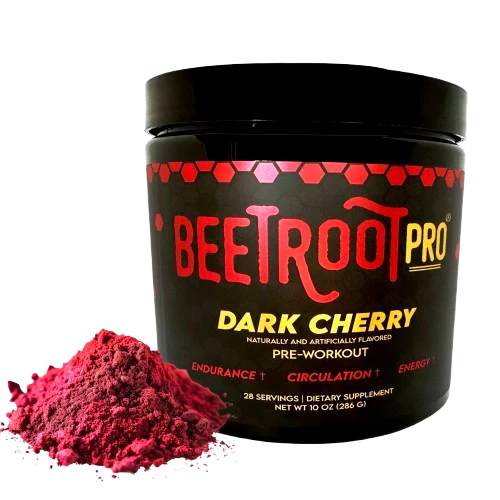
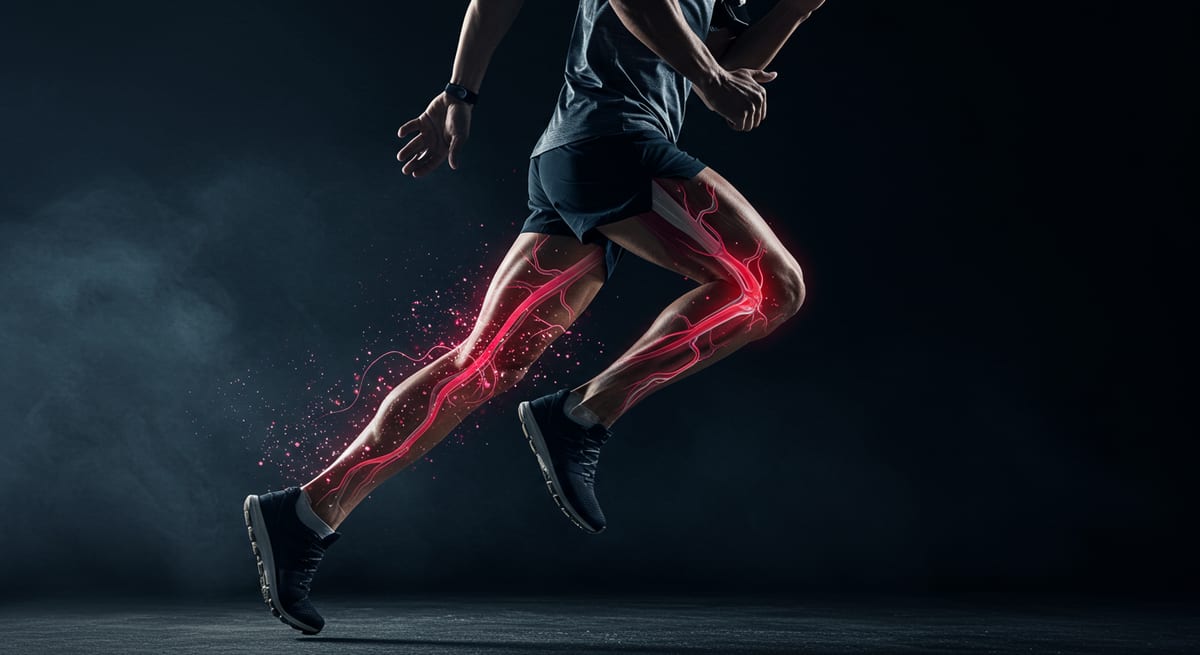
Commercial sports drinks deliver carbohydrates and electrolytes but leave the oxygen delivery side of performance untouched. Adding a scoop of Beetroot Pro per bottle adds standardized dietary nitrate, which the body converts to nitric oxide to widen blood vessels. A full 2-scoop serving yields about 160 mg of nitrate, below the roughly 5 to 9 mmol studied in the research.
The mechanism is straightforward. Dietary nitrate from concentrated beetroot is reduced to nitrite by oral bacteria, then converted to nitric oxide in the body. Nitric oxide causes vascular smooth muscle to relax, which widens blood vessels and lowers the oxygen cost of any given power output or pace. Researchers refer to this as improved oxygen economy: the same aerobic effort requires less oxygen (Jones, 2014). In one trial, a single dose of beetroot juice containing about 6.2 mmol of nitrate made club cyclists 2.7 to 2.8% faster over 4 km and 16.1 km time trials (Lansley et al., 2011).
The dosing model I use in my DIY mix is different from the standard pre-race protocol. The canonical Beetroot Pro protocol is 2 scoops taken 60 to 90 minutes before a race as an acute bolus. What I add to my training drink is 1 scoop per bottle, distributed across the session, to support the chronic nitrate effect that builds over weeks of consistent use.
After three weeks of adding BRP to every long-session bottle during my 100-mile lead-up training block, I was holding threshold pace on long climbs with measurably less perceived effort. That is what the chronic nitrate adaptation looks like in practice. It does not hit you in one ride. It compounds.
Key facts for your mix:
- Studied nitrate range: approximately 5 to 9 mmol (about 310 to 560 mg) of nitrate per day for 1 to 15 days produced favorable effects in the research reviewed by Jones (2014). One scoop per bottle delivers a fraction of a 2-scoop serving, which itself yields about 160 mg, below that range
- Sustained delivery model: 1 scoop per bottle distributes nitrate across multiple hours, supporting both acute vasodilation and chronic adaptation
- Cameron's Power Mix preset: the DIY Fuel Chef tool at beetrootpro.com/tools/diy-sports-drink has a preset called Cameron's Power Mix that builds this exact blend automatically, including BRP dose, carb ratio, and sodium target in one recipe
- Compatibility: BRP powder mixes cleanly into any dry blend with no clumping and no flavor interference on citrus or neutral bases
Technical
Beetroot Pro
Our product
- Patented betaine nitrate
- Acute Oxygen Efficiency
- 30 Calories Per Serving
Caffeine, Flavor, and the Finishing Touches
Optional add-ins let you tune a DIY sports drink for specific race conditions. Caffeine anhydrous powder (25-75mg per bottle) extends focus and reduces perceived effort during long events. Flavor agents like citric acid and freeze-dried fruit powder keep the mix palatable across multiple hours without artificial sweeteners or the gut-disrupting additives common in many commercial products.
A few specifics from what works in my bottles:
- Caffeine: I use 25mg per bottle for moderate sessions starting at hour 2, and skip it entirely on daily training runs to preserve race-day sensitivity. For a key long session or an A-race simulation, 50-75mg per bottle in hours 2 and 3 is where I see the clearest performance effect. Caffeine anhydrous powder dissolves cleanly and costs a fraction of caffeine gels per dose.
- Citrus flavor: citric acid (about 1g per bottle) plus freeze-dried lemon or lime powder gives a clean, tart finish that masks the slight earthiness of maltodextrin. For cherry, freeze-dried tart cherry powder is a reasonable choice: in a marathon study, runners drinking tart cherry juice recovered isometric strength faster and showed lower inflammation markers, though muscle soreness itself did not differ from placebo (Howatson et al., 2010).
- Ginger: 0.5 to 1g of ginger root powder per bottle meaningfully reduces nausea for athletes prone to GI issues at high intensity. I add this after hour 4 of long ultra efforts where sweet fatigue and light nausea become the limiting factor.
- Savory option for ultra and Ironman bike legs: a small amount of low-sodium bouillon powder transforms a sweet drink into something savory and genuinely satisfying after 5 or more hours. Many athletes find savory flavors much more palatable than sweet at extreme durations. The DIY Fuel Chef tool has a Bouillon Bomb preset for exactly this use case.
How to Know If Your Mix Is Actually Working
A sports drink in the isotonic zone (6-8% carb concentration, or 60-80g per 1000ml of water) empties from the stomach at the fastest rate and closely matches the osmolarity of blood plasma. Hypertonic mixes above 8% concentration require your gut to pull water from the bloodstream to process them, slowing gastric emptying and increasing cramping risk during sustained high-intensity efforts.
The simplest way to think about it: too much powder in too little water and you have made a hypertonic solution. Your gut has to pull water from your bloodstream to digest it. At mile 18 of a marathon or hour 6 of an Ironman bike, that is the last thing you want happening.
| Zone | Concentration | Carbs per 1000ml | Best Use |
|---|---|---|---|
| Hypotonic | Under 6% | Under 60g | Hot weather, low-carb daily training |
| Isotonic | 6-8% | 60-80g | Standard training and most racing |
| Mildly hypertonic | 8-10% | 80-100g | Short high-intensity efforts under 90 minutes |
| Hypertonic | Over 10% | Over 100g | Concentrate flask only, not primary hydration |
The DIY Fuel Chef tool displays an osmolarity bar automatically for any recipe you build. It tells you which zone your mix lands in and gives you a one-line interpretation so you do not have to do the math yourself.
The Calculator That Does All This Math for You
The DIY Fuel Chef at beetrootpro.com/tools/diy-sports-drink is a free 3-step wizard that outputs gram-exact ingredient weights per bottle, an osmolarity reading, a cost comparison against any commercial brand you are currently using, and a printable bottle label with your custom drink name. No spreadsheet required.
Once I understood the principles above, I built the tool so I would not have to recalculate every time my training load or event type changed. The inputs are plain English:
- Pick your event type (daily training through Ironman and multi-day events)
- Pick your gut status (sensitive, average, or trained)
- Pick your carb profile (standard fast, premium smooth, long-burning, sensitive gut, less sweet, or table sugar)
The output is a gram-exact recipe for your bottle size, an osmolarity zone reading, a cost audit against the commercial brand you enter, and a printable label with your custom drink name. The Cameron's Power Mix preset builds the BRP-inclusive version in one click.
Plug in your event and gut status and it will hand you a recipe: beetrootpro.com/tools/diy-sports-drink.
What a Week of Training Fuel Actually Costs
A serious endurance athlete spending $3-4 per serving on commercial sports drinks pays $1,500-2,000 or more annually for a 10-hour training week. The same carb and electrolyte targets sourced from bulk maltodextrin, fructose, and sodium citrate cost $0.40-0.60 per serving, saving over $1,800 per year with no compromise on what is actually in the bottle.
The ingredients inside that $4 Maurten pouch cost about 40 cents. The rest is packaging, branding, and the convenience of not having to think about it. That is a fair trade for race day. It is a terrible trade for every Tuesday threshold session.
| Brand | Cost per Serving | Weekly Cost (10hr training) | Annual Cost |
|---|---|---|---|
| Maurten 320 | ~$4.00 | ~$40 | ~$2,080 |
| Tailwind Nutrition | ~$2.50 | ~$25 | ~$1,300 |
| Skratch Labs | ~$2.00 | ~$20 | ~$1,040 |
| SiS Beta Fuel | ~$3.50 | ~$35 | ~$1,820 |
| DIY (maltodextrin + fructose + sodium citrate) | ~$0.50 | ~$5 | ~$260 |
Prices based on 1kg bulk bags purchased on Amazon. The DIY Fuel Chef cost audit section runs this comparison automatically for any commercial brand you enter, using your specific training volume.
Frequently Asked Questions
Can I use table sugar instead of maltodextrin and fructose? Yes. Sucrose is 50/50 glucose and fructose by molecular weight and uses both gut transporters, giving you the same dual-transporter benefit. It is sweeter and more likely to cause GI issues at high doses (above 60g per hour for most athletes). It works well for daily training at moderate carb intake. For race day at 80-90g per hour, the lower GI risk of maltodextrin and fructose is worth the extra cost.
How do I measure ingredients without a kitchen scale? You need a digital kitchen scale. Volume measurements like tablespoons are unreliable because powder density varies significantly between maltodextrin, fructose, sodium citrate, and any flavor powders. A basic kitchen scale costs around $12 and is the single most important piece of equipment for consistent DIY batching.
Is it safe to add Beetroot Pro to a sports drink I am making myself? Yes. One scoop of BRP powder blends cleanly into the dry mix and does not meaningfully affect osmolarity or solubility at standard bottle concentrations. The Cameron's Power Mix preset in the DIY Fuel Chef tool accounts for it in the recipe steps and displays the updated osmolarity reading with BRP included.
How long does a pre-mixed dry batch last? A dry-powder batch stored in an airtight container away from moisture stays fresh for 3 to 4 months. Do not add water more than 24 hours before you plan to drink it. Dissolved carbs can ferment at room temperature and the flavor degrades quickly. Mix fresh before each session or the night before.
The math changed the moment I looked at that ingredient label and recognized every item as a commodity available in bulk. The same carb sources, the same electrolytes, the same science. The only thing separating a well-fueled athlete from an over-billed one is knowing the ratios and having a tool that handles the calculation.
The DIY Fuel Chef handles the calculation: beetrootpro.com/tools/diy-sports-drink.
If you want to go further and add the oxygen delivery layer that commercial drinks will never include, the Cameron's Power Mix preset has it built in.
References:
- Jones AM. (2014). Dietary nitrate supplementation and exercise performance. Sports Medicine, 44(S1), 35-45. PMID 24791915.
- Lansley KE, et al. (2011). Acute dietary nitrate supplementation improves cycling time trial performance. Medicine and Science in Sports and Exercise, 43(6), 1125-1131.
- Jeukendrup AE. (2014). A step towards personalized sports nutrition: carbohydrate intake during exercise. Sports Medicine, 44(S1), 25-33.
- Howatson G, et al. (2010). Influence of tart cherry juice on indices of recovery following marathon running. Scandinavian Journal of Medicine and Science in Sports, 20(6), 843-852.
- Almond CS, et al. (2005). Hyponatremia among runners in the Boston Marathon. New England Journal of Medicine, 352(15), 1550-1556.
FDA Disclaimer: These statements have not been evaluated by the Food and Drug Administration. This product is not intended to diagnose, treat, cure, or prevent any disease.
Technical FAQ Extension
What carb ratio should a homemade endurance sports drink use?
Use a 2:1 maltodextrin-to-fructose ratio for standard training, scaling to 1:0.8 for gut-trained athletes targeting 90g or more per hour. Running both carb sources activates the SGLT1 and GLUT5 gut transporters in parallel, raising your absorption ceiling from roughly 60g per hour to 80-90g per hour and reducing GI distress compared with single-source drinks. Fructose tolerance is trainable, so build up gradually.
How much sodium do I need per hour in a DIY sports drink?
Endurance athletes need 500-1000mg of sodium per hour during sustained exercise, adjusted for individual sweat rate and climate. Sodium citrate is the preferred source: it dissolves cleanly, has no harsh taste at training doses, and provides a mild alkaline buffer. Salty sweaters can lose over 2,000mg per liter while low-sodium sweaters lose as little as 200mg, a 10x individual difference.
How much can I save making my own sports drink instead of buying commercial?
A lot. Commercial drinks at $3-4 per serving cost $1,500-2,000 or more annually for a 10-hour training week. The same carb and electrolyte targets from bulk maltodextrin, fructose, and sodium citrate cost about $0.40-0.60 per serving, saving over $1,800 per year. The ingredients inside a $4 Maurten pouch cost about 40 cents; the rest is packaging and branding.
Related Articles
Jun 19, 2026
Beetroot for Female Endurance Athletes: Dosing Guide
Female endurance athletes need 5-8 mmol dietary nitrate 2-3 hours pre-race, but iron deficiency cuts conversion efficiency up to 40%.
Apr 25, 2026
The IOC's 5 Evidence-Backed Endurance Supplements (2026)
The IOC's official list has just 5 evidence-backed supplements for endurance athletes: nitrate, creatine, caffeine, beta-alanine, sodium bicarbonate.
Apr 13, 2026
How Beetroot Powder Boosts Nitric Oxide for Endurance
Nitrate from beetroot converts to nitric oxide, widening blood vessels for better oxygen delivery. Take it 60 to 90 minutes before exercise.
*Technical citations and PubMed references are provided for performance education only. These statements have not been evaluated by the FDA.