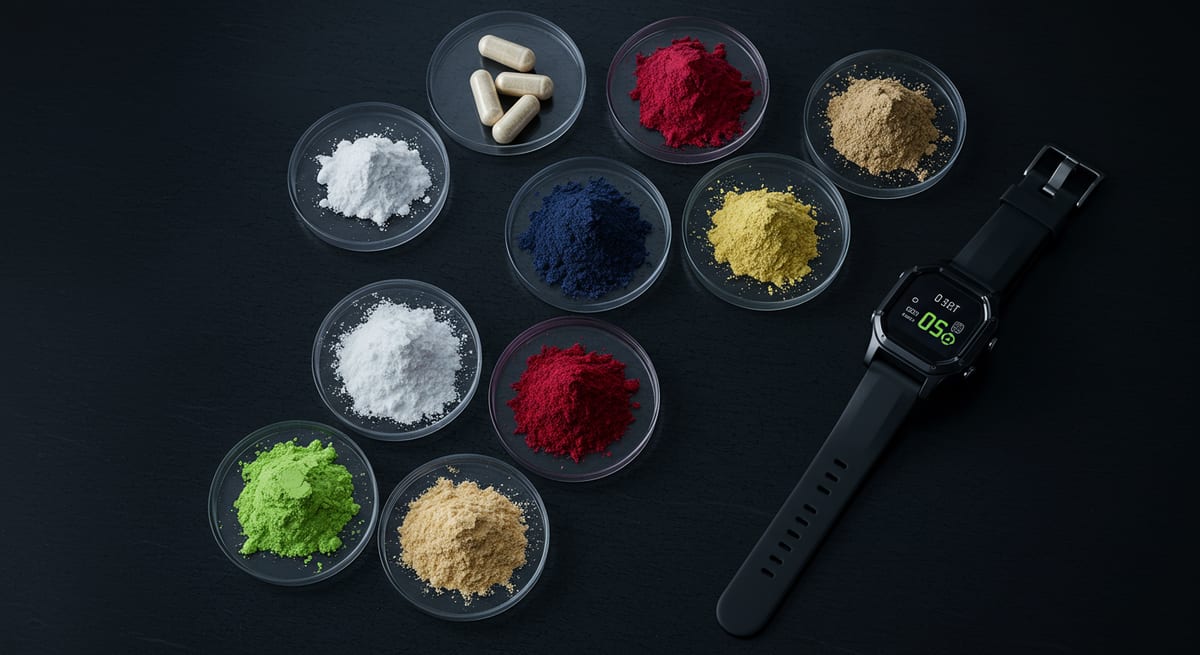
Top 10 Endurance Supplements, Ranked by Evidence (2026): The Short Answer
The supplements with the strongest evidence for endurance athletes are the five IOC-recognized ergogenic aids (dietary nitrate from beetroot, caffeine, creatine, beta-alanine, and sodium bicarbonate), plus foundational support from protein, iron, magnesium, omega-3, and B12. Dietary nitrate at about 310 to 560 mg improves time trials under 40 minutes by 1 to 3 percent in the IOC's 2018 review; creatine and beta-alanine need weeks of daily loading to saturate muscle stores before they take effect.
The best endurance supplements fall into two groups: a small set with strong performance evidence (dietary nitrate from beetroot, creatine, beta-alanine, caffeine, and sodium bicarbonate, the five recognized by the International Olympic Committee) and a foundational set that supports the engine behind them (protein, iron, electrolytes, omega-3, and vitamin B12). Most marketed endurance supplements fall outside both groups. Prioritize the evidence-backed performance aids first, then close nutritional gaps, and treat everything else as optional.
Not every endurance supplement carries the same weight of evidence. The table below tiers the ten covered in this guide by how strong the human performance data actually is, so you can prioritize spend before reading the detail on each.
| Supplement | Evidence tier | Primary benefit | Typical dose |
|---|---|---|---|
| Dietary nitrate (beetroot) | Strong (IOC) | Faster time trials, longer time to exhaustion | 310 to 560 mg nitrate, taken 60 to 90 min pre-effort |
| Creatine | Strong (IOC) | ATP resynthesis for sprints, climbs, finishes | 3 to 5 g/day, 28-day load |
| Beta-alanine | Strong (IOC) | Muscle buffering for 1 to 4 minute efforts | 3.2 to 6.4 g/day, 4 to 6 weeks |
| Caffeine | Strong (IOC) | Lower perceived effort, delayed fatigue | 3 to 6 mg/kg, about 60 min pre-effort |
| Protein | Foundational | Muscle repair and adaptation | 1.4 to 2.0 g/kg/day total intake |
| Iron | Foundational (if deficient) | Oxygen transport; corrects anemia | Per blood test and physician |
| Electrolytes (Na, K, Mg) | Foundational | Hydration, cramp prevention | Matched to sweat rate |
| Omega-3 | Foundational | Anti-inflammatory recovery support | 1 to 3 g/day EPA+DHA |
| Vitamin B12 | Foundational (if low) | Red blood cell and energy metabolism | Per diet and blood test |
| BCAAs / glutamine / antioxidants | Limited or contested | Marketed for recovery; weak performance data | Not a spending priority |
Here are the ten, ordered by how strong the human performance evidence actually is, so the list matches the table above rather than contradicting it.
1. Dietary Nitrate (Beetroot)
Dietary nitrate is one of the best-studied endurance supplements. The IOC's 2018 consensus statement reports 1 to 3 percent faster time trials under 40 minutes and 4 to 25 percent longer time to exhaustion after a 310 to 560 mg dose, and a 2021 meta-analysis pooled 73 studies. It works through the nitric oxide pathway.
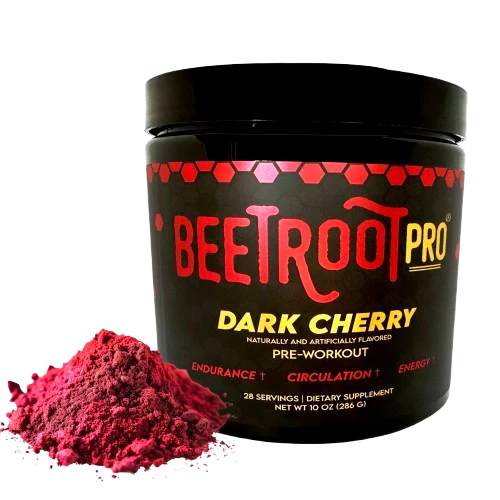
The practical problem is dose verification: nitrate content varies widely across beet products, and most labels disclose only the weight of dried root. Two options stand out at the performance end of the market. Momentous Beet is NSF Certified for Sport, meaning each batch is third-party tested for banned substances, which matters if you are subject to testing. Beetroot Pro® pre-workout beet powder uses patented betaine nitrate in a disclosed 8,000 mg standardized beet extract, yielding about 160 mg of dietary nitrate, below the 310 to 560 mg used in the research, at 30 calories per serving. See a full comparison of both. Comparing more beet products than these two? The best beetroot supplement comparison sets four of them side by side on declared actives, format, taste and price per serving.
2. Creatine
Creatine is the best-evidenced supplement for the repeated hard efforts inside an endurance race: the climbs, the bridges, the finish. It increases phosphocreatine stores so ATP regenerates faster between surges. Standard dosing is 3 to 5 g per day, and stores take roughly 28 days to saturate without a loading phase.
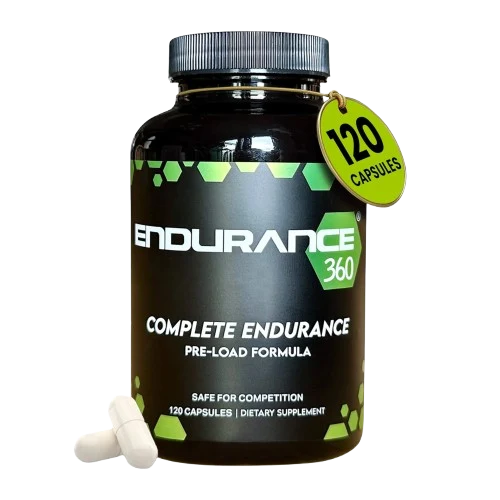
Creatine may also help improve endurance by reducing muscle fatigue across efforts lasting longer than 30 seconds. Because both creatine and beta-alanine require consistent daily dosing over weeks rather than a race-day dose, athletes often take them together. Endurance360® includes both inside a 2,000 mg Endurance Blend whose per-ingredient split is not printed, alongside cordyceps and rhodiola, for daily use across that multi-week loading period.
3. Beta-Alanine
Beta-alanine raises muscle carnosine, the buffer that slows the pH drop during hard efforts. The published dosing range is 3.2 to 6.4 g per day for 4 to 6 weeks, and the benefit concentrates in efforts lasting roughly 1 to 4 minutes: VO2 max intervals, criterium surges, and 5K to 10K racing rather than steady long-distance work.
Beta-alanine supplementation does nothing on the day you take it. Carnosine accumulates slowly, so a single dose before a race is wasted; only weeks of consistent daily intake raise the buffer. The harmless skin tingling some athletes notice confirms absorption, not effect. The IOC protocol is more conservative still: about 65 mg/kg a day split into 0.8 to 1.6 g doses for 10 to 12 weeks, for a benefit of roughly 0.2 to 3 percent in efforts of 30 seconds to 10 minutes. Most commercial endurance capsules sit well under the published range: Optygen HP discloses 1,500mg and Endurance360 places its beta-alanine inside a 2,000mg blend it shares with creatine, so reaching saturation on either means adding standalone powder. The Endurance360 vs Optygen HP comparison, the Xendurance Extreme Endurance review and the SportLegs alternative breakdown each work through one of these labels in full.
4. Caffeine
Caffeine is the most reliably ergogenic supplement in sport and the cheapest. The evidence-based dose is 3 to 6 mg per kg of body weight, taken about 60 minutes before the effort. It works primarily by lowering perceived exertion, so the same pace feels easier, with benefits across efforts from a few minutes to multi-hour races.
Higher doses do not improve the effect and increase the risk of jitters, elevated heart rate, and disrupted sleep. Habitual coffee drinkers still respond, though tolerance blunts the effect somewhat.
The fifth supplement in the strong-evidence tier is sodium bicarbonate, which is not in this top ten because its GI tolerability makes it impractical for most athletes outside targeted middle-distance events. All five are covered in the IOC consensus on supplements for endurance athletes.
5. Protein
Protein is foundational rather than ergogenic: it does not make you faster on the day, but insufficient intake blunts the adaptation you are training for. Endurance athletes should target 1.4 to 2.0 g per kg of body weight per day from total diet, with supplementation only to close the gap food leaves.
Endurance exercise breaks down muscle protein for energy, and adequate intake supports repair and adaptation between sessions. It also helps with appetite control during heavy training blocks.
6. Iron
Iron carries oxygen, so a deficiency directly limits endurance, but supplementing without a deficiency provides no benefit and carries real risk. Test before you supplement. Endurance athletes at highest risk are female athletes, vegetarians and vegans, and anyone with heavy training loads or gastrointestinal blood loss.
Dose and formulation should follow a blood test and a physician's guidance, not a label recommendation. Iron overload is genuinely harmful, which separates iron from most items on this list.
7. Electrolytes (Sodium, Potassium, Magnesium)
Electrolytes, such as sodium, potassium, and magnesium, maintain fluid balance and neuromuscular function during long efforts. The correct intake is matched to your own sweat rate and sweat sodium concentration, not to a fixed number, because sweat sodium varies several-fold between athletes.
Imbalances contribute to cramping, premature fatigue, and in extreme cases hyponatremia. Sweat rate testing is a better guide than any generic hourly target.
8. Omega-3 (EPA and DHA)
Omega-3 fatty acids support recovery through their anti-inflammatory effect rather than by improving performance directly. Typical supplementation is 1 to 3 g per day of combined EPA and DHA, most useful for athletes who eat little oily fish. The performance evidence is modest; the recovery and general health evidence is stronger.
9. Vitamin B12
Vitamin B12 supports red blood cell formation and energy metabolism, so a deficiency causes fatigue that looks like poor fitness. Like iron, it is worth supplementing only when diet or a blood test indicates a shortfall. Vegetarians, vegans, and older athletes are the groups most likely to be low.
10. BCAAs, Glutamine, and High-Dose Antioxidants
These are grouped together because they share a problem: heavy marketing and weak endurance performance data. BCAAs (for runners) and glutamine are sold for recovery and reduced soreness, but the measurable performance effect in well-fed athletes is small to absent once total protein intake is adequate.
High-dose antioxidant supplementation (vitamins C and E) is the clearest case for caution: the oxidative stress of training is part of the adaptation signal, and blunting it with large doses can interfere with the training response you are chasing. These should be the last place an endurance athlete spends. The same evidence-first lens applies to newer trends like lactate energy gels, where the hype is currently ahead of the data.
What Ergogenic Aid May Help an Endurance Athlete?
For most endurance athletes the shortlist is dietary nitrate, caffeine, creatine, and beta-alanine, with sodium bicarbonate as a situational fifth. Everything else on a supplement shelf is either foundational nutrition that corrects a deficit or marketing ahead of the data. Start with the four, then fix nutritional gaps, then stop.
The IOC's 2018 consensus statement (Maughan et al., British Journal of Sports Medicine) places five supplements in its good-to-strong evidence group for performance: caffeine, creatine, dietary nitrate, beta-alanine and sodium bicarbonate. It also stresses that supplements make a minor contribution next to an athlete's overall nutrition programme.
The best endurance supplements are readily available through various products. Some are crucial for basic physical functions and others have a strong correlation with sports performance. It's important to note that supplements should not be used as a replacement for a healthy and balanced diet.
Always consult with a healthcare professional before starting any supplement regimen. For a running-specific version of this list organized by training phase rather than evidence tier, see Best Supplements for Runners.
Endurance360® contains Beta Alanine, Creatine Monohydrate, Cordyceps & Rhodiola.
Beetroot Pro® contains beet extract, potassium, magnesium, sodium and Vitamin B12.
FDA disclaimer: These statements have not been evaluated by the Food and Drug Administration. This product and website content is not intended to diagnose, treat, cure, or prevent any disease.
Sources:
-
Protein: Tarnopolsky, M. (2004). Protein requirements for endurance athletes. Nutrition, 20(7-8), 662-668.
-
Beta-Alanine: Van Thienen, R., Van Proeyen, K., Vanden Eynde, B., Puype, J., Lefere, T., & Hespel, P. (2009). Beta-alanine improves sprint performance in endurance cycling. Medicine and Science in Sports and Exercise, 41(4), 898-903.
-
Creatine: Volek, J. S., Duncan, N. D., Mazzetti, S. A., et al. (1999). Performance and muscle fiber adaptations to creatine supplementation and heavy resistance training. Medicine and Science in Sports and Exercise, 31(8), 1147-1156.
-
Iron: Burke, L. M., & Deakin, V. (2015). Clinical sports nutrition (5th ed.). Sydney: McGraw-Hill Education.
-
Branched-Chain Amino Acids (BCAAs): Shimomura, Y., Yamamoto, Y., Bajotto, G., Sato, J., Murakami, T., Shimomura, N., Kobayashi, H., & Mawatari, K. (2006). Nutraceutical effects of branched-chain amino acids on skeletal muscle. Journal of Nutrition, 136(2), 529S-532S.
-
Nitrate: Larsen, F. J., Ekblom, B., Sahlin, K., Lundberg, J. O., & Weitzberg, E. (2006). Effects of dietary nitrate on blood pressure in healthy volunteers. The New England Journal of Medicine, 355(26), 2792-2793.
-
Electrolytes: Sawka, M. N., Burke, L. M., Eichner, E. R., Maughan, R. J., Montain, S. J., & Stachenfeld, N. S. (2007). American College of Sports Medicine position stand: Exercise and fluid replacement. Medicine and Science in Sports and Exercise, 39(2), 377-390.
-
Antioxidants: Powers, S. K., & Jackson, M. J. (2008). Exercise-induced oxidative stress: Cellular mechanisms and impact on muscle force production. Physiological Reviews, 88(4), 1243-1276.
-
Caffeine: Doherty, M., & Smith, P. M. (2004). Effects of caffeine ingestion on exercise testing: A meta-analysis. International Journal of Sport Nutrition and Exercise Metabolism, 14(6), 626-646.
-
Glutamine: Varnier, M., Leese, G., Thompson, J., & Rennie, M. J. (1995). Stimulatory effect of glutamine on glycogen accumulation in human skeletal muscle. American Journal of Physiology-Endocrinology And Metabolism, 269(2), E309-E315.
-
IOC consensus: Maughan, R. J., Burke, L. M., Dvorak, J., et al. (2018). IOC consensus statement: dietary supplements and the high-performance athlete. British Journal of Sports Medicine, 52(7), 439-455.
-
Nitrate meta-analysis: Gao, C., Gupta, S., Adli, T., et al. (2021). The effects of dietary nitrate supplementation on endurance exercise performance and cardiorespiratory measures in healthy adults: a systematic review and meta-analysis. Journal of the International Society of Sports Nutrition, 18, 55.
Master the Protocol: Read our definitive guides on VO2 Max Supplements, Beta-Alanine, the 14-Day Loading Protocol, and estimate your current ceiling with the free VO2 max calculator.
FDA Disclaimer: These statements have not been evaluated by the Food and Drug Administration. This product is not intended to diagnose, treat, cure, or prevent any disease.
Technical FAQ Extension
What are the most evidence-backed supplements for endurance athletes?
The five with the strongest evidence, per the IOC 2018 consensus statement, are dietary nitrate (beetroot), which improves time trials under 40 minutes by 1 to 3 percent at about 310 to 560 mg; caffeine at 3 to 6 mg/kg, which lowers perceived effort; creatine, for repeated high-intensity efforts; beta-alanine, which buffers acid in 30-second to 10-minute efforts; and sodium bicarbonate, for efforts around a minute. Everything else has weaker or more context-dependent evidence.
Which supplements are approved for drug-tested endurance sports?
Dietary nitrate (beetroot), caffeine, beta-alanine, creatine, BCAAs, and most vitamins and minerals are not on the WADA or NCAA prohibited lists. The specific ingredients, not the finished products, determine compliance. Always verify the specific product formulation and confirm with your governing body before competition use, as country-specific prohibited lists can differ from the global WADA code.
Should I combine multiple endurance supplements?
Combining is effective when mechanisms are complementary. Beetroot (nitric oxide pathway) pairs well with caffeine (adenosine pathway), beta-alanine (carnosine buffering), and creatine (phosphocreatine resynthesis) because they operate via completely different mechanisms with no known negative interactions. Direct evidence for the beetroot and caffeine pairing is weaker than the mechanism suggests: in trained cyclists, adding beetroot to caffeine produced no further time-trial gain (Lane 2014, Glaister 2015), though it did not harm the caffeine effect either.
Related Articles

Jun 2, 2026
Best Supplements for Energy in Endurance Athletes
The best energy supplements for endurance athletes: dietary nitrate, caffeine, creatine, and beta-alanine. Different mechanisms that combine cleanly.

Apr 13, 2026
WADA-Compliant Supplements for Tested Athletes (2026)
Stay clean and fast. The 2026 guide to WADA-compliant supplements for professional and collegiate athletes.
May 17, 2026
Sodium Calculator for Endurance Athletes (Free Tool)
Sweat sodium varies 3 to 4x across athletes. A free sodium calculator that sets an hourly target from your body, sweat history, and race-day climate.
The Ultimate
VO2 Max System
Our product
- Acute Nitric Oxide Vasodilation
- Chronic Lactic Acid Buffering
- Stimulant Free, cGMP Certified Manufacturing
*Technical citations and PubMed references are provided for performance education only. These statements have not been evaluated by the FDA.