
Beetroot vs. Sodium Bicarbonate: IOC Buffers Compared: The Short Answer
Dietary nitrate and sodium bicarbonate are both IOC-recognized but not interchangeable: nitrate improves oxygen economy for aerobic efforts of 20 minutes to 3 hours, while sodium bicarbonate (0.2 to 0.3 g per kg body weight) buffers acidosis in 1 to 7 minute near-maximal efforts but commonly causes GI distress. Only one trial has tested the two together, in a 4 km cycling time trial, and it found no benefit from either alone or combined, so pairing them for 8 to 20 minute efforts is plausible but unproven.
Both beetroot-derived dietary nitrate and sodium bicarbonate appear on the International Olympic Committee's short list of supplements with good evidence of a performance benefit (Maughan et al., BJSM 2018). That they share a list does not mean they are interchangeable. They target different physiological bottlenecks, work best at different race durations, and have very different side effect profiles.
This post compares the two supplements directly, identifies when each is most useful, and covers the evidence on whether they can be combined.
The Core Difference
Dietary nitrate works by increasing nitric oxide availability, which vasodilates blood vessels and improves oxygen delivery to working muscle. The primary benefit is reduced oxygen cost at sub-maximal aerobic intensities: for the same power or pace, you consume less oxygen. This effect is most meaningful during sustained aerobic efforts lasting 20 minutes to 3 hours, where oxygen economy determines how long you can sustain a given effort.
Sodium bicarbonate works by increasing the pH buffering capacity of the blood. During high-intensity exercise above lactate threshold, hydrogen ions accumulate faster than they can be cleared, causing the burning sensation associated with lactic acid accumulation and ultimately forcing effort reduction. Bicarbonate in the bloodstream accepts these hydrogen ions, delaying the acidosis and extending how long you can sustain high-intensity effort. The effect is most meaningful in efforts of 1 to 7 minutes where anaerobic glycolysis is the primary energy system.
In simple terms: dietary nitrate helps you go longer at aerobic intensities; sodium bicarbonate helps you go harder at anaerobic intensities.
Head-to-Head Comparison
Dietary nitrate and sodium bicarbonate work through completely different pathways, on different race durations, with very different side effect profiles. The table below lines up mechanism, dose, and risk side by side.
| Factor | Dietary Nitrate (Beetroot Pro) | Sodium Bicarbonate |
|---|---|---|
| Mechanism | Nitric oxide vasodilation, lowers oxygen cost | Blood pH buffering, delays acidosis |
| Best effort duration | 20 minutes to 3 hours (aerobic) | 1 to 7 minutes (near-maximal) |
| Primary benefit | Go longer at aerobic intensities | Go harder at anaerobic intensities |
| Typical dose | About 160 mg dietary nitrate (derived) | 0.2 to 0.3 g per kg body weight |
| GI risk | Low | High, common trigger for nausea and cramping |
| Notable side effect | Harmless pink urine or stool (beeturia) | Nausea, bloating, cramping |
| Loading required | No (optional 3-day load) | No, single pre-exercise dose |
| WADA status | Permitted, not restricted | Permitted, not restricted |
Performance Evidence by Duration
Dietary nitrate evidence is strongest in:
- Time trials of 20 to 60 minutes at moderate-to-high intensity (where aerobic economy is the primary determinant)
- Marathon and half-marathon pacing
- Long-course triathlon
- Gran fondo and century cycling events
Sodium bicarbonate evidence is strongest in:
- 800-meter to 1,500-meter running
- 4-kilometer cycling pursuit
- 200-meter and 400-meter swimming
- Events of 1 to 7 minutes at near-maximal intensity
The overlap zone is roughly 8 to 20 minutes of sustained high-intensity effort, like a 5K road race or a short time trial. In this range, both aerobic economy and acid buffering capacity are limiting factors, and some athletes use both.
Side Effect Profiles
Dietary nitrate: The most notable side effect is pink or reddish urine and stools (beeturia), caused by the betalain pigments passing through unmetabolized. This is harmless. Some athletes report mild headache during the initial loading phase, which typically resolves within the first week of use. There is no documented GI distress specific to standardized beet extract at normal doses.
Sodium bicarbonate: GI distress is the primary limiting factor. Nausea, bloating, cramping, and (in some athletes) severe GI upset are common at the standard performance dose (0.2 to 0.3 g per kg body weight). Protocols to reduce GI distress include taking bicarbonate with a carbohydrate-containing meal 90 minutes before exercise, splitting the dose across 2 to 3 hours, or using sodium citrate (an alternative buffer with a slightly lower GI distress profile) instead. Athletes should test their bicarbonate tolerance in training multiple times before attempting race-day use.
The GI risk is the primary reason many endurance athletes prefer dietary nitrate for aerobic events: it delivers performance benefit at far lower GI risk.
Can You Combine Both?
Only one controlled trial has tested dietary nitrate and sodium bicarbonate together. In eight endurance-trained cyclists, neither supplement alone nor the combination improved 4 km time trial performance (Callahan et al., 2017), and a 2023 review found no other study of the pairing. Combining them for 8 to 20 minute efforts is plausible but unproven.
The combination makes mechanistic sense for efforts in the 8 to 20 minute range, where both oxygen economy and acid buffering matter, but the evidence has not caught up. Callahan et al. (2017, International Journal of Sport Nutrition and Exercise Metabolism) gave eight endurance-trained cyclists beetroot crystals (300 mg nitrate per dose over 3 days), sodium bicarbonate (0.3 g per kg), both, or placebo, and found no difference in 4 km time trial power or time between any of the four conditions. A 2023 review of buffer combinations (Carr et al., Sports Medicine) found this was still the only study of the pairing, and noted a theoretical concern that bicarbonate's buffering could remove one of the conditions under which the nitrate pathway works best.
Practical timing protocol:
- Take sodium bicarbonate 60 to 90 minutes before exercise with a light carbohydrate-containing meal (to reduce GI risk)
- Take dietary nitrate (Beetroot Pro) 60 to 90 minutes before exercise, either with or shortly after the bicarbonate dose
- Both will be near peak effect at exercise start
The caveat: if you have never tested sodium bicarbonate in training, do not first attempt it at a key race. GI distress during a race is far worse than missing the performance benefit. Complete at least 3 to 5 training sessions using bicarbonate to establish your tolerance before committing to race-day use.
Which One First?
Dietary nitrate is the lower-risk, broader starting point for athletes new to both: the IOC consensus reports 1 to 3 percent gains in time trials under 40 minutes, GI risk is low, and the research dose is established. Sodium bicarbonate is worth adding only after dietary nitrate, and only if key events run under 15 minutes at high intensity.
For endurance athletes who have never used either supplement, dietary nitrate is the lower-risk, more broadly applicable starting point. The IOC consensus reports 1 to 3 percent improvements in time trials lasting under 40 minutes, with equivocal evidence for efforts under 12 minutes. The GI risk is low. The research dose is well-established at 310 to 560 mg of nitrate; a Beetroot Pro serving, an 8,000 mg beet extract, yields about 160 mg of dietary nitrate (derived), below that range. And the loading protocol is straightforward to implement.
Sodium bicarbonate is worth adding if:
- Your key events are under 15 minutes at high intensity (where acid buffering is the primary limiter)
- You have confirmed GI tolerance in training
- You are already using dietary nitrate and want to layer an additional mechanism
If your events are primarily aerobic and over 30 minutes, dietary nitrate is the more relevant of the two.
WADA Status
Both dietary nitrate and sodium bicarbonate are permitted under the WADA Prohibited List and are not restricted for competitive athletes at any level, since both are naturally occurring compounds the body already produces or uses.
Neither dietary nitrate nor sodium bicarbonate is restricted for competitive athletes at any level.
The Broader Context
Dietary nitrate and sodium bicarbonate are 2 of the 5 performance supplements the IOC consensus identifies as having good evidence of benefit, alongside creatine, caffeine, and beta-alanine. Sequencing all 5 appropriately by event duration and type is the basis of a rational supplement protocol.
Dietary nitrate and sodium bicarbonate are two of the five supplements the IOC consensus identifies as having good evidence of a performance benefit. The other three are creatine, caffeine, and beta-alanine. Understanding how all five fit together, which ones apply to your event duration and type, and how to sequence them appropriately is the basis of a rational supplement protocol.
Read the IOC supplement overview for the full picture. For the pairing question specifically around dietary nitrate and caffeine, see Stacking Beetroot and Caffeine. For a three-way buffer comparison, see Lactate vs Bicarbonate vs Beta-Alanine.
FDA Disclaimer: These statements have not been evaluated by the Food and Drug Administration. This product is not intended to diagnose, treat, cure, or prevent any disease.
Technical
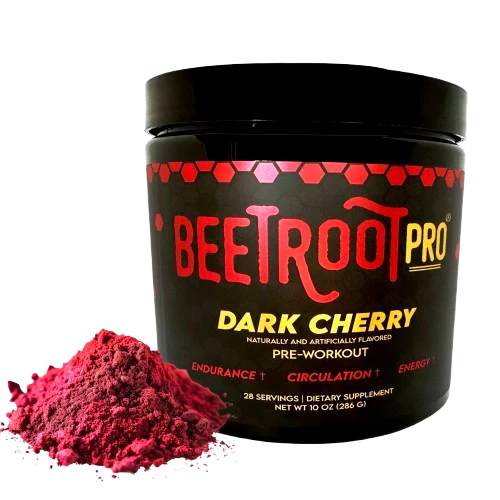
Beetroot Pro
Our product
- Patented betaine nitrate
- Acute Oxygen Efficiency
- 30 Calories Per Serving
Technical FAQ Extension
Is beetroot or sodium bicarbonate better for endurance athletes?
They work via different mechanisms with different use cases. Beetroot reduces oxygen cost via nitric oxide vasodilation, benefiting steady-state aerobic output across all intensities. Sodium bicarbonate buffers blood pH during high-intensity anaerobic work lasting 1 to 10 minutes. For threshold-to-aerobic endurance events, beetroot has a broader application profile. For maximal anaerobic intervals or track events, bicarbonate may have the edge.
Does sodium bicarbonate cause GI problems?
Yes, frequently. Sodium bicarbonate causes nausea, vomiting, and diarrhea in a significant proportion of athletes at the performance dose (0.3g/kg body weight). Splitting the dose across multiple smaller servings or co-ingesting with a carbohydrate-rich meal reduces severity but does not eliminate GI risk. This is the primary reason beetroot is the preferred ergogenic in most endurance racing despite bicarbonate having comparable efficacy in the right context.
Can you combine beetroot and sodium bicarbonate?
Yes. They work via different pathways and do not interfere pharmacologically. Beetroot acts on the oxygen delivery system (nitric oxide, vasodilation); bicarbonate acts on blood pH buffering. Evidence for an additive effect is thin: in the one controlled trial of the pair (Callahan 2017), eight trained cyclists saw no 4 km time-trial benefit from beetroot, bicarbonate or both together. The main limiting factor is GI tolerance of bicarbonate, not any interaction with beetroot.
Related Articles
Sep 27, 2026
Does Beetroot Lower Cholesterol? No. Here's What Does
Pooled trials found no significant effect of beetroot juice or powder on LDL or total cholesterol. What beetroot does help, and the fiber dose that lowers LDL.

Aug 9, 2026
Beetroot Benefits for Women: BP, Iron, Menopause
What beetroot does for women and what it does not. The blood pressure evidence, the iron interaction that gates it, menopause, dosing, and pregnancy safety.

Jul 25, 2026
Beetroot Pre-Workout: Does It Replace Stimulants?
Beetroot powder works as a pre-workout through vasodilation, not stimulation. The mechanism, the dosing window, and when it beats (or loses to) caffeine.
*Technical citations and PubMed references are provided for performance education only. These statements have not been evaluated by the FDA.