Beetroot Pro® vs Momentous Beet
Standardized Nitrate vs. Whole Beet Concentrate
Both products target serious endurance athletes at the premium price tier. The real difference is whether you know the nitrate dose you are taking, and whether fiber in the gut at race intensity is a concern for your events.
Two Different Bets: Standardization vs. Certification
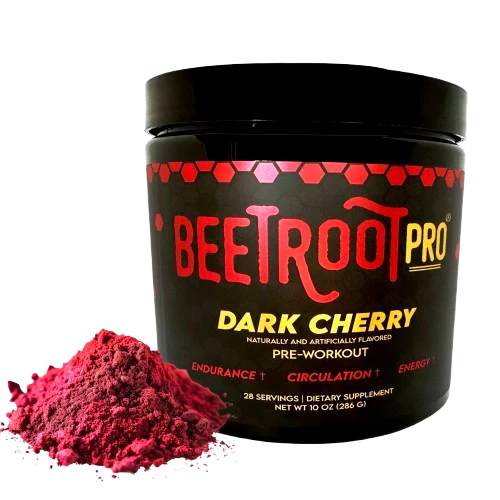
Momentous Beet wins on one dimension: NSF Certified for Sport status, which matters if you compete in a tested sport requiring it. Beetroot Pro wins on three: standardized nitrate dose you can verify, lower GI risk from fiber removal, and betaine co-ingestion in the same compound. For age-group athletes, recreational racers, and anyone doing long-course events where GI tolerance matters, Beetroot Pro is the more precisely engineered option.

How Beetroot Pro Is Rated
Our own product
- 5 ★94
- 4 ★3
- 3 ★1
- 2 ★0
- 1 ★2
Every published rating is counted above, low scores included. Nothing is left out of this breakdown.
READ ALL 100 REVIEWSThese are ratings of Beetroot Pro, our own product. They are not ratings of any other brand mentioned on this page.
Dose Reliability
About 160 mg nitrate per serving, derived from a standardized extract
GI Tolerance
No insoluble fiber, lower risk at race intensity
Sport Certification
NSF Certified for Sport for tested-sport athletes
Side-by-Side Comparison
| Factor | Beetroot Pro | Momentous Beet |
|---|---|---|
| Nitrate Source | Patented betaine nitrate (NO3-T) | Concentrated beet root powder |
| Nitrate figure you can check | About 160 mg, derived from the 8,000 mg standardized extract on the panel | No nitrate figure published |
| Dose Consistency Batch to Batch | Fixed (chemically defined compound) | Variable (crop and harvest dependent) |
| Fiber ContentLower GI risk at race intensity | Removed (refined extract) | Present (whole beet concentrate) |
| Sweetener | Xylitol, a sugar alcohol (1 g per serving) | Varies by formulation |
| NSF Certified for Sport | Not independently certified | Yes, NSF Certified for Sport |
| Manufacturing Standard | cGMP certified facility, Made in USA | cGMP certified facility |
| Betaine (TMG) Included | Yes (via betaine nitrate compound) | No |
| Stimulants | None | None |
| Price per Serving | ~$1.78 | ~$1.50 to $2.00 |
The Standardization Difference
Why the Source of Nitrate Matters
Beet supplements work through the nitrate-to-nitrite-to-nitric-oxide conversion pathway. Dietary nitrate is concentrated in saliva, reduced to nitrite by oral bacteria, absorbed into the bloodstream, and converted to nitric oxide in blood vessels and muscle tissue under exercise-induced hypoxia. The performance mechanism is real and well-documented. The critical variable is how much dietary nitrate you are actually ingesting per dose.
Raw beet concentrate varies batch to batch depending on growing conditions, soil nitrate levels, beet variety, and processing temperature. Published analyses of dried beet powders have found nitrate content ranging from under 200 mg per 100 g to over 1,800 mg per 100 g depending on the source. Momentous Beet uses a concentrated whole-food beet process that improves relative consistency, but the label does not list a standardized nitrate figure.
Beetroot Pro uses NO3-T (patented betaine nitrate), a compound where the nitrate content is fixed by molecular formula rather than by crop quality. Every serving of every batch delivers the same labeled nitrate dose. For an athlete who is 3 days into a loading protocol before a goal race, that predictability is not an abstraction, it is the difference between trusting the taper or not.
GI Tolerance at Race Intensity
Whole beet concentrate contains insoluble fiber. At race intensity (lactate threshold and above), splanchnic blood flow decreases as cardiac output redirects to working muscles. Insoluble fiber that sits undigested in the gut at that intensity is a documented cause of cramping, bloating, and GI distress. For a 5K, this is unlikely to matter. For a 70.3 triathlon, a marathon, or any event over 3 hours, GI tolerance is a first-order concern.
Beetroot Pro processes betaine nitrate without the fiber, retaining the nitrate while eliminating the insoluble bulk. Athletes who have experienced beet-related GI distress in past races should consider whether the fiber load of a whole-food concentrate is worth the whole-food sourcing argument that justifies it.
When NSF Certification Is the Right Choice
Momentous Beet's NSF Certified for Sport status is a genuine credential for athletes competing in tested sports. NSF tests for over 270 substances on major sport prohibited lists and verifies that the labeled ingredients are actually present. If your governing body requires NSF Certified for Sport products or you compete at a level where a positive test has serious career consequences, Momentous Beet provides a layer of third-party verification that Beetroot Pro does not.
For age-group athletes, recreational competitors, and anyone who competes in untested events, NSF certification adds cost and supply chain complexity without addressing the core performance question, which is whether you are getting a consistent, clinical nitrate dose in every serving.
Common Questions
Is Momentous Beet NSF certified?+
Is Beetroot Pro NSF certified?+
Which has more dietary nitrate: Beetroot Pro or Momentous Beet?+
Why does nitrate standardization matter for endurance performance?+
Does fiber in Momentous Beet cause GI issues during racing?+
Can I use Beetroot Pro if I am a drug-tested athlete?+
Which product is better for a 5-day loading protocol?+
How does the price compare between Beetroot Pro and Momentous Beet?+
Know Your Dose
Patented betaine nitrate, 160 mg standardized dietary nitrate, zero fiber, 30 calories per serving, 28 servings, cGMP certified. Pair with Endurance360 for the full loading system.
FDA Disclaimer: These statements have not been evaluated by the Food and Drug Administration. This product is not intended to diagnose, treat, cure, or prevent any disease.