
Best CoQ10 Supplements for Athletes (2026): The Short Answer
CoQ10 (coenzyme Q10) supports mitochondrial energy production by acting as an electron carrier in the ATP synthesis chain. For athletes, the most evidence-backed uses are: correcting statin-induced CoQ10 depletion (statins block CoQ10 synthesis), supporting mitochondrial function during heavy training loads, and reducing exercise-induced oxidative stress. Effective dose is 100 to 300mg daily of ubiquinol (the reduced, more bioavailable form), taken with a fat-containing meal.
Coenzyme Q10 is one of the most purchased supplements in the world, but athletes often choose it for the wrong reasons or at doses too low to move the needle. This guide cuts through the noise, covering what CoQ10 actually does for trained athletes, which form to choose, who benefits most, and where it fits in a complete performance system.
What Is CoQ10 and Why Do Athletes Care About It?
CoQ10 is an electron carrier embedded in the inner mitochondrial membrane, required at Complexes I, II, and III of the respiratory chain to synthesize ATP. The body produces it endogenously, but output declines measurably after age 30 to 35. Trained endurance athletes have higher mitochondrial density than sedentary adults, so their total CoQ10 demand per kilogram of muscle is correspondingly higher.
Every aerobic step you take runs on ATP generated in the mitochondria. CoQ10 is not optional hardware in that process; it is required for electron transfer between the large enzyme complexes that drive oxidative phosphorylation. Without adequate CoQ10, electrons back up, ATP production slows, and reactive oxygen species accumulate at the membrane.
The endogenous decline with age is well-documented. In a study of human organs from birth to 81 years (Kalén 1989, Lipids), CoQ10 content in most tissues peaked at about age 20 and declined continuously afterward. For an athlete training 10 to 20 hours per week, this decline matters because mitochondrial stress from training amplifies CoQ10 turnover. The body can compensate with dietary CoQ10 from fatty fish, beef, and organ meats, but typical dietary intake is 3 to 6mg per day, far below the 100 to 200mg range studied in athletes.
Ubiquinol vs. Ubiquinone: Which Form Should Athletes Use?
Ubiquinol is the reduced form of CoQ10 and ubiquinone the oxidized form. In a two-week crossover trial in older men, 200 mg a day of ubiquinol raised total plasma CoQ10 from 1.3 to 3.4 µmol/L while ubiquinone produced no significant rise, but a 2019 study found carrier oil and formulation mattered as much as form. Ubiquinol is a sensible default.
Here is a direct comparison of the two forms:
| Property | Ubiquinol | Ubiquinone |
|---|---|---|
| Oxidation state | Reduced (active form) | Oxidized (precursor form) |
| Bioavailability | Higher in some human trials, though formulation matters as much as form | Lower in some trials; a well-formulated softgel can match ubiquinol |
| Conversion required | No (already in active form) | Yes (liver converts to ubiquinol) |
| Stability | Less stable, degrades faster in storage | More stable shelf life |
| Cost | Higher per mg | Lower per mg |
| Best for | Over-40 athletes, statin users, anyone prioritizing absorption | Budget-conscious athletes under 40 with good conversion capacity |
Recommended dosing by profile:
| Athlete Profile | Form | Daily Dose |
|---|---|---|
| Under 40, healthy, not on statins | Ubiquinol or ubiquinone | 100 to 200mg |
| Over 40, not on statins | Ubiquinol | 150 to 200mg |
| On statin medication | Ubiquinol | 200 to 300mg |
| Masters athlete (50+) on statins | Ubiquinol | 300mg |
The practical takeaway: if price is not the binding constraint, buy ubiquinol. If you are choosing ubiquinone to save money, increase the dose modestly (e.g., 200mg ubiquinone instead of 100mg ubiquinol) to account for lower conversion efficiency.
Does CoQ10 Improve Athletic Performance?
The performance evidence for CoQ10 in already-healthy, CoQ10-replete athletes is mixed and generally modest. The strongest, most consistent evidence is in populations with baseline CoQ10 deficiency: statin users, adults over 50, and athletes in heavy training blocks where oxidative stress depletes CoQ10 faster than it is synthesized. Correcting a deficiency reliably improves markers of muscle fatigue and perceived exertion; supplementing an already-adequate level produces smaller or inconsistent gains.
This distinction matters before you spend money on CoQ10 expecting a race-day boost comparable to dietary nitrate or caffeine. CoQ10 is not an acute ergogenic. You will not feel it on the day you take it. Its value is cumulative, working through mitochondrial membrane maintenance and oxidative stress buffering over weeks to months.
What the better-designed human studies show:
- Reduced markers of exercise-induced muscle damage: serum creatine kinase and interleukin-6 were lower in CoQ10-supplemented groups in several randomized controlled trials covering moderate endurance athletes.
- Lower perceived exertion at submaximal loads: a few studies measuring RPE (rating of perceived exertion) at matched wattage found a small but statistically significant reduction in CoQ10 groups.
- Inconsistent VO2max effects: some studies show no VO2max change; a smaller subset shows slight improvement. Trained athletes with already-high aerobic capacity are the hardest population to move on any single supplement.
Bottom line: CoQ10 is a mitochondrial maintenance compound, not a performance booster in the same category as dietary nitrate or beta-alanine. Expect foundational health benefits over months, not a 3% power output gain in 3 weeks.
CoQ10 and Statins: A Critical Interaction for Masters Athletes
Statins (atorvastatin, rosuvastatin, simvastatin, and others) inhibit the HMG-CoA reductase enzyme, which is the same biosynthetic pathway the body uses to produce CoQ10. Clinical measurements show 40 to 50% reductions in plasma CoQ10 in patients on standard statin doses. Athletes on statins are particularly affected because training already stresses CoQ10 supply; statin-induced depletion on top of elevated demand is directly associated with myopathy (muscle pain, weakness, and cramping) that limits training quality.
Statin use among masters athletes (40 and older) is common. Cardiovascular risk management increasingly leads physicians to prescribe statins at the same age when training load is often highest in an aging athlete's life. The muscle side effects from statins are frequently attributed to overtraining or aging, masking what may be a correctable CoQ10 deficiency.
The mechanism is specific: CoQ10 is a downstream product of the mevalonate pathway, the same pathway statins block to reduce LDL cholesterol. Blocking the pathway cuts cholesterol synthesis and CoQ10 synthesis simultaneously.
If you are a masters athlete on statin therapy and experiencing unexplained muscle fatigue, cramping, or slow recovery that does not match your training load, CoQ10 depletion is a plausible contributing factor worth discussing with your physician. Supplementing 100 to 200mg ubiquinol daily is a low-risk intervention that has been studied specifically in statin myopathy contexts, though results vary across individuals.
Note: this is not medical advice. Discuss statin-related muscle symptoms with your prescribing physician before making supplementation decisions.
Disclosure: some product links below are affiliate links. Beetroot Pro may earn a commission if you purchase through them, at no additional cost to you. We only link products that match the evidence in this article.
How to Choose the Best CoQ10 Supplement
The most important selection criteria for CoQ10 supplements are: form (ubiquinol preferred over ubiquinone), dose per capsule (100mg minimum for meaningful blood level impact), third-party testing certification, and delivery format (softgel with oil carrier for fat-soluble absorption). Avoid proprietary blends that bundle CoQ10 with other compounds at unstated individual doses. A solid default for most athletes is a third-party-tested ubiquinol CoQ10 at 200mg, which clears the dose and testing bars below in a single softgel.
What to look for:
- Form: ubiquinol clearly stated on the label. If the label says "CoQ10" without specifying the form, assume ubiquinone.
- Dose: at least 100mg per serving. Products dosed at 30 to 50mg are not supported by the clinical literature for athletes.
- Third-party testing: look for NSF Certified for Sport, Informed Sport, or USP verification marks. These programs test for banned substance contamination and label accuracy, which matters for competitive athletes subject to drug testing.
- Delivery format: softgel capsules filled with an oil carrier (olive oil, sunflower oil) absorb significantly better than hard tablets or dry-powder capsules. CoQ10 is fat-soluble; it needs fat present in the gut for proper absorption.
- Single-ingredient products: combination products that pack CoQ10 alongside resveratrol, PQQ, or other antioxidants often compromise on CoQ10 dose to fit everything into one capsule. If you want CoQ10 at a therapeutic dose, buy it as a standalone.
Red flags to avoid:
- Doses under 50mg per serving
- "CoQ10 complex" or "proprietary blend" language without disclosed amounts
- Hard tablet format (low absorption for fat-soluble compounds)
- No third-party testing mark (important for any competitive athlete)
- Claims of "enhanced cellular energy" without transparent dose disclosure
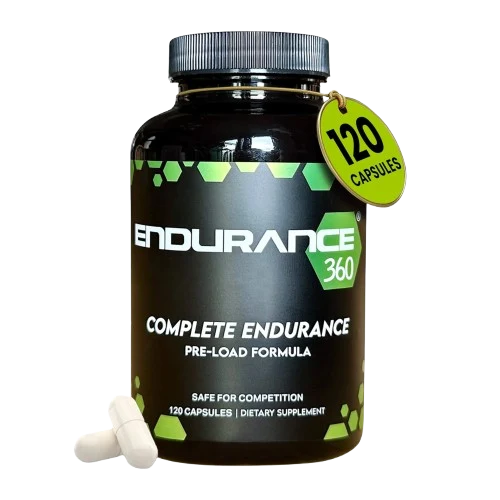
Endurance360 loads beta-alanine, creatine, and cordyceps to buffer lactic acid and sustain power.
CoQ10 Dosing and Timing for Athletes
Take 100 to 200mg of ubiquinol daily with your largest fat-containing meal for optimal absorption. Athletes on statins or over 40 should use 200 to 300mg. CoQ10 is a cumulative supplement: allow 4 to 8 weeks of consistent daily use before expecting meaningful increases in plasma CoQ10 levels.
CoQ10 does not have an acute pre-workout window the way caffeine or dietary nitrate does. Timing within the day is secondary to consistency and fat co-ingestion. The fat requirement is real: CoQ10 is fat-soluble and a large molecule, so its absorption is slow and limited (Bhagavan and Chopra 2006, Free Radical Research), which is why it belongs with a meal that contains fat. For general maintenance, a ubiquinol CoQ10 at 100mg per softgel taken with your largest meal covers the lower end of the range.
Practical dosing guidance:
| Goal | Form | Dose | Timing |
|---|---|---|---|
| General mitochondrial maintenance | Ubiquinol | 100mg daily | With breakfast or dinner (with fat) |
| Active training support (high volume blocks) | Ubiquinol | 150 to 200mg daily | Largest meal of the day |
| Statin-induced depletion correction | Ubiquinol | 200 to 300mg daily | Split into two doses with meals if using 300mg |
| Masters athlete (50+), high training load | Ubiquinol | 200 to 300mg daily | With meals |
Split dosing (twice daily) can improve total plasma exposure slightly compared to a single large dose, particularly at the 200 to 300mg range. For most athletes at 100 to 200mg, a single daily dose with a meal is practical and sufficient.
Choose the right form for your age and budget. Ubiquinol is the active, better-absorbed form; ubiquinone is the budget option for athletes under 40 with intact conversion capacity.
As an Amazon Associate we earn from qualifying purchases. Price and availability may vary.
Where CoQ10 Fits in an Endurance Athlete's Full Supplement System
CoQ10 operates in the foundational health tier of an athlete's supplement hierarchy: supporting long-term mitochondrial integrity, buffering oxidative stress from high training load, and correcting drug-induced deficiencies. It is not a race-day performance compound. Dietary nitrate and metabolic loading compounds operate on a different timescale and mechanism, delivering acute oxygen efficiency and training adaptation that CoQ10 does not.
Understanding this distinction helps with budget allocation. Here is how the tiers rank:
Performance-specific (primary for athletes):
- Dietary nitrate (Beetroot Pro®): acts acutely via nitric oxide signaling to improve oxygen delivery to working muscle and reduce the oxygen cost of submaximal exercise. Effect is measurable within 60 to 90 minutes of ingestion. This is the compound that moves race-day numbers in healthy athletes with normal CoQ10 status.
- Beta-alanine and metabolic loading compounds (Endurance360®): beta-alanine buffers hydrogen ions during high-intensity glycolytic efforts, creatine supports phosphocreatine resynthesis, and adaptogens support stress response over weeks of loading. These compounds build training adaptation, not just race-day function.
Foundational health (secondary, important but not the priority lever):
- CoQ10: mitochondrial membrane support, oxidative stress buffering, statin depletion correction. Operates over months; does not have an acute race-day effect.
- Vitamin D3, omega-3s, magnesium: similar tier. Essential for long-term athletic health but not primary performance levers in athletes who are already replete.
For the wider shelf, Top 10 Endurance Supplements, Ranked by Evidence ranks ten common endurance supplements by evidence tier, with doses.
If budget is limited, build the performance-specific layer first. Beetroot Pro® delivers measurable, research-backed changes in oxygen efficiency that CoQ10 alone does not; see the IOC-recognized supplement list for how it ranks against other evidence-backed options. Once the performance foundation is in place, CoQ10 is a rational next addition for athletes who train at high volume, are over 40, or are managing statin-related fatigue.
Endurance360® covers the metabolic loading side: beta-alanine carnosine buffering, creatine phosphocreatine support, and adaptogen-assisted recovery all compound across training cycles in ways that CoQ10 supports but does not replicate.
The full system for a masters endurance athlete who wants comprehensive coverage looks like: Beetroot Pro® pre-race and pre-workout for oxygen delivery + Endurance360® for daily metabolic loading + ubiquinol CoQ10 for mitochondrial maintenance and statin protection.
These statements have not been evaluated by the Food and Drug Administration. These products are not intended to diagnose, treat, cure, or prevent any disease.
Related Articles

Aug 17, 2026
Best Cordyceps Supplements for Endurance Athletes
How to choose a cordyceps supplement: species, extraction form, dose, and third-party testing. Full comparison table and dosing guidance for athletes.
Aug 17, 2026
Best Supplements for Lactic Acid: What Actually Works
Ranked by evidence: beta-alanine, sodium bicarbonate, and exogenous lactate salts, plus the physiology mistake some lactic acid products are built on.
Jun 3, 2026
Stop Leg Cramps: Supplement Protocol & Risk Calculator
Leg cramps have two causes: electrolyte depletion and neuromuscular fatigue. Score yours with the free calculator, then load the 5 supplements that fix both.
Complete
Endurance 360
Our product
- Chronic Lactic Acid Buffering
- ATP & Cellular Saturation
- Cordyceps & Adaptogen Matrix
*Technical citations and PubMed references are provided for performance education only. These statements have not been evaluated by the FDA.