Potassium for Endurance Athletes: Cramps and Targets: The Short Answer
Potassium is an essential electrolyte that supports muscle contraction, fluid balance, and nerve signaling. Endurance athletes lose roughly 100 to 300 mg per hour of training through sweat. Daily intake should target 3,500 to 4,700 mg, with active replacement during sessions longer than 90 minutes. Low potassium presents as muscle cramps, weakness, and irregular heartbeat. Whole-food sources (banana, sweet potato, beet greens, coconut water) typically outperform supplemental potassium chloride for absorption and tolerability.
Potassium: The Mineral for Sports Performance
Potassium is the electrolyte that drives muscle contraction, fluid balance, and nerve signaling. Endurance athletes lose roughly 100 to 300 mg per hour through sweat, and daily intake should target 3,500 to 4,700 mg. Deficiency shows up as muscle cramps, fatigue, and irregular heartbeat, and whole-food sources typically outperform potassium chloride supplements for absorption and GI tolerance.
Potassium is the most abundant positively charged ion inside working muscle cells. It regulates fluid balance, drives the nerve impulses behind every muscle contraction, and supports normal heart rhythm. For endurance athletes, sustained sweating steadily depletes it over the course of a long session, which is why potassium shows up on cramp-prevention checklists as often as sodium. For a broader view of where potassium ranks among evidence-backed options, see our top 10 supplements for endurance athletes.
How Much Potassium You Lose, and How Much You Need
Endurance athletes lose approximately 100 to 300 mg of potassium per hour of training through sweat, a smaller loss than sodium but still meaningful over a multi-hour session. Daily dietary intake should target 3,500 to 4,700 mg for adults, and active in-session replacement becomes relevant for sessions longer than 90 minutes.
| Context | Potassium Target |
|---|---|
| Daily baseline intake | 3,500 to 4,700 mg |
| Sweat loss rate | 100 to 300 mg per hour |
| Replacement threshold | Sessions over 90 minutes |
| Deficiency symptoms | Cramping, weakness, irregular heartbeat |
Potassium ions are critical for normal nerve and muscle cell function. The electrochemical gradient maintained by the sodium-potassium pump drives nerve impulse transmission and cardiac muscle contraction, and when a potassium disorder becomes severe it can cause neuromuscular dysfunction and life-threatening cardiac conduction disturbances (Viera AJ, Wouk N. American Family Physician, 2015).
Whole-Food Potassium Sources
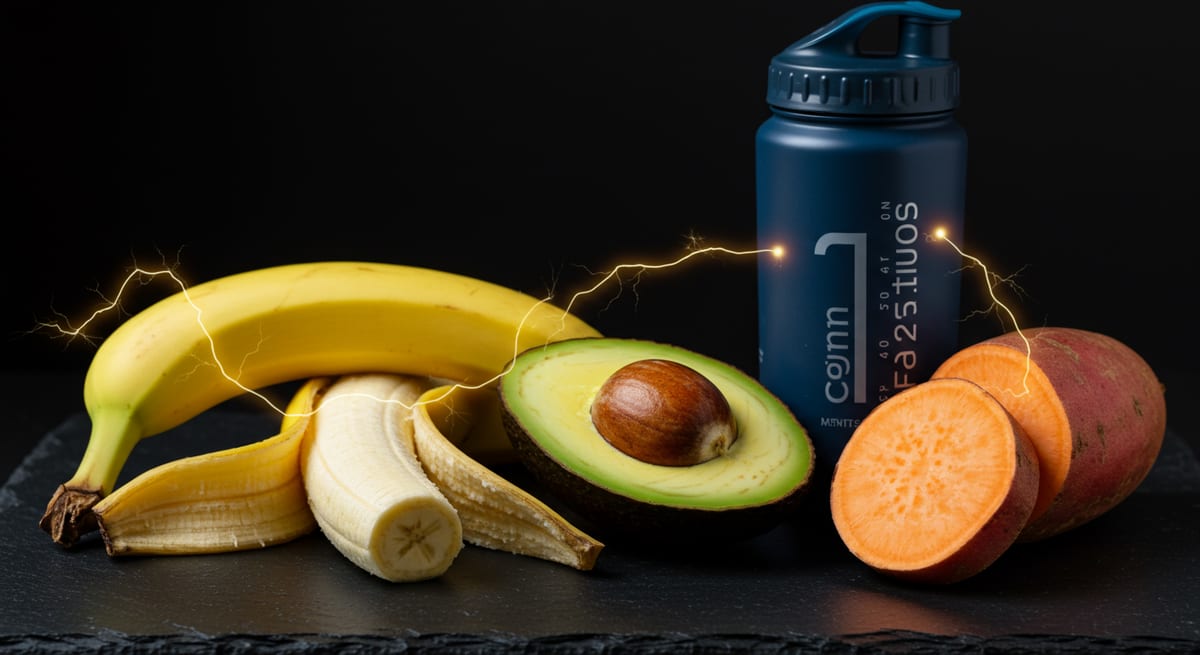
Whole-food potassium sources typically outperform potassium chloride supplements for absorption and GI tolerance. A medium banana delivers about 420 mg, a medium sweet potato about 540 mg, a cup of cooked beet greens about 1,300 mg, and 500 ml of coconut water about 600 mg, making food-first replacement realistic for most athletes.
| Food | Approximate Potassium |
|---|---|
| Beet greens (1 cup, cooked) | ~1,300 mg |
| Avocado (1 medium) | ~975 mg |
| Sweet potato (1 medium) | ~540 mg |
| Coconut water (500 ml) | ~600 mg |
| Banana (1 medium) | ~420 mg |
Potassium chloride tablets exist, but a high single dose can cause GI distress and is easy to over- or under-shoot. Spreading intake across whole foods through the day, then leaning on a formulated electrolyte source during long sessions, is the more reliable pattern. For cramp-specific strategy beyond potassium alone, see muscle cramps in athletes: causes and realistic prevention.
Potassium and Cramping
Low potassium is one of several drivers of exercise-associated muscle cramping, alongside sodium loss, dehydration, and neuromuscular fatigue. Potassium's specific role is maintaining the electrochemical gradient that lets nerves signal muscles to contract and relax cleanly; when that gradient degrades from sustained sweat loss, muscles are more prone to firing erratically and cramping.
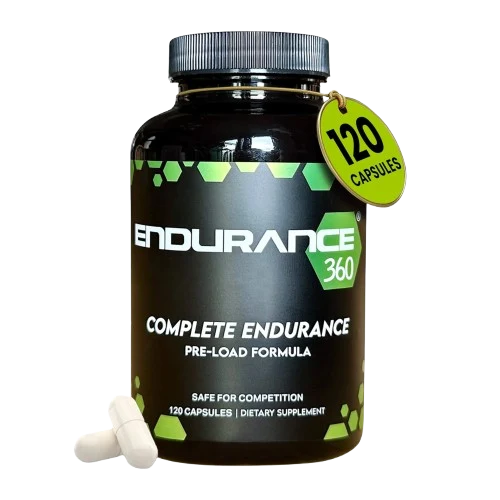
Potassium works alongside sodium, not in place of it. Sodium is lost in far greater quantities through sweat (see our sodium calculator for a personalized replacement target), and most sports drinks are formulated sodium-forward with a smaller potassium contribution. Endurance360® is the loading layer that sits alongside your electrolytes rather than replacing them: creatine and beta-alanine in a single daily formula built for the multi-week loading period those two ingredients require. Cover potassium, sodium and magnesium from your drink mix or a dedicated electrolyte product.
Potassium and Cardiovascular Health
Adequate potassium intake helps regulate blood pressure and reduces the risk of blood clot formation, a cardiovascular benefit that compounds with the blood-pressure effect already documented for dietary nitrate. For Masters athletes in particular, both effects matter more as baseline cardiovascular strain increases with age.
The Bottom Line
Target 3,500 to 4,700 mg of potassium daily from whole foods, with active replacement during sessions longer than 90 minutes at roughly 100 to 300 mg per hour of sweat loss. Whole-food sources like bananas, sweet potatoes, beet greens, and coconut water are more reliable and better tolerated than potassium chloride supplements, and a formulated electrolyte source that pairs potassium with sodium and magnesium covers the gap on long training days.
It is recommended to consult with a healthcare professional before taking any dietary supplement, especially if you have any medical condition, are pregnant, are breastfeeding, or are on any medication.
FDA Disclaimer: These statements have not been evaluated by the Food and Drug Administration. This product is not intended to diagnose, treat, cure, or prevent any disease.
Maximize your results: Learn how to build your nutrition system for peak performance in our VO2 Max Supplements Guide.
Technical FAQ Extension
How much potassium do endurance athletes lose through sweat?
Endurance athletes lose roughly 100 to 300 mg of potassium per hour of training through sweat. Daily intake should target 3,500 to 4,700 mg, with active replacement during sessions longer than 90 minutes. Because you lose potassium through sweat and urination, potassium-rich foods should be consumed each day, especially by athletes.
Why does potassium matter for muscle cramps and performance?
Potassium transmits the nerve impulses necessary for muscle contraction and relaxation, so adequate intake can help prevent muscle cramping, weakness, and fatigue. It also regulates fluid balance; when the body is dehydrated, blood volume drops and oxygen and nutrient delivery to muscles falls, which can cause fatigue, cramping, and reduced athletic performance.
What are good food sources of potassium for athletes?
Whole-food sources such as bananas, avocado, sweet potato, beet greens, coconut water, fresh fruits, and leafy greens typically outperform supplemental potassium chloride for absorption and tolerability. The post notes one avocado has about 975 milligrams of potassium, roughly twice as much as a sweet potato or banana, and that bananas help promote muscle recovery.
Related Articles

Jun 3, 2026
Stop Leg Cramps: Supplement Protocol & Risk Calculator
Leg cramps have two causes: electrolyte depletion and neuromuscular fatigue. Score yours with the free calculator, then load the 5 supplements that fix both.

Apr 26, 2026
Rhodiola Rosea for Endurance Athletes: The Evidence
What rhodiola rosea does for endurance athletes: how it lowers RPE and cortisol under heavy load, a cycling protocol, and how it fits into Endurance360.
Apr 13, 2026
Creatine for Endurance Athletes and Cyclists (2026)
Why creatine monohydrate works for runners, cyclists, and triathletes: ATP regeneration, glycogen storage, cognitive endurance, and dosing.
Complete
Endurance 360
Our product
- Chronic Lactic Acid Buffering
- ATP & Cellular Saturation
- Cordyceps & Adaptogen Matrix
*Technical citations and PubMed references are provided for performance education only. These statements have not been evaluated by the FDA.