The Best Beetroot Supplement,
Chosen by the Data
For endurance athletes who want a pre-workout powder, our pick is Beetroot Pro: a standardized beet extract plus a BCAA blend, potassium, magnesium and B12, shelf-stable and needing no refrigeration. The right beet supplement for you depends on what you need from the label, so compare declared actives, format, calories and cost per serving. Below we rank four leading beet supplements on those criteria plus certification, and show where each one wins, including the rows we lose.
How We Ranked These (And Who Published This)
This guide is published by Beetroot Pro, so treat it the way you would any brand-authored comparison: by checking the data. Every figure below is sourced from each brand's own label and our linked head-to-head breakdowns. We rank on six objective criteria and we hand three of our four category awards to competitors where they genuinely win. Beetroot Pro takes one: declared actives and race-morning logistics.
How to Choose a Beet Supplement
Six criteria separate a beet supplement worth buying from an expensive guess. Start with the whole label, meaning what is in the scoop besides beet, then weigh format, calories, testing standards and cost per serving.
Declared Actives
Read what is in the scoop besides beet. Some labels list beet root alone; others declare electrolytes, B vitamins or amino acids alongside a standardized extract. Check the whole Supplement Facts panel rather than the front of the tub, and where a nitrate figure is published, prefer it over a gram weight of root powder.
Standardization
A chemically defined compound delivers a fixed nitrate amount per gram every batch. Whole-beet concentrate and fermented crystals vary by crop, harvest, and processing, so the dose drifts batch to batch even when the scoop size does not.
Sugar per Serving
Juice-based products can carry 13 to 17g of naturally occurring sugar per dose, a figure they disclose on their own labels. That matters for fasted sessions, pre-race fueling math, and athletes prone to GI distress at intensity. Powders and extracts differ from each other, so read the carbohydrate line on the panel rather than assuming anything from the format.
Format and Timing
Powders are shelf-stable and travel flat in a drop bag; liquid shots need refrigeration and a 2 to 3 hour pre-race window. Capsules are the most portable, though most capsule labels list root powder weight rather than dietary nitrate. Format dictates how, and how early, you can actually take it on race morning.
Third-Party Testing
cGMP manufacturing and ISO 17025 lab testing cover identity, potency, and purity. Some products add lot-level banned-substance screening on top. If your sport tests, confirm with your governing body which standard it recognizes before you buy.
Price per Serving
Sticker price hides the real number. Normalize to cost per serving across a training block. Beet supplements range from roughly $1.60 to over $5.00 per dose, a gap that compounds fast over a multi-week loading protocol.
Four Labels, Side by Side
Every cell below is read off the brand's own label. Beetroot Pro is the only one of the four that declares betaine alongside its beet extract, and it costs less per serving than SuperBeets Sport or Beet It Sport. Where a cell says a figure is not disclosed, the label simply does not print one.
| Factor | Beetroot Pro | SuperBeets Sport | Beet It Sport | Momentous Beet |
|---|---|---|---|---|
| Nitrate figure published | Yes, about 160 mg (derived from the 8,000 mg extract) | No | Yes, 400 mg (on label) | No |
| Nitrate source | Patented betaine nitrate (standardized) | Fermented beet crystals | Concentrated beet juice | Whole beet concentrate |
| Carbohydrate load per serving | 30 cal, 8 g total carbs, sweetened with xylitol | Not clearly disclosed | About 9 g sugars per 70 ml shot | Not disclosed |
| Betaine (TMG) included | Yes, via betaine nitrate | No | No | No |
| Format | Powder (shelf-stable) | Powder | Liquid shot (refrigerate) | Powder |
| Third-party certification | cGMP + ISO 17025 | NSF + Informed Sport | Research-validated formula | NSF Certified for Sport |
| Price per serving | $1.78 | $2.00 | $3.50 to $5.00 | Premium ($40 to $50/canister) |
Data sourced from each brand's label and the linked comparison pages (2026). Checkmark indicates the stronger answer for an endurance athlete choosing a pre-workout powder.
Nitrate, Stated Plainly
Beetroot Pro publishes about 160 mg of dietary nitrate per serving, derived from its 8,000 mg standardized extract rather than printed on the label. That is below the 300 to 600 mg that published nitrate research typically uses, and we state it rather than round it up.
Nitrate is one row of the comparison above, not the whole of it. The table shows each label's printed figure where one exists. What a label declares besides beet, the format it comes in and what a serving costs are the differences you can act on.
Best Beet Supplement by Use Case
There is no single best beet root supplement for everyone. The right pick depends on whether your priority is a disclosed dose, lot-level certification, research provenance, or whole-food sourcing.
Beetroot Pro®
Declares a BCAA blend, potassium, magnesium and B12 alongside its 8,000 mg standardized beet extract, and is the only pick here that includes betaine (TMG). 30 calories and 8 g of total carbohydrate per serving, sweetened with xylitol, in a shelf-stable powder that travels flat in a drop bag and needs no refrigeration on race morning.
Tradeoff: Does not carry NSF lot-level certification (cGMP + ISO 17025 instead).
Shop Beetroot ProSuperBeets Sport
Holds both NSF Certified for Sport and Informed Sport lot-level certification, screening each batch for banned substances. The right call when your governing body mandates that credential.
Tradeoff: Does not disclose nitrate milligrams; runs about 24% more per serving than BRP.
SuperBeets vs BRPBeet It Sport
A concentrated beet juice shot used in a large share of the published nitrate-and-endurance research, so the exact product has been studied directly. The pick if a studied juice shot is what reassures you and refrigeration fits your race morning.
Tradeoff: 13 to 17g sugar per shot, needs refrigeration, a 2 to 3 hour pre-race window, and $3.50 to $5.00 per dose.
Beet It vs BRPMomentous Beet
Pairs NSF Certified for Sport with whole-food beet sourcing, appealing if you prefer minimally processed ingredients with a banned-substance screen.
Tradeoff: Nitrate milligrams are undisclosed and vary by batch; retains fiber that can raise GI risk at race intensity.
Momentous vs BRP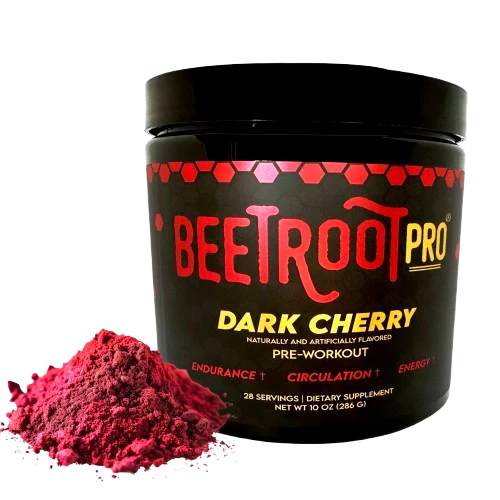
Beetroot Pro®: Five Actives Per Serving
An 8,000 mg standardized beet extract, a BCAA blend, potassium, magnesium and B12, at 30 calories and $1.78 per serving. It publishes about 160 mg of dietary nitrate per serving, derived from its patented betaine nitrate compound, below the 300 to 600 mg range published research uses. It mixes as a shelf-stable powder in 6 to 8 oz of water and works on a 60 to 90 minute pre-exercise window.
Beetroot Pro is made in a cGMP facility and ISO 17025 tested. It is not NSF Certified for Sport or Informed Sport certified, so if your sport tests, confirm with your governing body what it requires.
28 servings · Free US shipping on 3+ items · 30-day money-back guarantee

How Beetroot Pro Is Rated
Our own product
- 5 ★94
- 4 ★3
- 3 ★1
- 2 ★0
- 1 ★2
Every published rating is counted above, low scores included. Nothing is left out of this breakdown.
READ ALL 100 REVIEWSThese are ratings of Beetroot Pro, our own product. They are not ratings of any other brand mentioned on this page.
Common Questions
What is the best beetroot supplement for endurance athletes?+
How much nitrate should a beetroot supplement have?+
Why do most beetroot supplements not list their nitrate dose?+
Powder, juice shot, or capsule: which beet supplement format is best?+
Are beetroot supplements safe for drug-tested athletes?+
Is beet root powder better than beet juice for athletes?+
How much should a good beetroot supplement cost?+
Five Actives, One Serving
Standardized beet extract, BCAA blend, potassium, magnesium and B12. 30 calories. Dark cherry. 60 to 90 minute timing window. Take one serving before training or racing, or run a 5-day loading protocol before your goal event.
$49.95 for 28 servings ($1.78/serving). Free US shipping on 3+ items. 30-day money-back guarantee.
Full Head-to-Head Comparisons
FDA Disclaimer: These statements have not been evaluated by the Food and Drug Administration. This product is not intended to diagnose, treat, cure, or prevent any disease.