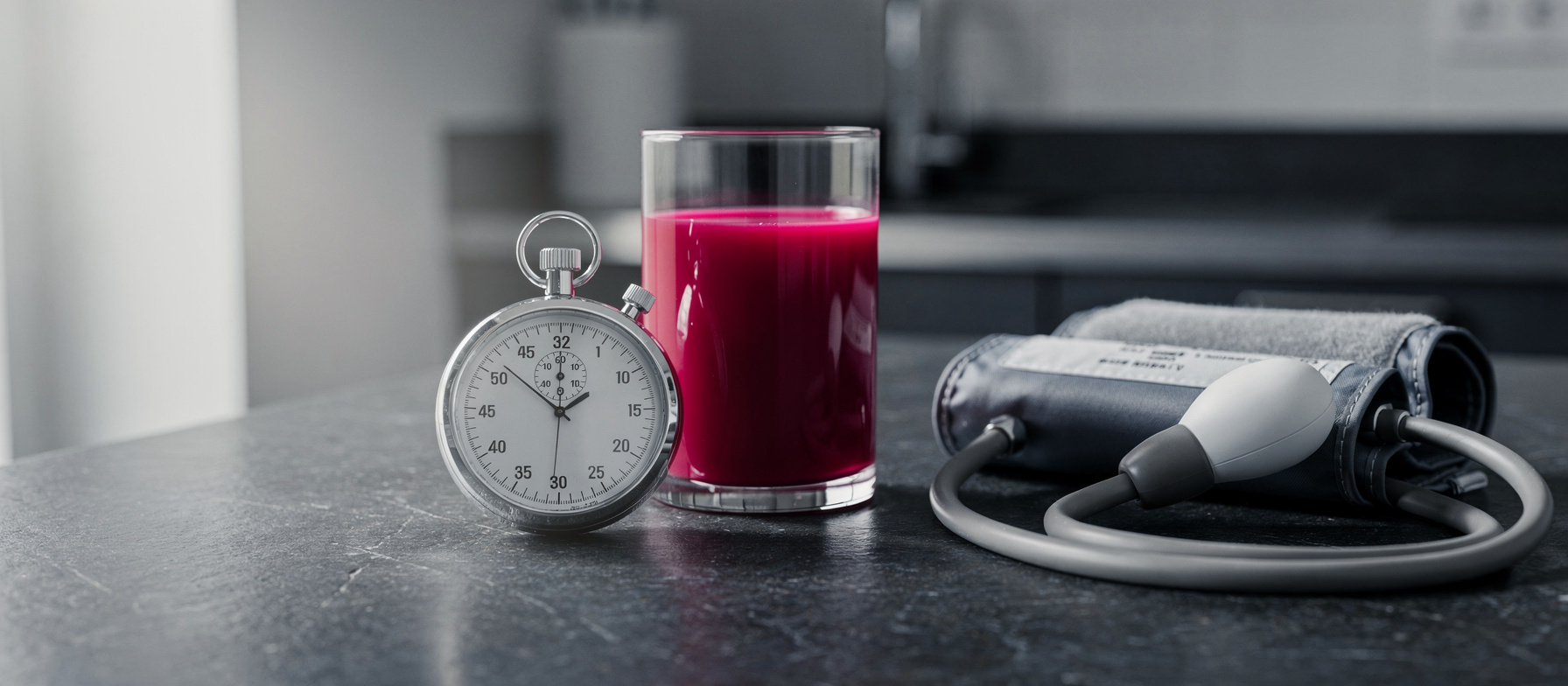
How Long Beetroot Powder Takes to Lower Blood Pressure: The Short Answer
In controlled trials of beetroot juice, blood pressure starts to fall about 1 hour after a single dose and reaches its lowest point at roughly 2.5 to 3 hours, when plasma nitrite peaks; in one trial systolic pressure was still about 6 mmHg lower at 24 hours. A pure nitrate salt has not been shown to act faster than juice. Daily use over 7 to 14 days raises baseline plasma nitrate further, producing more stable blood pressure support than an occasional single dose.
Beetroot powder is not instant. The dietary nitrate it contains has to pass through a specific biological pathway, oral bacteria, stomach, bloodstream, blood vessel wall, before it can do anything to blood pressure. That pathway has a fixed minimum speed, and the studies that measured it show the largest effect arriving hours, not minutes, after a dose.
Medical disclaimer: These statements have not been evaluated by the Food and Drug Administration. Supplements are not intended to diagnose, treat, cure, or prevent any disease, including hypertension. Always consult a physician before modifying blood pressure management, particularly if you take antihypertensive medication.
How Long Does It Take Beetroot Powder to Lower Blood Pressure?
In the best-studied format, beetroot juice, blood pressure starts to fall about 1 hour after a single dose and reaches its lowest point at roughly 2.5 to 3 hours, when plasma nitrite peaks. In one trial, systolic pressure was still about 6 mmHg lower 24 hours later (Webb et al., 2008).
This timeline comes from pharmacokinetic studies that track plasma nitrite (the direct precursor to nitric oxide) after a single dose. The full breakdown of that dose, and why the number has to be measured in milligrams of nitrate rather than grams of beet, is covered in beetroot powder for blood pressure. The timing question is a separate one: even at the correct dose, how fast does it actually work?
The Full Timeline, Minute by Minute
The nitrate-to-nitric-oxide pathway runs through five stages: swallowing, oral bacterial conversion, absorption, plasma nitrite rise, and vasodilation. In beetroot juice trials, that sequence reaches its peak roughly 2.5 to 3 hours after the dose (Webb et al., 2008; Wylie et al., 2013).
How Fast a Single Dose Actually Works
Progression from dose to peak blood pressure effect, based on beetroot juice trials (Webb et al., 2008; Wylie et al., 2013).
Nitrate is swallowed and absorbed into the bloodstream, then concentrated in saliva, where oral bacteria convert a portion to nitrite.
Blood pressure begins to fall compared with a water control.
Plasma nitrite concentration peaks, rising with the size of the dose.
Blood pressure reduction is at its largest for a single acute dose.
After the peak: Plasma nitrite stayed raised to about 5 hours and was near baseline by 24 hours, while systolic pressure was still about 6 mmHg lower at 24 hours in one trial.
Antiseptic mouthwash disrupts the second stage of this chain by killing the oral bacteria that convert nitrate to nitrite, which is why clinical trials studying this timeline specifically instruct participants not to use it during the test window.
Does the Product Format Change the Timing?
There is no good evidence that a fiber-free extract acts faster than beetroot juice. When researchers gave the same 800 mg nitrate dose as sodium nitrate, beetroot juice, rocket or spinach, peak plasma nitrate was similar, and the pure nitrate salt did not lower systolic pressure while beetroot juice did at 150 minutes (Jonvik et al., 2016).
| Format | Timing in Studies | Source |
|---|---|---|
| Beetroot juice | BP starts falling at ~1 hr, lowest at 2.5 to 3 hrs | Webb et al., 2008; Wylie et al., 2013 |
| Sodium nitrate (pure salt) | No systolic drop over 5 hrs in one trial | Jonvik et al., 2016 |
| Rocket or spinach beverage | Systolic drop at 150 to 300 min | Jonvik et al., 2016 |
| Standardized extracts and whole beet powder | Not measured separately | Little published pharmacokinetic data |
| Undisclosed-dose beet products | Unknown | Without a stated nitrate mg figure, the effective dose and its timeline cannot be verified |
The practical takeaway is that dose and timing matter more than format. Whatever form you take, the best-studied window for the largest single-dose effect is roughly 2.5 to 3 hours after the dose, so plan around that if you are timing a dose for a blood pressure check, a workout, or a race start.
Does It Get Faster or Stronger With Daily Use?
A single dose does not get faster with repetition; the roughly 2.5 to 3 hour window to peak is set by the pathway. What changes with daily use is the baseline: after 7 to 14 days of consistent dosing, resting plasma nitrate rises, so blood pressure support becomes steadier across the day rather than depending on one dose.
Think of it as two different clocks. The acute clock (about 1 hour to the first drop in blood pressure, 2.5 to 3 hours to the peak) resets with every dose and does not shorten no matter how long you have been supplementing. The chronic clock is different: daily dosing over one to two weeks raises the floor your plasma nitrate sits at between doses, which is why consistent daily use produces steadier blood pressure support than occasional single doses, even though any individual dose still takes the same 2.5 to 3 hours to reach its peak.
Two weeks is also the window in which the chronic effect shows up in trials, and age appears to decide how large it is. A 2025 University of Exeter crossover trial (Vanhatalo et al., Free Radical Biology and Medicine) gave adults aged 67 to 79 and adults aged 18 to 30 two weeks of nitrate-rich beetroot juice and two weeks of a nitrate-free placebo. After the beetroot juice phase the older group's mean arterial pressure was about 4 mmHg lower; the younger group, who started with lower blood pressure, showed no such drop. (PubMed 40615058)
Timing It Around a Doctor's Appointment or Blood Pressure Check
If you are trying to see the effect on a specific reading, at a doctor's office, a home cuff check, or before a workout, dose about 2.5 to 3 hours ahead. That is when blood pressure reached its lowest point after a single dose in the trials that tracked it hour by hour.
This is a common practical question that generic dosage guides skip: beetroot is not something you take five minutes before a blood pressure cuff and expect a result from. If your appointment is at 9am, a dose around 6 to 6:30am puts you inside the peak window measured in the trials. None of this is a substitute for medical monitoring or medication, it is simply the pharmacokinetic reality of the compound.
The Bottom Line
In beetroot juice trials, blood pressure starts to fall about 1 hour after a dose, is lowest at roughly 2.5 to 3 hours, and in one trial was still lower at 24 hours. A single dose does not speed up with repetition, and no format has been shown to act faster. Daily use raises your baseline instead.
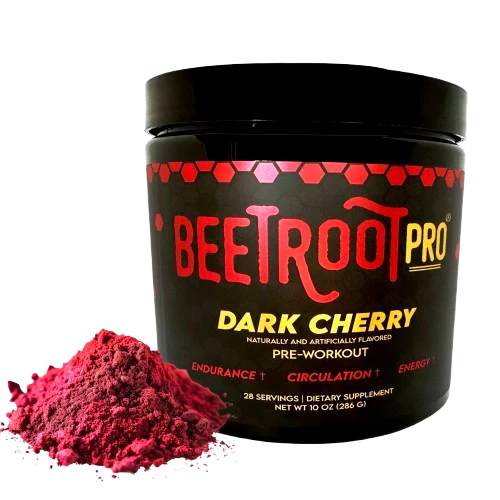
Beetroot Pro standardizes an 8,000 mg beet extract (about 160 mg dietary nitrate) per serving, well below the nitrate doses used in the timing trials above, and its own timing has not been measured separately, so the studied 2.5 to 3 hour window is the best available guide. For the full dose comparison against SuperBeets and Xendurance Blood Fuel, see beetroot powder for blood pressure.
Technical
Beetroot Pro
Our product
- Patented betaine nitrate
- Acute Oxygen Efficiency
- 30 Calories Per Serving
Frequently Asked Questions
The most common questions on timing cover how fast a single dose works, whether daily use speeds anything up, and how to time a dose around a specific reading or event.
How fast does beetroot powder lower blood pressure? In beetroot juice trials, blood pressure starts to fall about 1 hour after a dose and reaches its lowest point at roughly 2.5 to 3 hours, when plasma nitrite peaks (Webb et al., 2008; Wylie et al., 2013). A pure nitrate salt has not been shown to work faster (Jonvik et al., 2016).
Does beetroot powder work faster the longer I take it? No. A single dose takes roughly the same 2.5 to 3 hours to reach its peak effect each time; that window does not shorten with repetition. What improves with 7 to 14 days of daily use is your baseline plasma nitrate level, which produces steadier blood pressure support between doses rather than a faster single-dose effect.
How long before a blood pressure check should I take beetroot powder? Dose about 2.5 to 3 hours ahead, when the effect peaked in the trials. Dosing right before a reading will not show the effect, because the nitrate has not completed the conversion pathway yet.
Does mouthwash affect how fast beetroot powder works? Yes. Antiseptic mouthwash kills the oral bacteria responsible for converting dietary nitrate to nitrite, the first step in the pathway. Using mouthwash in the hours around your dose can blunt or eliminate the blood pressure effect regardless of product or format.
How long does the blood pressure effect last after one dose? In one trial using a large dose of beetroot juice, systolic pressure was still about 6 mmHg lower 24 hours later, even though plasma nitrite was back near baseline (Webb et al., 2008). This is why daily dosing, rather than occasional use, is needed for consistent blood pressure support.
Medical disclaimer: These statements have not been evaluated by the Food and Drug Administration. Supplements are not intended to diagnose, treat, cure, or prevent any disease, including hypertension. Always consult a physician before modifying blood pressure management, particularly if you are currently taking antihypertensive medications.
Related reading: Beetroot Powder for Blood Pressure: Dose and Brands | Natural Supplements That Lower Blood Pressure | How Much Nitrate Is in Your Beet Supplement? | Beetroot Benefits for Men
Technical FAQ Extension
How fast does beetroot powder lower blood pressure?
It takes a few hours. In published studies on beet juice, plasma nitrite peaks about 2 to 3 hours after a dose, and in Webb 2008 blood pressure was substantially lower about 3 hours after the juice. No study has shown that an extract or powder works faster than juice.
Does beetroot powder work faster the longer I take it?
No. A single dose takes roughly the same 2 to 3 hours to reach peak plasma nitrite each time (measured in beet juice studies), and that window does not shorten with repetition. What improves with 7 to 14 days of daily use is your baseline plasma nitrate level, which produces steadier blood pressure support between doses rather than a faster single-dose effect.
How long before a blood pressure check should I take beetroot powder?
Dose 60 to 90 minutes ahead for a standardized extract, or 2 to 3 hours ahead for raw beet juice or whole beet powder. Dosing right before a reading will not show the effect, the nitrate has not completed the conversion pathway yet.
Does mouthwash affect how fast beetroot powder works?
Yes. Antiseptic mouthwash kills the oral bacteria responsible for converting dietary nitrate to nitrite, the first step in the pathway. Using mouthwash in the hours around your dose can blunt or eliminate the blood pressure effect regardless of product or format.
How long does the blood pressure effect last after one dose?
The acute effect is largest a few hours after a dose (about 3 hours in Webb 2008) and fades over the following day as plasma nitrate and nitrite fall back toward baseline. This is why the longer trials used daily dosing rather than occasional use.
Related Articles
Jul 14, 2026
Beetroot Powder for Blood Pressure: Dose and Brands
Beetroot powder can lower systolic blood pressure about 3 to 5 mmHg, but only at a real nitrate dose. See how Beetroot Pro, SuperBeets, and Xendurance compare.
Jun 2, 2026
Natural Supplements That Lower Blood Pressure
Dietary nitrate, magnesium, potassium, and omega-3s have the strongest evidence for lowering blood pressure. Beetroot cuts systolic BP about 3 to 5 mmHg.
Sep 27, 2026
Does Beetroot Lower Cholesterol? No. Here's What Does
Pooled trials found no significant effect of beetroot juice or powder on LDL or total cholesterol. What beetroot does help, and the fiber dose that lowers LDL.
*Technical citations and PubMed references are provided for performance education only. These statements have not been evaluated by the FDA.