What Is Betaine Nitrate? How NO3-T® Works: The Short Answer
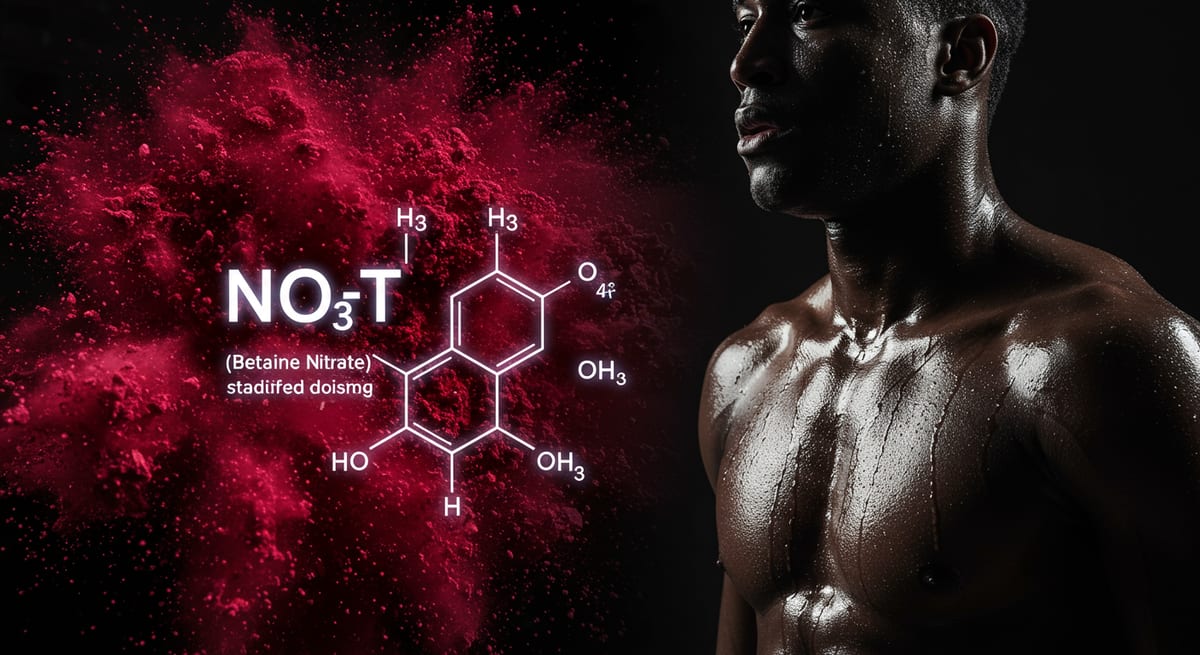
Betaine nitrate is a single compound that bonds betaine (trimethylglycine, TMG) to nitrate (NO3-). The nitrate drives the nitrate to nitrite to nitric oxide pathway for vasodilation and oxygen efficiency, while the betaine acts as an osmolyte that supports cellular hydration and power output. NO3-T is the patented, standardized form: a guaranteed nitrate yield with no oxalate load and minimal GI risk compared with raw beet juice or powder.
Betaine nitrate is a compound that pairs a molecule of betaine (trimethylglycine, TMG) with nitrate (NO3-) in a single salt. The nitrate drives nitric oxide production for vasodilation and oxygen efficiency, while the betaine acts as an osmolyte that supports cellular hydration and power output under heat and dehydration stress. NO3-T® is the patented, standardized form of betaine nitrate, delivering a disclosed nitrate yield that raw beet juice and powder cannot.
In high-performance endurance sports, the ability to deliver oxygen to working muscles is the primary limiter of speed and power. While traditional beetroot juice has been the go-to source for nitrates, a standardized alternative has emerged: NO3-T® Betaine Nitrate.
This deep-dive goes past the basic conversion chain (covered in our patented NO3-T nitrate technology overview) into the enzymatic machinery that actually reduces nitrite to nitric oxide inside working muscle, including the two-enzyme system your body switches between depending on oxygen availability.
The Nitrate-Nitrite-Nitric Oxide Pathway
Dietary nitrate becomes nitric oxide through a two-stage reduction: oral bacteria first convert swallowed nitrate to nitrite, then a separate, oxygen-sensitive step converts that nitrite to nitric oxide deep in muscle tissue. The second stage is the clinically interesting one, because it runs in reverse of how the body normally uses oxygen, it accelerates as oxygen levels fall, concentrating nitric oxide production exactly where and when a working muscle needs it most.
Nitric oxide (NO) is a short-lived gas molecule that acts as a powerful vasodilator. It relaxes the smooth muscles in blood vessel walls, allowing them to widen. This increases blood flow and oxygen delivery while simultaneously reducing blood pressure.
NO3-T® utilizes the Enterosalivary Pathway:
- Ingestion: You consume NO3-T® Betaine Nitrate.
- Absorption: It is absorbed in the small intestine and circulates in the blood.
- Concentration: It is concentrated in the salivary glands and secreted into the mouth.
- Reduction: Oral bacteria reduce nitrate (NO3-) into nitrite (NO2-).
- Activation: Once swallowed, nitrite is converted into nitric oxide (NO) in the acidic environment of the stomach and further reduced in low-oxygen (hypoxic) muscle tissue during exercise.
The Enzyme Switch: Xanthine Oxidoreductase and Deoxyhemoglobin
Nitrite-to-nitric-oxide conversion in muscle runs through two distinct enzymatic routes that activate at different oxygen tensions: xanthine oxidoreductase (XOR) reduces nitrite to nitric oxide most efficiently in mildly acidic, low-oxygen tissue, while deoxyhemoglobin, the oxygen-stripped form of hemoglobin in red blood cells, takes over as the dominant reducer once tissue oxygen falls further during intense effort. Together they form an oxygen-sensing feedback loop that supplies nitric oxide in proportion to how starved the tissue is for oxygen.
This is the mechanism that separates a disclosed-dose nitrate strategy from simply "eating more beets":
- Xanthine oxidoreductase (XOR): A molybdenum-containing enzyme normally associated with purine metabolism. Under the mildly acidic, oxygen-poor conditions found in contracting skeletal muscle, XOR switches roles and reduces nitrite directly to nitric oxide.
- Deoxyhemoglobin-mediated reduction: As a red blood cell releases its bound oxygen to feed a hard-working muscle, the resulting deoxyhemoglobin becomes an efficient nitrite reductase in its own right. The lower the local oxygen saturation, the faster this reaction proceeds.
- The net effect: Nitric oxide production is not flat or constant. It is self-regulating, rising specifically in the muscle fibers and capillary beds that are most hypoxic, which is precisely where added vasodilation and oxygen delivery matter most during a race effort or a hard interval.
This hypoxia-triggered amplification is why dietary nitrate shows its largest performance effect during high-intensity and altitude or heat-stressed efforts, conditions where local muscle oxygen tension drops the most and both reduction pathways accelerate.
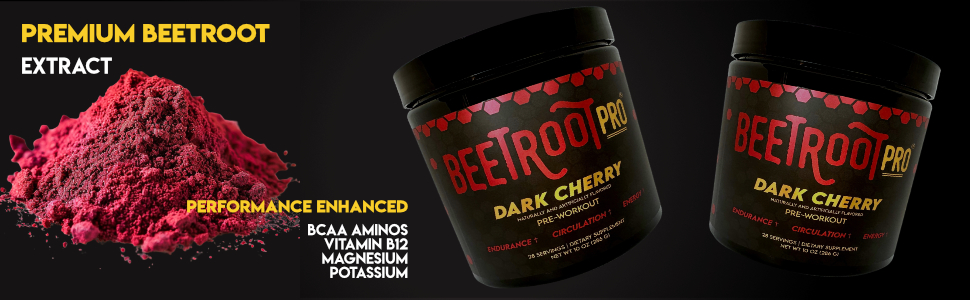
Beetroot Pro delivers standardized dietary nitrate to lower the oxygen cost of every effort.
The Betaine Advantage: More Than Just Nitrate
Betaine nitrate delivers two independent performance mechanisms from one compound: the nitrate half drives the enzymatic nitric oxide pathway described above, while the betaine half functions as an osmolyte that draws water into muscle cells to support hydration and power output. Betaine's cellular effect is not conditional on the nitrate pathway working, it contributes on its own even before nitric oxide levels rise.
Unlike the sodium nitrate or potassium nitrate often used in lower-quality supplements, NO3-T® is a molecule of Betaine Nitrate. This provides a dual-action benefit:
- The Nitrate Benefit (O2 Efficiency): Drives the nitric oxide pathway above, improving VO2 Max efficiency and delaying time to exhaustion.
- The Betaine Benefit (Osmolyte Support): Betaine Anhydrous (Trimethylglycine) is a powerful osmolyte. It helps cells maintain fluid balance and structural integrity under the stress of heat and dehydration, supporting better cellular hydration and muscular power output during long sessions.
Audit: NO3-T® vs. Raw Dietary Nitrate
NO3-T® betaine nitrate is delivered inside a standardized 8,000 mg beet extract, yielding about 160 mg dietary nitrate, at 30 calories and with no meaningful oxalate load per serving, while raw beet juice and powder swing by as much as 400 percent in nitrate content depending on soil, crop, and storage. That variability is why raw beets cannot reliably hit a specific nitrate target.
| Parameter | NO3-T® Betaine Nitrate | Raw Beet Juice / Powder |
|---|---|---|
| Standardized dose | 8,000 mg standardized beet extract (160 mg dietary nitrate, guaranteed) | Highly variable (up to 400% flux) |
| Purity | Disclosed dose, 30 calories per serving | High sugar and oxalates |
| Mechanism | Dual (nitrate plus betaine osmolyte) | Single (nitrate only) |
| Bioavailability | Maximal (concentrate) | Moderate (requires high volume) |
| GI risk | Minimal | High (fiber/sugar fermentation) |
Mitochondrial Efficiency: Doing More with Less
Dietary nitrate supplementation reduces the oxygen cost of submaximal exercise, meaning the mitochondria in trained muscle produce the same amount of ATP while consuming less oxygen. Larsen et al. (2011) documented this efficiency gain directly, and it is the physiological basis for a higher sustainable power output at the same perceived effort.
One of the most remarkable findings in nitrate research (Larsen et al., 2011) is that it actually reduces the "oxygen cost" of exercise. Essentially, it makes your mitochondria, the power plants of your cells, more efficient.
By improving the efficiency of ATP production, athletes can maintain a higher power output for the same amount of oxygen consumed. This effectively raises your functional threshold power (FTP) and improves your running economy.
Conclusion: The Technical Standard
A standardized 8,000 mg beet extract dose, yielding 160 mg dietary nitrate, gives athletes a repeatable nitrate load that raw beets cannot match, paired with a betaine osmolyte effect that raw beets do not deliver at a meaningful dose at all. For athletes who want a specific, reproducible dose rather than a variable crop-dependent guess, standardized betaine nitrate is the more precise tool.
For the athlete who demands precision, raw beets are an unreliable tool. NO3-T® Betaine Nitrate provides a standardized, disclosed-dose nitrate source you can plan a protocol around. See how this compound fits into a full serving in our nitric oxide and beetroot powder performance guide, or check exact per-serving nitrate content in how much nitrate is in a beet supplement.
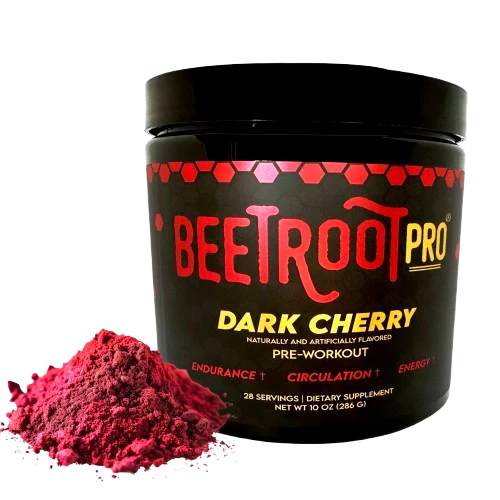
Experience NO3-T® in Beetroot Pro® Dark Cherry
The citations below anchor every mechanism claim above to peer-reviewed exercise physiology research, not marketing copy.
Clinical Citations:
- Larsen FJ, et al. (2011). Dietary inorganic nitrate improves mitochondrial efficiency in humans. Cell Metabolism.
- Lansley KE, et al. (2011). Dietary nitrate supplementation reduces the O2 cost of walking and running: a placebo-controlled study. Journal of Applied Physiology.
- Bailey SJ, et al. (2009). Dietary nitrate supplementation reduces the O2 cost of low-intensity exercise and enhances tolerance to high-intensity exercise in humans. Journal of Applied Physiology.
FDA Disclaimer: These statements have not been evaluated by the Food and Drug Administration. This product is not intended to diagnose, treat, cure, or prevent any disease.
Maximize your results: Learn how to build your nutrition system for peak performance in our VO2 Max Supplements Guide, or read the full FAQ on nitrate dosing and timing before your next race. Not sure whether nitrate or a beta-alanine and creatine protocol fits your training block first? See Beetroot Pro vs Endurance360: Which First?
Technical FAQ Extension
How does NO3-T Betaine Nitrate produce nitric oxide in the body?
NO3-T Betaine Nitrate works through the enterosalivary pathway. After ingestion it is absorbed in the small intestine and circulates in the blood, then concentrates in the salivary glands and is secreted into the mouth. Oral bacteria reduce nitrate to nitrite, and once swallowed, nitrite converts to nitric oxide in the acidic stomach and further reduces in low-oxygen muscle tissue during exercise.
What is the betaine part of betaine nitrate for?
Betaine Anhydrous (Trimethylglycine) is a powerful osmolyte, giving NO3-T a dual-action benefit beyond nitrate alone. It helps cells maintain fluid balance and structural integrity under heat and dehydration stress. For an endurance athlete, this supports better cellular hydration and improved muscular power output during long sessions, alongside the nitrate-driven oxygen efficiency benefit.
Is concentrated betaine nitrate more consistent than raw beet powder?
According to the post, NO3-T offers a guaranteed standardized yield, while raw beet juice or powder is highly variable. NO3-T is described as clinical grade with minimal GI risk, whereas raw beet products carry high sugar, oxalates, and greater GI risk from fiber and sugar fermentation. Note that the finished product is not independently certified; only the active ingredients are not on prohibited lists.
What is betaine nitrate?
Betaine nitrate is a single compound that bonds betaine (trimethylglycine, TMG) to nitrate (NO3-) in one salt. The nitrate portion fuels the nitrate to nitrite to nitric oxide pathway, which widens blood vessels and improves the oxygen cost of exercise. The betaine portion is an osmolyte that supports cellular fluid balance. NO3-T is the patented, standardized form of betaine nitrate, delivering a guaranteed nitrate dose without the sugar or oxalates of raw beet products.
What does betaine nitrate do for athletes?
It delivers two benefits in one molecule. The nitrate raises nitric oxide, which reduces the oxygen cost of exercise (a documented 3 to 5% improvement in economy), supports vasodilation, and helps delay fatigue at threshold. The betaine acts as an osmolyte that supports cellular hydration and power output under heat and dehydration stress. The combination is why standardized betaine nitrate is positioned for endurance performance rather than general wellness.
Related Articles
Aug 18, 2019
What Is Betaine Nitrate? How NO3-T Technology Works
NO3-T is a patented betaine nitrate that delivers a fixed, standardized nitrate dose, unlike beet juice or raw powder, whose nitrate varies by batch.
Aug 20, 2026
Pre-Workout Without Beta-Alanine: What Works
Beta-alanine does nothing on the day you take it, so a pre-workout without it loses no acute benefit. What to look for instead on a tingle-free label.

Apr 24, 2026
How Much Nitrate Is In Your Beet Supplement?
Commercial beet products deliver 4 to 496mg of nitrate per serving, a 100x range with no labeling standard. The clinical dose is 300 to 600mg. Check yours.
Technical
Beetroot Pro
Our product
- Patented betaine nitrate
- Acute Oxygen Efficiency
- 30 Calories Per Serving
*Technical citations and PubMed references are provided for performance education only. These statements have not been evaluated by the FDA.