How Many Beet Capsules To Take, And What They Do.
Most beet root capsules direct 2 capsules once daily, typically 1,000 to 1,600 mg of dried beet root, which delivers whole-food beet nutrition and dietary nitrate that supports circulation. What that serving cannot tell you is the nitrate dose, because labels print dried root weight and independent testing of commercial beet products has found dietary nitrate ranging from about 4 mg to 496 mg per serving. Below: what capsules actually deliver, how many to take for your goal, the side effects that are normal, and the one case where a capsule is genuinely the right call.
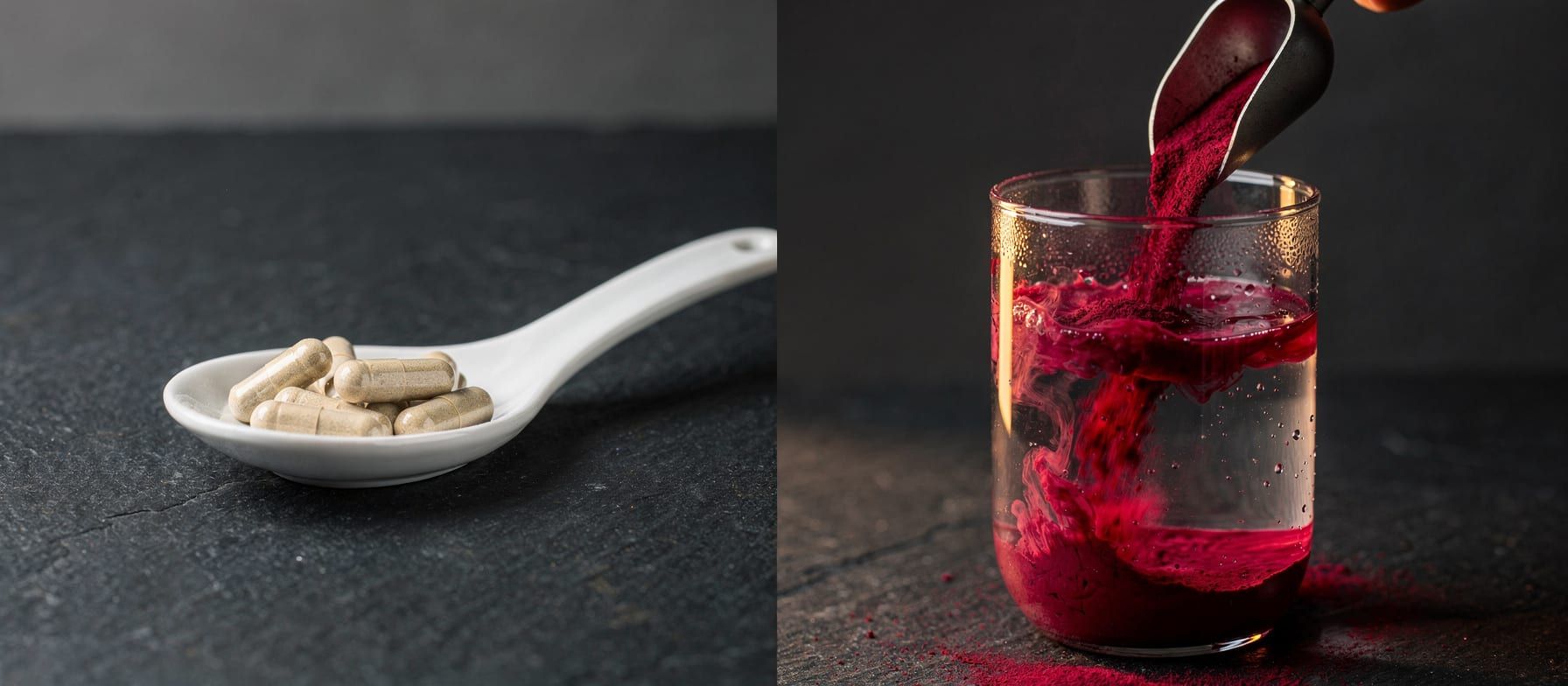
We Make The Powder, Not The Capsule.
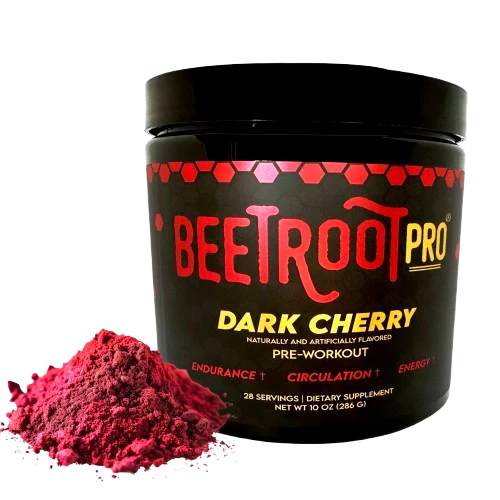
Worth saying before you read our comparison of the two formats. Beetroot Pro publishes about 160 mg of dietary nitrate per serving, derived from its 8,000 mg standardized extract, at $1.78 per serving. That figure sits below the 300 to 600 mg used in published research, which we state rather than round up. If a capsule brand publishes a comparable number, buy theirs.
The Three Things A Beet Capsule Delivers
Beet root capsules deliver dietary nitrate, betalains, folate and potassium from dried beet root. The nitrate converts to nitric oxide in the body, which relaxes blood vessels and supports circulation. The whole-food nutrition arrives reliably; the nitrate dose does not, because a capsule label prints dried root weight rather than a nitrate figure.
Circulation and blood pressure
The most studied effect. Dietary nitrate converts to nitrite and then nitric oxide, which relaxes blood vessels. This is also why the interaction warning below matters: the effect is real enough to compound with medication.
Oxygen efficiency during exercise
Studied at 300 to 600 mg of dietary nitrate per dose, where it can reduce the oxygen cost of submaximal work. Reaching that range from raw dried root is the part capsules struggle with, not the mechanism itself.
Whole-food beet nutrition
Betalains, folate, potassium and fiber come along with the root. This is the benefit capsules deliver best, because keeping the whole dried root is exactly what the format does.
These statements have not been evaluated by the Food and Drug Administration. This product is not intended to diagnose, treat, cure or prevent any disease. If you take blood pressure or heart medication, speak to your doctor before starting any beet supplement.
How Many Beetroot Capsules Per Day?
Take the label serving, which is usually 2 capsules once daily, and treat that as a daily vegetable top-up rather than a measured dose. Reaching the 300 to 600 mg dietary nitrate range used in the research from raw dried beet root would take several grams of powder, which is far more capsules than any label directs.
| Your goal | What to take | Does the format work? |
|---|---|---|
| Daily whole-food beet intake | Label serving, typically 2 capsules | Yes. This is what capsules are good at. |
| General circulation support | Label serving, taken consistently for weeks | Probably, though you cannot verify the dose. |
| A specific pre-exercise nitrate dose | A product publishing 300 to 600 mg dietary nitrate | Not from raw beet capsules. The count required is impractical. |
| Race-week loading | A disclosed dose, daily, for 3 to 6 days | Not without a milligram figure to load against. |
More capsules is not a workaround. Scaling raw dried root up to reach a nitrate target also scales the fiber and oxalate load, which is where the GI complaints come from. For the full dosing breakdown by goal and body weight, see how much beetroot powder per day.
Which Format Fits You?
The format question resolves on two things: whether you need a dose you can repeat, and what stopped you being consistent last time. Three questions below. One of the three possible answers is that capsules are the better buy for you, and we mean it.
Capsules Or Powder: Which Format Fits You?
Question 1 of 3
What are you actually trying to get out of beets?
What It Costs To Reach A Target
Set the dietary nitrate you are trying to hit, then compare what a raw beet capsule and a standardized extract each cost to get you there.
Inside the 300 to 600 mg range used in published endurance nitrate research.
Lowest and highest are the extremes ConsumerLab measured in its independent testing of commercial beetroot juices, powders and chews: 4.3mg to 495.7mg of nitrate per serving. There is no sourced typical figure for a raw capsule, so the tool starts at the highest tested, the case most favourable to the capsule. Raw beet capsules do not publish a dietary nitrate figure, so this is always an assumption, never a label claim about any specific brand.
About 2 capsules a day at a typical 2-capsule serving.
160 mg dietary nitrate per serving, derived from an 8,000 mg Beta vulgaris root extract standardized to 2%. Below the 300 to 600 mg research range at one serving.
A cost comparison, not medical guidance. Prices and servings are editable because they vary by seller; nothing here claims any supplement treats or prevents a condition.
Shop Beetroot ProWhat A Capsule Label Can And Cannot Tell You
A beet capsule label reliably tells you four things: dried root weight per serving, capsule count, farming claims like organic and non-GMO, and other ingredients. It does not tell you dietary nitrate content unless the brand separately publishes that figure, and most do not, because a raw root has no fixed nitrate fraction to print.
A dietary nitrate figure in mg
Not "beet root powder 1,300 mg", which is dried plant weight. Look for nitrate or NO3 with its own milligram number. If it is absent, the dose is unknowable, not merely unlisted.
Serving size against capsule count
A 60-capsule bottle at 2 per day is 30 days. At 4 per day it is 15. Compare cost per serving, not per bottle, or a cheap bottle with a large serving quietly becomes the expensive one.
What a certification actually covers
Organic and non-GMO describe farming. GMP describes the facility. None of the three is a statement about dose or about banned-substance testing, which is a separate product-level program.
Extract ratio, if one is claimed
A "20:1 extract" claim without a nitrate figure still does not tell you the dose, because the ratio describes concentration of the whole root, not of the one compound you care about.
The spread across tested products is the reason the label matters. ConsumerLab's independent testing of commercial beet products measured nitrate from 4.3 mg to 495.7 mg per serving. That is more than a hundredfold between the lowest and the highest, inside one product category, and a capsule label that prints only dried root weight cannot tell you which end you bought. A 2023 study of 50 beetroot supplements in the journal Foods found only 4 of them declared a nitrate figure at all.
For reference, published dietary nitrate research typically uses 300 to 600 mg per dose. Beetroot Pro publishes about 160 mg per serving, derived from its 8,000 mg standardized extract, which is below that range and which we state rather than round up. The point of this section is not whose number is biggest; it is that most beet capsules give you no number to compare at all.
Capsules Or Powder: Which Is Right For You
Capsules win on convenience, travel and taste. Powder wins when the dose has to be specific, because a standardized extract can concentrate the nitrate and print the number. Neither is better in the abstract; the right answer depends on whether you are topping up your diet or executing a protocol.
Choose capsules when
- You want a daily whole-food beet habit, not a measured dose
- You travel and cannot mix a drink every morning
- The earthy beet taste is what stopped you last time
- Cost per day matters more than dose certainty
Choose a standardized powder when
- You are dosing before training or a race and timing matters
- You want to load deliberately in the days before an event
- You need to repeat the same dose day after day
- You want to read the nitrate figure rather than assume it
| Factor | Standardized powder | Raw beet capsules |
|---|---|---|
| Dose you can repeat | Published figure per serving | Not derivable from dried root weight |
| Convenience | Mix a drink, needs water | Swallow, needs nothing |
| Travel and packing | Scoop plus a bottle | Bottle in a bag, no prep |
| Taste | Earthy, flavored to mask it | None, it is a capsule |
| Timing before a session | Straightforward to time a dose | Possible, but the dose is unknown |
| Fiber and oxalate load | Fiber largely removed in extraction | Whole dried root, fiber included |
| Whole-food profile | A concentrated extract | Closer to eating the vegetable |
| Cost per serving | Varies by brand | Varies by brand |
| What the label discloses | Extract weight and standardization | Dried root weight only, in most cases |
A format comparison, not a brand comparison: every row describes what each format can and cannot structurally do, and none of it is a claim about a specific product. Cost per serving varies by brand in both columns, which is why it is scored as a draw rather than a win. Capsules take four of the nine rows.
Where we sit, stated plainly. Beetroot Pro is a powder and we do not sell capsules, so treat the section above as an interested party laying out the tradeoff rather than a neutral referee. The part that is not opinion: our label discloses an 8,000 mg standardized extract, yielding about 160 mg of dietary nitrate, at $1.78 per serving ($49.95 for 28 servings), and a raw beet capsule discloses only how much dried root you swallowed. If a capsule brand ever publishes a nitrate figure in that range, buy theirs if you prefer pills. The number is the point, not the format. The panel that figure comes from is on the Beetroot Pro supplement facts, so you can check it rather than take our word for it. Comparing a specific capsule brand? Our Rosabella beetroot review runs the same audit against one.
Beet Root Capsule Side Effects
Most are harmless and come from the beet rather than the brand: beeturia (red or pink urine and stool), gas and loose stools from the fiber, and an oxalate load that matters if you have had calcium oxalate kidney stones. The one that needs real attention is blood pressure, because dietary nitrate lowers it and that can compound with medication.
Beeturia
Red or pink urine and stool. Harmless, common, and not a sign of bleeding. It reflects pigment excretion, not a problem with the product.
Gas and loose stools
From the fiber in whole dried root. More noticeable the more capsules you take, which is one practical ceiling on scaling the count up.
Oxalate load
Beets are relatively high in oxalates. Relevant if you have a history of calcium oxalate kidney stones; worth raising with your doctor.
Blood pressure compounding
Dietary nitrate lowers blood pressure. That effect can compound with nitrate-based heart medication, PDE5 inhibitors and prescribed antihypertensives. Speak to your doctor first.
None of these are specific to capsules; they apply to concentrated beet products generally. Full detail in beetroot side effects.
Common Questions
How many beetroot capsules should I take per day?
Follow the label serving, which for most beet root capsules is 2 capsules once daily, but understand what that serving actually delivers. A typical 2-capsule serving is 1,000 to 1,600 mg of dried beet root, and dried root is not nitrate. Independent testing of commercial beet products has found dietary nitrate ranging from roughly 4 mg to 496 mg per serving, so two capsules from one brand and two from another can differ by more than 100 times on the compound that does the work. If your goal is general daily vegetable top-up, the label serving is fine. If your goal is the blood-flow and oxygen-efficiency effect studied in the research, you need a product that prints a dietary nitrate figure in milligrams, because no capsule count can be converted into a dose without one.
What does the mg number on beet root capsules actually mean?
It is the combined dried weight of the beet root powder inside the capsules that make up one serving, not the amount of any active compound. A 1,300 mg serving tells you how much dried plant material you are swallowing. It does not tell you the dietary nitrate content, which depends on the soil the beets grew in, the crop, the season, and how the root was dried and stored. Two products can print an identical milligram figure and deliver very different nitrate loads. This is why the milligram number on the front of a beet capsule bottle is the least useful number on the package, and why a separate dietary nitrate figure, when a brand publishes one, is the number worth comparing.
Are beetroot capsules as effective as beetroot powder?
For general daily wellness, yes, the same nitrate-to-nitric-oxide pathway applies to any beet product. For hitting a specific dose, capsules are structurally limited: a capsule caps your intake at whatever the manufacturer packed into it, and reaching the 300 to 600 mg dietary nitrate range used in the research from raw dried beet root would typically take several grams of powder, which is a large handful of capsules per serving. A standardized extract concentrates the nitrate and removes the fiber, so one drink can carry a disclosed figure that a capsule format struggles to reach. The honest tradeoff runs the other way too: capsules need no water, no mixing and no cleanup, they travel better, and they sidestep the earthy taste entirely. If convenience is what actually keeps you consistent, that is a real advantage and consistency beats precision you never maintain.
What are the side effects of beet root capsules?
The common ones are harmless and come from the beet itself rather than any brand. Beeturia, red or pink urine and stool, affects a meaningful share of people and is not a sign of bleeding. The fiber load in whole dried root can cause gas and loose stools, which is more noticeable at higher capsule counts. Beets carry oxalates, which matter if you have a history of calcium oxalate kidney stones. The one worth real attention is blood pressure: dietary nitrate lowers it, and that effect can compound with nitrate-based heart medications, PDE5 inhibitors and prescribed antihypertensives. If you take blood pressure or heart medication, talk to your doctor before starting any beet supplement, capsule or powder.
How do I choose between organic beetroot capsules and a standardized extract?
They answer different questions, so pick by goal rather than by which sounds higher quality. Organic certification tells you how the beets were farmed; it says nothing about how much nitrate ends up in the capsule, and an organic raw beet capsule and a conventional one can both land anywhere in that 100x range. A standardized extract tells you the dose but is a processed ingredient rather than a whole food. If you want whole-food beet nutrition as part of a daily routine, an organic raw beet capsule is a reasonable and usually cheaper choice. If you want a repeatable dietary nitrate dose you can plan a protocol around, you need a published milligram figure, which in practice means a standardized product.
Why do most beet capsule brands not publish a nitrate number?
Usually because they cannot, not because they are hiding something. A raw dried root has no fixed nitrate fraction: the content depends on growing conditions, so any figure printed on the label would be wrong for some portion of the lots. A chemically defined compound is different, because the nitrate it yields per gram can be calculated and printed. So the split between labels that publish a nitrate figure and labels that do not is mostly a difference in source material rather than a difference in honesty. What it does mean practically is that only one of the two can be dosed deliberately.
Read The Dose Instead Of Guessing It
Beetroot Pro discloses 160 mg of dietary nitrate per serving, $1.78 per serving. It is a powder, not a capsule, and that is the tradeoff you are choosing.
More Research
How Much Nitrate Is In Your Beet Supplement
The 100x brand-to-brand variance, and how to read a label
How Much Beetroot Powder Per Day
Dosing tables by goal, body weight and race week
Beetroot Powder vs Beet Juice
Dose reliability, sugar, GI tolerance and cost, head to head
Best Beetroot Supplement
Every major brand ranked by disclosed dose, sugar and price
Beetroot Side Effects
Beeturia, oxalates, GI tolerance and medication interactions
Performance Calculator
What a disclosed nitrate dose is worth on your finish time