Beta-Alanine Itch: Why It Happens and How to Stop It: The Short Answer
Beta-alanine paresthesia is nerve activation, not an allergy and not a sign of efficacy. It begins around 800 mg in a single dose, peaks near 20 minutes, and clears within an hour. The fix is dose splitting: take 800 mg to 1.6 g at a time, four times a day, rather than one large dose. Sustained-release forms avoid it entirely while still loading carnosine, which is the proof that the tingle and the benefit are separate thresholds.
If you have taken a pre-workout and felt your face, scalp, forearms or the backs of your hands start to prickle about twenty minutes later, that was almost certainly beta-alanine. It is the single most-reported side effect in sports supplements, and the two things people most want to know are whether it is dangerous and how to make it stop. The short answers are no, and split the dose.
Why Does Beta-Alanine Make You Itch?
Beta-alanine causes itching because it directly activates a specific class of sensory neurons in the skin, not because of an allergic reaction. Liu et al. (2012) traced it in mice to MrgprD, a receptor on skin sensory neurons. Histamine is not involved, which is why antihistamines do not help. The sensation is called paresthesia and it is harmless.
The mechanism matters for the practical advice that follows. Because this is direct receptor activation rather than an immune response, the intensity tracks the amount arriving in your bloodstream at once, not your sensitivity to the compound over time. That is why the same daily total split into four doses can be almost unnoticeable when one large dose is uncomfortable.
It also explains why the usual remedies fail. An antihistamine targets a pathway beta-alanine never engages. Drinking more water dilutes nothing meaningful at these volumes. Taking it with food slows absorption slightly, which genuinely does blunt the peak, and that is the one kitchen-cupboard fix with a mechanism behind it.
How Long Does the Beta-Alanine Tingle Last?
Beta-alanine paresthesia typically begins 10 to 20 minutes after a dose, peaks around the 20 to 30 minute mark, and resolves within 60 to 90 minutes. It does not accumulate and it leaves nothing behind. Most people also report it diminishing over the first two weeks of consistent supplementation, though the dose threshold that triggers it does not change.
| Stage | Timing after dose | What you feel |
|---|---|---|
| Onset | 10 to 20 minutes | Prickling on face, scalp, neck, forearms |
| Peak | 20 to 30 minutes | Strongest sensation, sometimes warmth or flushing |
| Fade | 45 to 60 minutes | Tapering to background |
| Clear | 60 to 90 minutes | Gone entirely |
The regions affected are consistent and slightly odd: face, scalp, neck, chest, forearms and the backs of the hands, rarely the legs. That distribution follows the density of the sensory neurons involved rather than anything about circulation.
How to Stop the Beta-Alanine Itch
The reliable fix is dose splitting. Paresthesia is dose-dependent, with the threshold for most people sitting near 800 mg in a single sitting, so taking 800 mg to 1.6 g four times across the day delivers a full daily load without ever crossing the threshold. Sustained-release formulations achieve the same by slowing absorption. Antihistamines do not work, because histamine is not part of the mechanism.
Ranked by how well they actually work:
- Split the dose (most effective). Four servings of 800 mg to 1.6 g across the day, rather than one serving of 3.2 to 6.4 g. Costs nothing and needs no different product.
- Use a sustained-release form. Slows the rate of arrival below the threshold. Costs more, and it is the same compound.
- Take it with a meal (moderately effective). Blunts the absorption peak. The simplest change if you are already taking one dose a day.
- Move the dose away from training. Does not reduce the tingle, but stops it landing mid-warm-up, which is when most people find it distracting rather than merely strange.
- Wait it out. Most people report it fading over the first two weeks of consistent use.
- Take an antihistamine. No mechanism, no evidence. Skip it.
Is the Tingle a Sign It Is Working?
No, and this is the most common misconception about beta-alanine. The tingle threshold and the carnosine-loading threshold are different. Sustained-release beta-alanine raises muscle carnosine perfectly well while producing little or no paresthesia, which is the clearest available proof that you do not need to feel anything for the supplement to work.
This matters more than it sounds, because the belief runs in both directions and both are wrong. People who feel nothing conclude their product is underdosed and take more than they need. People who feel a strong tingle conclude they have found a potent product, when all they have established is that they took a large amount in one sitting.
What actually determines whether beta-alanine works is consistent daily intake over weeks, which is what raises muscle carnosine.
| Study | Population | Dose | Result |
|---|---|---|---|
| Saunders et al., 2017, meta-analysis | 40 studies, 1,461 participants | Chronic supplementation, varied protocols | Small overall benefit (effect size 0.18), clearest in exercise lasting 30 seconds to 10 minutes |
| Trexler et al., 2015, ISSN position stand | Review of the literature | 4 to 6 g per day for at least 2 to 4 weeks | Most pronounced gains in time trials and open-ended efforts of 1 to 4 minutes |
Nothing in that literature makes the acute sensation a marker of anything except the size of a single dose.
Is Beta-Alanine Itching Dangerous?
Beta-alanine paresthesia is not dangerous and is not an allergic reaction. It involves no histamine release, no swelling, no breathing difficulty and no lasting effect. It is classed as a benign sensory side effect. Symptoms that do not fit this pattern, such as hives, facial swelling or any breathing difficulty, are not paresthesia and warrant medical attention rather than a dosing adjustment.
That distinction is the one genuinely useful safety point in this topic. Paresthesia is a prickle with no visible change to the skin, following the distribution described above, on a predictable timeline. Anything involving raised welts, swelling or respiratory symptoms is a different event and should be treated as one.
As with any supplement, if you are pregnant, nursing, taking prescription medication or managing a health condition, the sensible move is to raise it with your doctor first.
Where Endurance360® Sits On This
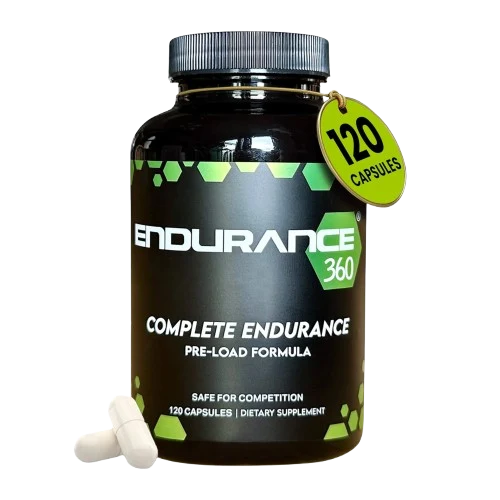
Endurance360® contains beta-alanine inside its 2,000 mg Endurance Blend, which it shares with creatine, so it is not a substitute for a standalone beta-alanine loading dose. If your goal is specifically to saturate muscle carnosine, take beta-alanine on its own at the researched 3.2 to 6.4 g per day and treat Endurance360® as something you take alongside it.
We would rather say that plainly than imply a blend does a job it is not sized for. Endurance360® exists to cover several pathways at once, including the cordyceps and rhodiola in its Cellular Oxygenation blend, and that breadth is the tradeoff against a single-ingredient dose. Someone who wants one ingredient at the full researched amount should buy that ingredient on its own, from us or from anyone else.
Complete
Endurance 360
Our product
- Chronic Lactic Acid Buffering
- ATP & Cellular Saturation
- Cordyceps & Adaptogen Matrix
Frequently Asked Questions
Why does beta-alanine make my scalp tingle specifically? The affected regions follow the distribution of MrgprD-expressing sensory neurons, which are denser in the face, scalp, neck and forearms than in the legs. It is a map of receptor density, not of blood flow.
Can I build a tolerance to the beta-alanine tingle? Most people report the sensation becoming less noticeable over the first two weeks of consistent use. The dose that triggers it does not change, so a return to one large serving will usually bring it back.
Does the tingle mean I took too much? Not unsafe, but more than you needed in one sitting. Crossing the paresthesia threshold delivers no extra benefit, since what matters is the daily total over weeks. Splitting the same amount is strictly better.
Do pre-workouts without beta-alanine work? Yes, for different reasons. Beta-alanine is a chronic buffering supplement rather than an acute one, so it contributes nothing on the day you take it. A pre-workout built on nitrate or caffeine works acutely. See pre-workout without beta-alanine.
Related reading: Creatine vs beta-alanine for endurance athletes compares what each one actually buys you, and creatine for endurance athletes and cyclists covers the daily dose that produces no itch at all.
References:
- Liu Q, et al. (2012). Mechanisms of itch evoked by beta-alanine. J Neurosci.
- Saunders B, et al. (2017). Beta-alanine supplementation to improve exercise capacity and performance: a systematic review and meta-analysis. Br J Sports Med.
- Trexler ET, et al. (2015). International Society of Sports Nutrition position stand: Beta-Alanine. JISSN.
These statements have not been evaluated by the Food and Drug Administration. This product is not intended to diagnose, treat, cure or prevent any disease.
Related Articles

Jul 16, 2026
Lactate vs Bicarbonate vs Beta-Alanine (2026)
Three ways to fight acidosis: bicarbonate, beta-alanine, and exogenous lactate. How each buffer works, what the evidence shows, and which fits your event.
Apr 13, 2026
Beta-Alanine for Endurance: Lactic Acid Buffering
How beta-alanine raises muscle carnosine to buffer lactic acid, lift threshold, and delay the burn for endurance athletes. Dose, timing, and the tingling.

Jan 30, 2023
Creatine vs Beta-Alanine for Endurance Athletes (2026)
Creatine and beta-alanine fuel different systems: creatine regenerates ATP for short bursts, beta-alanine buffers lactic acid. When to run each.
*Technical citations and PubMed references are provided for performance education only. These statements have not been evaluated by the FDA.