
Beetroot Powder Benefits for Men: Dose by Body Weight: The Short Answer
Beetroot works in men through one mechanism, nitrate to nitric oxide, with four measurable outcomes: systolic blood pressure 4 to 10 mmHg lower, improved flow-mediated dilation, 1 to 3 percent lower oxygen cost of exercise, and less muscle soreness from betalain pigments. Testosterone is not one of them. Published research uses 300 to 500 mg of dietary nitrate per dose, scaled up over 90 kg and down under 70 kg, taken 60 to 90 minutes before exercise.
Most of the foundational research on dietary nitrate and exercise enrolled male subjects averaging 75 to 80 kg, so the standard clinical dose was calibrated on a male baseline to begin with. What is actually male specific is not the dose itself but three other variables: how that dose scales for men outside the 75 to 80 kg range, a cardiovascular risk profile that shows up earlier in men on average, and a vascular mechanism, blood flow, that most beetroot content skips past on the way to talking about blood pressure.
Medical disclaimer: These statements have not been evaluated by the Food and Drug Administration. Supplements are not intended to diagnose, treat, cure, or prevent any disease. Always consult a physician before starting a new supplement, particularly if you take blood pressure medication.
Do Men Need a Different Beetroot Nitrate Dose?
The standard 300 to 500mg dietary nitrate dose was calibrated on male subjects averaging 75 to 80 kg, so most men fall inside the range the original research already targeted. Where men do need to adjust is at the edges: a lighter man under 70 kg reaches target plasma concentration on the low end of that range, and a heavier man over 90 kg may need the high end or a slightly larger dose to hit the same effective concentration.
Blood volume scales with body weight, so plasma nitrate concentration from a fixed dose is inversely proportional to mass, the same relationship covered in beetroot dosing for female athletes, just running in the other direction here. A 300mg serving that saturates a 65 kg man can under-dose a 100 kg man aiming for the same clinical effect. The practical dosing table further down this page breaks out the adjustment by weight bracket.
Our Product
Technical
Beetroot Pro
- Patented betaine nitrate
- Acute Oxygen Efficiency
- 30 Calories Per Serving
Beetroot Nitric Oxide, Blood Pressure, and Cardiovascular Risk in Men
Cardiovascular disease remains the leading cause of death for men in the United States, and men develop measurable cardiovascular risk factors earlier in life on average than pre-menopausal women. Dietary nitrate from beetroot lowers systolic blood pressure 4 to 10 mmHg by converting to nitric oxide and relaxing vascular smooth muscle, an effect confirmed across multiple meta-analyses of randomized controlled trials.
That risk gap is well documented, not a beetroot-specific claim: heart disease is the leading cause of death for men in the US per CDC mortality data (CDC, Heart Disease Facts), and the estrogen-mediated vascular protection that delays comparable risk in premenopausal women is established in cardiovascular research (Du X, et al., 2021). The other side of that comparison, including what changes after menopause, is covered in beetroot benefits for women.
The mechanism and the dosing math are covered in full, including how the nitrate figure derived from Beetroot Pro's disclosed extract compares to HumanN SuperBeets and Xendurance Blood Fuel, in beetroot powder for blood pressure. The short version: the effect requires 300 to 500mg of actual dietary nitrate, not a gram weight of beet ingredient, and most retail products only disclose the latter.
Anyone on antihypertensive medication should talk to a physician before adding a standardized nitric oxide supplement, since the combined effect can push blood pressure lower than intended.
Blood Flow and Vascular Function
Dietary nitrate's core mechanism, converting to nitric oxide and relaxing vascular smooth muscle, is the same nitric-oxide pathway responsible for healthy blood flow throughout the body. This is a mechanism-level connection backed by nitric oxide physiology, not a claim that beetroot powder treats any specific vascular condition, which warrants its own medical evaluation.
The vascular evidence goes beyond the blood pressure numbers. A 2015 randomized, double-blind, placebo-controlled trial in the American Journal of Clinical Nutrition measured flow-mediated dilation (FMD), a direct ultrasound measurement of how well an artery widens in response to increased blood flow, in adults with hypercholesterolemia. The dietary nitrate group produced an absolute FMD increase of 1.1 percent (roughly a 24 percent improvement from baseline), while the placebo group's FMD worsened by 0.3 percent (Velmurugan S, et al., 2015). FMD is the same class of vascular-health measurement used to study blood flow broadly throughout the body.
How It Works
The 60-minute cascade that turns a scoop into measurable threshold power.
Nitrate Uptake
T-60 MINStandardized betaine nitrate absorbs through the gut and enters the bloodstream intact, unlike raw beet juice, which varies wildly batch to batch.
Conversion to Nitrite
T-45 MINOral bacteria reduce nitrate to nitrite. Swishing with each gulp maximizes sublingual absorption and speeds the conversion.
Nitric Oxide Release
T-30 MINNitrite converts to nitric oxide (NO) in active tissue. NO is the master signal molecule for blood vessel dilation.
Vasodilation + O2 Delivery
T-0 · RaceBlood vessels widen, oxygen delivery to working muscles climbs, and the oxygen cost of every watt drops. Threshold power goes up.
This is also why the interaction caution on beetroot powder and blood pressure prescriptions matters here specifically: combining a standardized nitrate dose with certain blood pressure medications can produce an excessive, additive drop in blood pressure. If you take blood pressure medication or a nitrate-based heart medication, talk to your physician before adding a nitric oxide supplement. Persistent circulation concerns should be evaluated by a physician regardless of supplement use, dietary nitrate supports the same healthy-vasodilation pathway but is not a substitute for medical care.
Circulation and Sexual Health: What the Evidence Shows
Dietary nitrate relaxes vascular smooth muscle through nitric oxide, and that is the same pathway that governs blood flow everywhere in the body, including the tissue involved in erectile function. No published trial has measured erectile outcomes after beetroot supplementation. The honest position is a shared mechanism with no direct evidence behind it, which is not the same thing as a treatment.
This is what most searches about beetroot and men are actually asking, and it is worth answering straight rather than either overselling it or skipping it.
What the evidence supports is vascular function as a measured outcome. The flow-mediated dilation result above is the relevant one: dietary nitrate improved an artery's ability to widen in response to blood flow by 1.1 percentage points absolute, roughly 24 percent over baseline, in a randomized placebo-controlled trial (Velmurugan S, et al., 2015). Flow-mediated dilation is a whole-body measure of endothelial health, and endothelial health is one input to erectile function.
What the evidence does not support is the inference people draw from that. Three things sit between the mechanism and the outcome:
- No trial has used erectile function as an endpoint after beetroot or dietary nitrate. Every figure on this page comes from blood pressure, flow-mediated dilation or exercise-economy endpoints.
- Vascular supply is one cause among several. Erectile difficulty also tracks with nerve function, hormones, medication side effects, sleep, alcohol and psychological factors, and a supplement addresses none of those.
- It can be an early cardiovascular signal. That is the reason this belongs with a physician rather than with a supplement decision: persistent difficulty is one of the presentations that earns a cardiovascular workup, and self-treating forfeits it.
The practical read: the cardiovascular and blood flow reasons to take dietary nitrate are well evidenced, and they are the same reasons it is plausible here. If the specific concern is erectile difficulty, see a physician and mention every supplement you take, because the blood pressure interaction covered above is real and several prescriptions act on this same nitric oxide pathway.
Does Beetroot Increase Testosterone?
No. There is no clinical evidence that beetroot or dietary nitrate raises or lowers testosterone, and no published human trial reports testosterone as an outcome. The documented mechanisms, vasodilation and improved exercise oxygen economy, run through nitric oxide and are independent of the hypothalamic-pituitary-gonadal axis that regulates testosterone production.
The belief is easy to account for. Nitric oxide products are marketed on blood flow and male vitality, testosterone is marketed on the same shelf to the same buyer, and the two get conflated. They are separate systems: nitric oxide is produced locally in the endothelium and acts on vessel walls within seconds, while testosterone is produced in the testes under pituitary control on a daily rhythm.
| Claim | Status |
|---|---|
| Raises testosterone | No human trial evidence |
| Lowers testosterone | No human trial evidence |
| Improves blood flow | Supported, flow-mediated dilation and blood pressure endpoints |
| Lowers the oxygen cost of exercise | Supported, 1 to 3 percent at a given pace |
The useful version of the question is what men actually want from a testosterone claim, which is usually training quality. Dietary nitrate contributes to that directly through oxygen economy rather than hormonally, and the evidence for it is in the performance section above. If testosterone itself is the concern, that is a blood test and a physician, not a supplement aisle.
Beetroot Nitric Oxide vs. L-Citrulline for Blood Flow
Dietary nitrate and L-citrulline both raise nitric oxide production, but through different routes: nitrate converts to nitrite and then nitric oxide via oral bacteria, while L-citrulline first converts to L-arginine in the kidneys before nitric oxide synthase converts that arginine to nitric oxide. Nitrate has the deeper evidence base specifically for blood pressure and flow-mediated dilation; L-citrulline's strongest research is pharmacokinetic, showing it raises plasma arginine more effectively than taking arginine directly.
| Factor | Dietary Nitrate (Beetroot) | L-Citrulline |
|---|---|---|
| Pathway to nitric oxide | Nitrate to nitrite to NO (entero-salivary pathway) | Converts to L-arginine, then NO via nitric oxide synthase |
| Vascular/blood flow evidence | Multiple RCTs on blood pressure and flow-mediated dilation (4 to 10 mmHg systolic reduction, 1.1% absolute FMD improvement) | Strong pharmacokinetic data on plasma arginine; fewer large RCTs on blood pressure or FMD specifically |
| Typical effective dose | 300 to 500mg dietary nitrate | 6 to 8g L-citrulline (research doses vary 3 to 6g) |
| Time to measurable effect | 45 to 90 minutes | 60 to 90 minutes |
| Primary marketed use | Endurance performance, blood pressure, blood flow | Pre-workout "pump," muscle blood flow during resistance training |
The two are not mutually exclusive, and some athletes use both. But if blood pressure and measured vascular function are the priority, dietary nitrate has the deeper outcome-level evidence (Kapil V, et al., 2010; Velmurugan S, et al., 2015), while L-citrulline research concentrates more on plasma arginine kinetics and resistance-training pump (Schwedhelm E, et al., 2007).
Which Beetroot Benefit Matters Most to You?
The right beetroot protocol depends on which outcome you actually care about most, race-day performance, daily blood pressure support, or general blood flow, since the timing and consistency of dosing shifts slightly for each. Answer two quick questions for a tailored starting point.
BENEFIT_FINDER
Which Beetroot Benefit Matters Most to You?
Question 1 of 2
What brought you to beetroot powder?
Beetroot Nitric Oxide for Athletic Performance in Men
Dietary nitrate lowers the oxygen cost of exercise at a given pace by 1 to 3 percent, an effect most measurable at threshold intensity and over sustained efforts where the oxygen-cost savings compound. For a man training 5 or more days a week, that translates to holding a pace or power output that used to require more effort at the same heart rate.
The full mechanism and 12 evidence-backed benefits for endurance training, including how nitrate affects mitochondrial efficiency and type II muscle fiber function, are covered in 12 proven beetroot benefits for endurance athletes. Men who train at higher weekly volumes benefit most from the daily-loading approach in the dosing table below rather than a single race-day dose.
Betalains, Inflammation and Recovery
Beetroot carries a second active class besides nitrate: betalain pigments, betanin and vulgaxanthin, which are the compounds that make beets red and which act as antioxidants. Controlled trials show less delayed onset muscle soreness and faster strength recovery after hard eccentric exercise, a mechanism entirely separate from the nitric oxide pathway that drives performance and blood pressure.
A 2015 study by Clifford et al. in the European Journal of Applied Physiology gave trained participants beet juice concentrate for 72 hours after an eccentric exercise bout and measured significantly less soreness and faster recovery of maximal strength against placebo. Later work found reduced creatine kinase, a muscle-damage marker, in the 24 hours after repeated sprint exercise in trained cyclists.
This matters more for a man training several days a week than any single session does, because the benefit compounds across back-to-back hard days rather than showing up in one workout. The full dose-and-timing picture is in betalains, DOMS and recovery. One honest limit: no beet product publishes a betalain figure, so unlike nitrate, betalain exposure cannot be dosed. You get what the product happens to contain.
Beet Juice vs Beetroot Powder for Men
Juice and powder both deliver nitrate through the same pathway, so the choice is practical rather than physiological. Juice arrives in a fixed liquid volume, needs refrigeration and carries a proportionally larger oxalate load at a research dose. Powder is a measured scoop that travels and keeps at room temperature. Neither format tells you its nitrate content unless the label says so.
| Factor | Beet Juice or Shots | Beetroot Powder |
|---|---|---|
| Nitrate consistency | Varies with the beets used unless standardized | Varies unless the extract is standardized |
| Volume at a research dose | 300 to 500 mL of juice, or multiple concentrated shots | One to two scoops in water |
| Oxalate load | Higher, scaling with the fluid volume you drink | Lower at an equivalent nitrate dose |
| Storage | Refrigerated, short shelf life once opened | Room temperature, months |
| Travel and race day | Awkward, needs a cold chain | Packable |
The variability point is the one that decides it for most men. Nitrate content in raw beet swings by as much as 400 percent with soil, season and cultivar, so an unstandardized juice or powder can deliver a very different dose bottle to bottle. A standardized extract removes that variable, whichever format it arrives in. The longer comparison, including what happens to fiber and the pigments, is in beet juice versus powder.
How Much Beetroot Powder Should Men Take?
Published nitrate research uses 300 to 500 mg of dietary nitrate per dose, taken 60 to 90 minutes before exercise. Body weight sets where in that range you land: under 70 kg the low end reaches target plasma concentration, over 90 kg it takes the high end. Check what your own product delivers per serving, because almost none of them say.
| Body Weight | Research Nitrate Target Per Dose | Why |
|---|---|---|
| Under 70 kg (154 lb) | 300 mg | Lower blood volume, so a smaller dose reaches the same plasma nitrate concentration |
| 70 to 90 kg (154 to 198 lb) | 400 mg | The band the foundational trials actually enrolled, averaging 75 to 80 kg |
| Over 90 kg (198+ lb) | 500 to 600 mg | Higher blood volume dilutes a fixed dose, so the top of the researched range, or a second dose spaced across a loading day |
These weight brackets extrapolate from the same blood-volume-to-plasma-concentration relationship used in beetroot dosing for female athletes, not a dedicated male-specific dose-response trial by body weight, which remains an unaddressed gap in the research. Most men do well starting with one standard serving and adjusting from there.
For daily blood pressure or blood flow support:
- One serving each morning, taken consistently rather than occasionally, since daily use raises baseline plasma nitrate further than single doses
- Avoid antibacterial mouthwash within 2 hours of dosing, it kills the oral bacteria that convert nitrate to nitrite, the first step in the pathway
For training and racing:
- Single serving 60 to 90 minutes before key sessions
- 3 to 7 day loading protocol (one serving daily) before a goal race, then a final serving 60 to 90 minutes before the start
- Events over 4 hours: add a second serving roughly 3 hours in
Those are research targets, not product servings, and the gap between the two is the whole practical problem with this category. A gram weight of beet ingredient on a label tells you nothing about nitrate, because nitrate content in raw beet varies by as much as 400 percent with soil, season and cultivar.
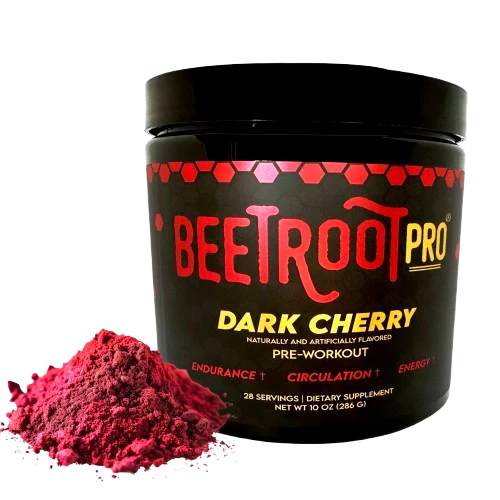
Beetroot Pro® prints an 8,000 mg standardized Beta vulgaris root extract per serving. That extract is standardized to 2 percent nitrate, so one serving yields about 160 mg of dietary nitrate, which is below the 300 to 500 mg used in the research above. The label itself prints no nitrate figure, so that 160 mg is arithmetic across the panel and the Certificate of Analysis rather than a label-disclosed number. Stated plainly: a man working from the table above needs more than one serving of any beet product we are aware of to reach a research dose, and most products do not give you the arithmetic to work out how many. Which products publish what, and how to check it yourself, is in how much nitrate is actually in your beet supplement.
Our Product
Technical
Beetroot Pro
- Patented betaine nitrate
- Acute Oxygen Efficiency
- 30 Calories Per Serving
Frequently Asked Questions
The most common questions men have about beetroot powder cover safety, what to avoid alongside it, whether daily use is alright, testosterone, how fast it works, and two side effects that show up often in search: kidney safety and urine color. Each is answered directly below.
Is beetroot powder safe for men? Yes, for most healthy men. Dietary nitrate from beetroot is generally well tolerated. The main caution is for men on antihypertensive medication or nitrate-based heart medication, since both interact with the same nitric oxide pathway and combining them can cause an excessive blood pressure drop. Talk to a physician before starting if any of those apply.
What to avoid when taking beetroot powder? Four things. Antibacterial mouthwash within two hours of a dose, because it kills the oral bacteria that perform the first conversion step and blunts the whole effect. Stacking it on top of blood pressure medication or a nitrate-based heart prescription without asking a physician first, since both act on this pathway. Large daily volumes of raw beet juice if you have a history of calcium oxalate kidney stones. And assuming a gram weight on the label tells you the nitrate dose, because it does not.
Is it safe to take beetroot powder every day? For most healthy men, yes, and daily use is how the blood pressure benefit is actually produced: 3 to 7 consecutive days raises baseline plasma nitrate further than any single dose does. Dietary nitrate from vegetables has a long safety record at these intakes. The same cautions apply as for a single dose, namely blood pressure prescriptions and a kidney stone history, and beeturia may show up at any point.
Does beetroot powder affect testosterone? No. There is no clinical evidence that beetroot or dietary nitrate raises or lowers testosterone, and no published human trial reports testosterone as an outcome. Nitric oxide is produced locally in the endothelium and acts on vessel walls within seconds; testosterone is produced in the testes under pituitary control on a daily rhythm. They are separate systems, so the documented mechanisms, vasodilation and improved exercise oxygen economy, are independent of the hypothalamic-pituitary-gonadal axis. The full answer, including where the belief comes from, is in the testosterone section above.
Does beetroot powder affect your kidneys? Beetroot contains oxalates, and very high, sustained intake can be a concern for people with a history of calcium oxalate kidney stones. A standardized beetroot extract serving carries a far smaller oxalate load than drinking multiple glasses of raw beet juice every day, which is the usual route to a problematic intake. Anyone with a history of kidney stones or kidney disease should check with a physician before starting a regular protocol.
Does beetroot turn urine or stool red? In some people, yes, and it is harmless. Beeturia, pink or red urine after eating beets, happens in roughly 10 to 14 percent of people. It is not genetic, despite the common claim: the pigment is destroyed by stomach acid and gut bacteria and protected by the beet's own oxalic acid, so gastric pH and oxalate load decide the outcome (full mechanism here). It is not blood and does not indicate a health problem. Stool can show the same pink or red tint. If you notice it without having eaten beets or beetroot supplements recently, that is worth mentioning to a physician.
How fast does beetroot powder work? A standardized nitrate extract raises plasma nitrite within about 45 minutes, with measurable vasodilation and blood pressure effects by 60 to 90 minutes. That effect holds for 12 to 24 hours after a single dose. Daily use over 3 to 7 days raises baseline plasma nitrate further, producing a stronger and more stable effect than occasional dosing. The full minute-by-minute timeline is in how long beetroot powder takes to lower blood pressure.
Medical disclaimer: These statements have not been evaluated by the Food and Drug Administration. Supplements are not intended to diagnose, treat, cure, or prevent any disease. Always consult a physician before starting a new supplement, particularly if you take blood pressure medication.
Related reading: Beetroot Powder for Blood Pressure | Beetroot Dosing for Female Athletes | 12 Proven Beetroot Benefits for Endurance Athletes | Beetroot Powder Side Effects | How Much Nitrate Is in Your Beet Supplement?
References
- Lansley KE, et al. Dietary nitrate supplementation reduces the O2 cost of walking and running. Med Sci Sports Exerc. 2011.
- Wylie LJ, et al. Beetroot juice and exercise: pharmacodynamic and dose-response relationships. J Appl Physiol. 2013.
- Bailey SJ, et al. Dietary nitrate supplementation reduces the O2 cost of low-intensity exercise. J Appl Physiol. 2009.
- Kapil V, et al. Inorganic nitrate supplementation lowers blood pressure in humans. Hypertension. 2010.
- Jones AM. Dietary nitrate: the new magic bullet? Nutr Bull. 2014.
- Velmurugan S, et al. Dietary nitrate improves vascular function in patients with hypercholesterolemia: a randomized, double-blind, placebo-controlled study. Am J Clin Nutr. 2015.
- Schwedhelm E, et al. Pharmacokinetic and pharmacodynamic properties of oral L-citrulline and L-arginine: impact on nitric oxide metabolism. Br J Clin Pharmacol. 2007.
- Clifford T, et al. The effects of beetroot juice supplementation on indices of muscle damage following eccentric exercise. Eur J Appl Physiol. 2015.
- Du X, et al. Protective effects of estrogen on cardiovascular disease mediated by oxidative stress. Oxid Med Cell Longev. 2021.
- Centers for Disease Control and Prevention. Heart Disease Facts. cdc.gov, 2026.
Technical FAQ Extension
Is beetroot powder safe for men?
Yes, for most healthy men. Dietary nitrate from beetroot is generally well tolerated. The main caution is for men on antihypertensive medication or nitrate-based heart medication, since both interact with the same nitric oxide pathway and combining them can cause an excessive blood pressure drop. Talk to a physician before starting if any of those apply.
What to avoid when taking beetroot powder?
Four things. Antibacterial mouthwash within two hours of a dose, because it kills the oral bacteria that perform the first conversion step and blunts the whole effect. Stacking it on top of blood pressure medication or a nitrate-based heart prescription without asking a physician first, since both act on this pathway. Large daily volumes of raw beet juice if you have a history of calcium oxalate kidney stones. And assuming a gram weight on the label tells you the nitrate dose, because it does not.
Is it safe to take beetroot powder every day?
For most healthy men, yes, and daily use is how the blood pressure benefit is actually produced: 3 to 7 consecutive days raises baseline plasma nitrate further than any single dose does. Dietary nitrate from vegetables has a long safety record at these intakes. The same cautions apply as for a single dose, namely blood pressure prescriptions and a kidney stone history, and beeturia may show up at any point.
Is beetroot good for blood flow and erectile function?
Dietary nitrate improves measured vascular function: a randomized placebo-controlled trial found flow-mediated dilation, an ultrasound measure of how well an artery widens, improved by 1.1 percentage points absolute, roughly 24 percent over baseline. That is a whole-body measure of endothelial health. No published trial has measured erectile outcomes after beetroot supplementation, so this is a shared mechanism rather than direct evidence, and it is not a treatment. Erectile difficulty has several causes beyond blood supply and can be an early cardiovascular signal, so it warrants a physician rather than a supplement decision.
Does beetroot powder affect testosterone?
No. There is no clinical evidence that beetroot or dietary nitrate raises or lowers testosterone, and no published human trial reports testosterone as an outcome. Nitric oxide is produced locally in the endothelium and acts on vessel walls within seconds; testosterone is produced in the testes under pituitary control on a daily rhythm. They are separate systems, so the documented mechanisms, vasodilation and improved exercise oxygen economy, are independent of the hypothalamic-pituitary-gonadal axis. What dietary nitrate does contribute is training quality, through a 1 to 3 percent lower oxygen cost of exercise, rather than anything hormonal.
Does beetroot powder affect your kidneys?
Beetroot contains oxalates, and very high, sustained intake can be a concern for people with a history of calcium oxalate kidney stones. A standardized beetroot extract serving carries a far smaller oxalate load than drinking multiple glasses of raw beet juice every day, which is the usual route to a problematic intake. Anyone with a history of kidney stones or kidney disease should check with a physician before starting a regular protocol.
Does beetroot turn urine or stool red?
In some people, yes, and it is harmless. Beeturia, pink or red urine after eating beets, happens in roughly 10 to 14 percent of people due to how their gut and kidneys process betalain pigments. It is not blood and does not indicate a health problem. If you notice it without having eaten beets or beetroot supplements recently, that is worth mentioning to a physician.
How fast does beetroot powder work?
A standardized nitrate extract raises plasma nitrite within about 45 minutes, with measurable vasodilation and blood pressure effects by 60 to 90 minutes. That effect holds for 12 to 24 hours after a single dose. Daily use over 3 to 7 days raises baseline plasma nitrate further, producing a stronger and more stable effect than occasional dosing.
Continue reading
Related Articles
Jan 30, 2023
Beetroot Powder Benefits: 6 Backed by Trials (2026)
Beetroot powder cuts oxygen cost 1 to 3%, extends time to exhaustion by 15%, and lowers blood pressure 4 to 10 mmHg. See the studies, doses, and effect sizes.
Jul 14, 2026
Beetroot Powder for Blood Pressure: Dose and Brands
Beetroot powder can lower systolic blood pressure 4 to 10 mmHg, but only at a real nitrate dose. See how Beetroot Pro, SuperBeets, and Xendurance compare.
Aug 9, 2026
Beetroot Benefits for Women: BP, Iron, Menopause
What beetroot does for women and what it does not. The blood pressure evidence, the iron interaction that gates it, menopause, dosing, and pregnancy safety.
*Technical citations and PubMed references are provided for performance education only. These statements have not been evaluated by the FDA.