
Best Supplements for Lactic Acid: What Actually Works: The Short Answer
Beta-alanine has the strongest evidence for the burn athletes call lactic acid: it raises muscle carnosine over 10 to 14 days minimum, buffering the hydrogen ions that actually cause the burn. Sodium bicarbonate works faster but causes GI distress in a large share of users. Exogenous lactate salt products (SportLegs) have weak, mixed evidence: two small trials found no time-trial benefit, and a 2024 sponsor-funded trial found slightly higher time-trial power with no change in lactate threshold. Cordyceps and rhodiola support the same oxygen-delivery pathway as a smaller, adjunct effect.
The Lactic Acid Myth Some Supplements Are Built On
Lactate does not cause the burn: it is a fuel your muscles produce and reuse, and blocking its production does not reduce fatigue. The actual cause is a buildup of hydrogen ions (H+) that drops muscle pH and interferes with contraction. At least one popular lactic acid supplement is built on the older belief that lactate causes the burn.
For decades the standard explanation was simple: hard exercise produces lactic acid, lactic acid causes the burn, so anything that reduces lactate production should reduce the burn. Exercise physiology moved past this model years ago. Lactate itself is not the villain: it is a usable fuel that muscles and the heart burn for energy, and elite athletes typically produce more of it, not less. What actually drops muscle function is the accumulation of H+ ions that comes along with anaerobic metabolism, lowering intramuscular pH to a point where the contractile proteins stop working efficiently.
This is not a semantic quibble. It changes which supplement mechanism should work. A product that tries to suppress lactate production is targeting a fuel source, not the fatigue mechanism. A product that raises your muscles' own buffering capacity against H+ is targeting the actual cause.
Beta-Alanine: The Strongest Evidence
Beta-alanine raises muscle carnosine, an intracellular buffer that neutralizes hydrogen ions directly. Meta-analyses show consistent benefit in efforts lasting 1 to 4 minutes: threshold intervals, VO2 max work, and hard surges. The effective dose is 3.2 to 6.4 grams daily, and it requires 10 to 14 days minimum of consistent daily dosing to build carnosine stores; there is no acute, race-morning effect.
This is the single best-supported ingredient in this category, and it is also the slowest. Beta-alanine does nothing taken once before a session. It has to load, the same way creatine does, which is why it belongs in a training-block supplement rather than a race-day one. The harmless skin tingling (paresthesia) some people feel after a dose is a sign of absorption, not a side effect to manage around.
Full mechanism and dosing detail: Beta-Alanine for Endurance Athletes.
Sodium Bicarbonate: Faster, Harsher
Sodium bicarbonate buffers hydrogen ions extracellularly, in the blood, rather than inside the muscle cell the way beta-alanine does. It works on the same day it is taken, which beta-alanine cannot do, at a typical dose of 0.2 to 0.3 g per kg body weight taken 60 to 90 minutes pre-effort. The tradeoff is gastrointestinal distress, cramping, nausea, and diarrhea, which affects a meaningful share of users and has ended more than one race for athletes who tried it untested.
Because the two buffers work in different compartments (bicarbonate outside the muscle cell, beta-alanine's carnosine inside it), the research on combining them shows an additive effect rather than redundancy. Full head-to-head comparison, including why lactate salt products are grouped with bicarbonate in the research literature despite a very different marketing story: Lactate vs. Bicarbonate vs. Beta-Alanine.
Exogenous Lactate Salts (SportLegs): The Mechanism Doesn't Hold Up
SportLegs and similar magnesium/calcium lactate capsules market the claim that raising blood lactate early "signals" muscles to produce less of it later, reducing the burn. The controlled trials of SportLegs itself are small and mixed, and the one that measured it found no change in the lactate threshold.
| Study | Population | Dose | Result |
|---|---|---|---|
| Peveler and Palmer, 2012 | 9 cyclists | SportLegs-type magnesium and calcium lactate | No difference in 20 km time trial time or power |
| Northgraves et al., 2014 | 7 recreationally active men | 1,115 mg lactate | No difference in 40 km time trial; no change in blood acid-base markers |
| Ewell et al., 2024 (sponsor-funded) | 15 recreational exercisers | SportLegs, about 19 mg/kg | About 4% higher work rate in a 20-minute time trial; no change in VO2peak or lactate threshold |
| Bordoli et al., 2024 | 16 trained cyclists | 120 mg/kg lactate (a much larger dose, not SportLegs) | No performance benefit, despite higher blood bicarbonate and lower perceived effort |
This is the product category built on the outdated lactate-causes-the-burn model described above. At SportLegs doses, the one trial that measured blood acid-base balance found no change (Northgraves et al., 2014), so the capsules do little for hydrogen ion buffering, which is what the actual fatigue pathway runs on. Full evidence breakdown: SportLegs Alternative.
Oral lactate has had a second life in pro cycling as a fuel rather than a buffer, which is a genuinely different claim and a better-supported one. Both sides are covered in Lactate Energy Gels: What the Science Says and the ingredient-level breakdown in ExoLactate Gels: The Honest Evidence.
Cordyceps and Rhodiola: A Smaller, Different Lever
Cordyceps and rhodiola do not buffer hydrogen ions directly. They support the oxygen-delivery side of the equation, potentially delaying how quickly an athlete reaches the anaerobic threshold where H+ accumulation starts in the first place. Treat this as an adjunct to a buffering strategy, not a replacement for one.
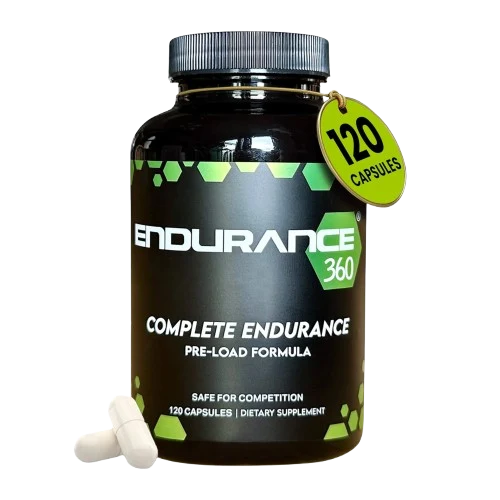
Endurance360's Cellular Oxygenation blend pairs cordyceps and rhodiola alongside a separate Endurance Blend of beta-alanine and creatine monohydrate, so the buffering ingredient with real evidence and the oxygen-delivery adaptogens load together on the same 14-day schedule rather than as two separate purchases. The label discloses blend totals, not a per-ingredient split.
Ranked by Evidence
Beta-alanine ranks first, with strong and consistent meta-analysis support, but it needs 10 to 14 days of daily loading before it works. Sodium bicarbonate also has strong evidence and works the same day, though gastrointestinal distress limits who can use it. Cordyceps and rhodiola are a moderate adjunct, and lactate salts like SportLegs rank last on weak, mixed evidence.
| Supplement | Mechanism | Evidence strength | Onset |
|---|---|---|---|
| Beta-alanine | Raises muscle carnosine, buffers H+ intracellularly | Strong, consistent meta-analyses | 10 to 14 days minimum |
| Sodium bicarbonate | Buffers H+ extracellularly | Strong, but GI tolerance limits usability | Same day |
| Cordyceps + rhodiola | Supports oxygen delivery, delays threshold onset | Moderate, adjunct effect | Days to weeks |
| Exogenous lactate salts (SportLegs) | Claims to lower lactate production | Weak and mixed: no benefit in two small trials, a 4% gain in one sponsor-funded trial | N/A |
Frequently Asked Questions
Does taking a supplement right before a race reduce lactic acid burn?
No, not from beta-alanine. Carnosine loading takes 10 to 14 days minimum, so a dose the morning of a race has not had time to raise your buffering capacity. Sodium bicarbonate is the exception, it works same-day, but carries a real GI-distress risk that should be tested in training first, never on race day for the first time.
Is lactic acid actually bad for performance?
Lactate itself is not the problem; it is a fuel your body reuses for energy. The hydrogen ions that accompany its production are what drop muscle pH and interfere with contraction. This is why buffering agents (beta-alanine, bicarbonate) that target H+ directly outperform products that only try to suppress lactate production.
What is the fastest way to reduce lactic acid buildup during a race?
Nothing removes it instantly mid-effort; the practical lever is pacing below the point where H+ accumulates faster than your body can buffer it. A trained buffering capacity from beta-alanine loading raises that ceiling before race day; in the moment, backing off intensity slightly is the only real-time control an athlete has.
Complete
Endurance 360
Our product
- Chronic Lactic Acid Buffering
- ATP & Cellular Saturation
- Cordyceps & Adaptogen Matrix
FDA Disclaimer: These statements have not been evaluated by the Food and Drug Administration. This product is not intended to diagnose, treat, cure, or prevent any disease.
Technical FAQ Extension
Does taking a supplement right before a race reduce lactic acid burn?
No, not from beta-alanine. Carnosine loading takes 10 to 14 days minimum, so a dose the morning of a race has not had time to raise your buffering capacity. Sodium bicarbonate is the exception, it works same-day, but carries a real GI-distress risk that should be tested in training first, never on race day for the first time.
Is lactic acid actually bad for performance?
Lactate itself is not the problem; it is a fuel your body reuses for energy. The hydrogen ions that accompany its production are what drop muscle pH and interfere with contraction. This is why buffering agents (beta-alanine, bicarbonate) that target H+ directly outperform products that only try to suppress lactate production.
What is the fastest way to reduce lactic acid buildup during a race?
Nothing removes it instantly mid-effort; the practical lever is pacing below the point where H+ accumulates faster than your body can buffer it. A trained buffering capacity from beta-alanine loading raises that ceiling before race day; in the moment, backing off intensity slightly is the only real-time control an athlete has.
Related Articles

Aug 17, 2026
Best Cordyceps Supplements for Endurance Athletes
How to choose a cordyceps supplement: species, extraction form, dose, and third-party testing. Full comparison table and dosing guidance for athletes.

Jul 27, 2026
How to Get Rid of Lactic Acid in Muscles
Lactic acid isn't what causes the burn, and it clears within an hour on its own. The real limiter is your lactate threshold, and how to raise it.

Jun 2, 2026
Best CoQ10 Supplements for Athletes (2026)
The best CoQ10 supplement for athletes is ubiquinol, 100 to 300mg daily with a fatty meal. Supports mitochondrial ATP and eases statin-related muscle fatigue.
*Technical citations and PubMed references are provided for performance education only. These statements have not been evaluated by the FDA.