
Technical
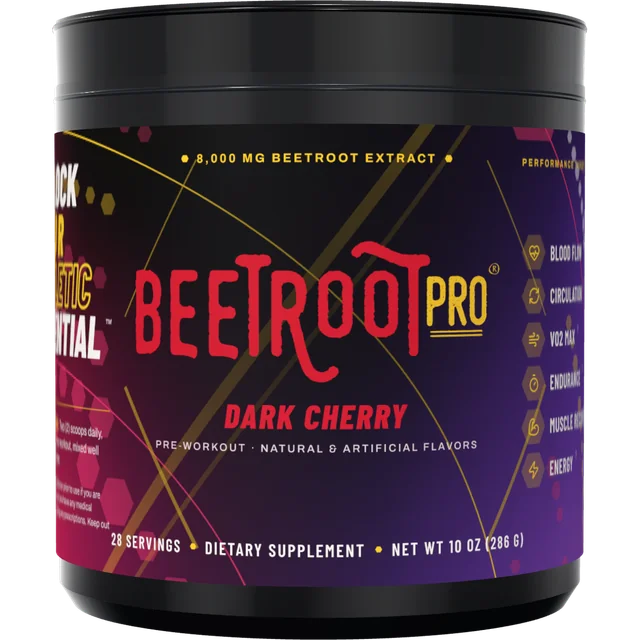
Beetroot Pro
Our product
- Patented betaine nitrate
- Acute Oxygen Efficiency
- 30 Calories Per Serving
How Long Does It Take for Beetroot to Work?
A single dose of beetroot builds over the first 2 to 3 hours and reaches its peak effect at roughly 2.5 to 3 hours, when plasma nitrite is highest. Some effects, such as a lower oxygen cost of exercise, appear after the first dose; others, such as higher peak power, appeared only after about two weeks of daily use.
That is the short version, and it hides the most useful fact about beetroot timing: there are two separate clocks. The first is the single-dose clock, measured in hours, which resets every time you take a serving. The second is the daily-use clock, measured in days, which raises your baseline so each dose lands on a higher floor. Most "it isn't working" complaints come from judging one clock by the other.
The timings on this page come from published trials on beetroot juice and other dietary nitrate sources, which are where the measurements exist.
| Question | Answer | Source |
|---|---|---|
| Measured effect, one dose | By 2.5 hours after a dose | Vanhatalo et al., 2010; Jonvik et al., 2016 |
| Peak effect, one dose | 2.5 to 3 hours after a dose | Webb et al., 2008; Wylie et al., 2013 |
| Stays near peak until | About 5 hours after a dose | Webb et al., 2008 |
| Back to baseline | By about 24 hours | Webb et al., 2008 |
| Lower oxygen cost of exercise | From the first dose (2.5 hours) | Vanhatalo et al., 2010 |
| Higher peak power | After 15 days of daily use | Vanhatalo et al., 2010 |
| Lower resting blood pressure, daily use | After 2 weeks, in adults aged 67 to 79 | Vanhatalo et al., 2025 |
What Happens Hour by Hour After One Dose?
After one dose, dietary nitrate is absorbed, concentrated in saliva, converted to nitrite by oral bacteria, and carried back into the blood, where it becomes nitric oxide. Plasma nitrite rises over the first 2 to 3 hours, peaks around 3 hours, holds near peak until about 5 hours, and returns to baseline by 24 hours.
One Dose of Beetroot, Hour by Hour
Plasma nitrite and blood pressure after a single dose of beetroot juice (Webb et al., 2008; Wylie et al., 2013).
Nitrate is absorbed, concentrated in saliva and converted to nitrite by bacteria on the tongue.
Converted nitrite reaches the blood and plasma nitrite climbs toward its peak.
Plasma nitrite peaks and the blood pressure drop is at its largest.
Plasma nitrite stays close to its peak value.
By 24 hours: Plasma nitrite returns to baseline, which is why a daily serving keeps levels up rather than a single occasional dose.
The conversion step is why beetroot is not instant, and why it is not a stimulant. Nothing happens until bacteria in your mouth have turned nitrate into nitrite. In the Webb trial, spitting out saliva after the dose stopped the rise in plasma nitrite and blocked the drop in blood pressure entirely. (PubMed 18250365)
How Long Before a Workout Should You Take Beetroot?
Take beetroot 60 to 90 minutes before a hard workout or race. Plasma nitrite is already rising by then, and because it peaks around 2.5 to 3 hours and stays near peak until about 5 hours, the peak lands during the session rather than before it. Dosing 2 to 3 hours out is also reasonable.
The 2 to 3 hour figure you see in most guides describes when nitrite peaks, not the only sensible time to dose. Our protocol for Beetroot Pro is one serving 60 to 90 minutes before the start, for three practical reasons:
- It covers the whole effort. With the plateau lasting to about 5 hours, a dose 60 to 90 minutes out keeps nitrite high through the start and the hours after it.
- It fits a race morning. Most athletes eat 2 to 3 hours before the start, so taking the serving during warmup preparation keeps it separate from the meal.
- A dose at the start line is too late. Ten minutes before the gun, the oral conversion has barely begun.
For efforts over about 3 hours, a second serving partway through keeps levels up. The full race-day breakdown, including second-serving timing by event length, is in when to take beetroot powder before a race.
How Long Do You Have to Take Beetroot to See Results?
Some results show up after the first dose, and some take one to two weeks of daily use. In one trial, the oxygen cost of moderate exercise fell about 4% within 2.5 hours of the first dose and stayed down through 15 days, while peak power and the gas exchange threshold improved only after 15 days of daily supplementation.
That 2010 University of Exeter trial (Vanhatalo et al.) is the clearest answer to the "how long until I notice it" question, because it tested the same people at 2.5 hours, 5 days and 15 days. Plasma nitrite was raised at every point, blood pressure was about 4% lower throughout, and the exercise economy benefit held steady. The extra performance gains on a ramp test arrived only at the 15-day mark. (PubMed 20702806)
| Timeframe | What changed in trials | What it means for you |
|---|---|---|
| 2.5 hours (first dose) | Lower oxygen cost of moderate exercise; lower blood pressure | A hard session can feel more economical from day one |
| 3 days | Our race-week loading window | Builds your baseline before a key event |
| 5 days | Same benefits, maintained | Daily use does not wear off |
| 15 days | Higher peak power and gas exchange threshold | The bigger training gains need consistency |
| 2 weeks (age 67 to 79) | Mean arterial pressure about 4 mmHg lower | Daily use matters most for steady blood pressure support |
For a key race, our race-week loading protocol is one serving morning and evening for the 3 days before, then one serving 60 to 90 minutes before the start. For training gains, the trials point to two weeks or more of daily use. If you are tracking blood pressure specifically, the 2025 Exeter crossover trial found a drop after two weeks of daily beetroot juice in adults aged 67 to 79 but not in adults aged 18 to 30, who started lower (PubMed 40615058); the full blood pressure timeline is in how long beetroot powder takes to lower blood pressure.
Medical disclaimer: These statements have not been evaluated by the Food and Drug Administration. Supplements are not intended to diagnose, treat, cure, or prevent any disease. Consult a physician before using beetroot alongside blood pressure medication.
Do Beetroot Capsules, Pills or Powder Work Faster?
No format has been shown to work faster. When researchers gave the same amount of nitrate as beetroot juice, rocket, spinach or a pure nitrate salt, peak plasma nitrate was similar across all four, and the pure salt was the only one that did not lower systolic blood pressure. How much nitrate a product delivers matters more than whether it is a capsule, pill, gummy or powder.
That comparison comes from a 2016 Maastricht trial (Jonvik et al.), which measured blood pressure for 5 hours after each drink. Beetroot juice and rocket lowered systolic pressure at 150 minutes and spinach at 300 minutes. (PubMed 27075914)
The practical difference between formats is dose, not speed. A capsule that does not state how much nitrate it contains gives you no way to know whether the timeline above will happen at all, which is the most common reason beetroot seems not to work. How to read a label for that number is covered in how much nitrate is in your beet supplement.
How Long Does Beetroot Stay in Your System?
After one dose, plasma nitrite stays close to its peak until about 5 hours and returns to baseline by about 24 hours. That is why one serving covers a single workout or race, and why a daily serving is needed to keep levels raised from one day to the next.
The same 24-hour curve explains the loading advice. Because each dose clears within a day, taking beetroot every day keeps the floor raised, and the trials above show that benefits are maintained as long as daily use continues. Stop for a few days and your baseline drifts back to where it started.
Pink or red urine after beets, called beeturia, runs on a different clock: it comes from betalain pigments rather than nitrate, and is covered in why beets turn urine pink.
Why Isn't Beetroot Working for Me?
The usual reasons are timing, dose and mouthwash. A dose taken minutes before exercise is too late, a product that does not state its nitrate content may deliver too little, and antiseptic mouthwash stops the conversion step. Judging a single dose by results that take two weeks of daily use is the fourth.
Each of those has a specific fix, and the full diagnostic checklist is in why your beet supplement isn't working. If you want your exact dose and loading days mapped onto your race date, the race week training and nutrition plan builds the timeline for you.
Technical
Beetroot Pro
Our product
- Patented betaine nitrate
- Acute Oxygen Efficiency
- 30 Calories Per Serving
Related reading: When to Take Beetroot Powder Before a Race | How Much Beetroot Powder Per Day | How Long Beetroot Powder Takes to Lower Blood Pressure | Why Your Beet Supplement Isn't Working | Beetroot Powder vs Beet Juice
Technical FAQ Extension
How long does it take for beetroot to work?
A single dose peaks about 2.5 to 3 hours after you take it, when plasma nitrite is highest (Webb 2008; Wylie 2013), and effects were measurable by 2.5 hours in trials. Some training benefits, such as higher peak power, appeared only after 15 days of daily use (Vanhatalo 2010).
How long before a workout should you take beetroot?
Take it 60 to 90 minutes before the session. Plasma nitrite is rising by then, peaks around 2.5 to 3 hours and stays near its peak until about 5 hours after the dose, so the effect covers the workout. Dosing 2 to 3 hours out is also reasonable.
How long do you have to take beetroot to see results?
In one trial, the oxygen cost of moderate exercise fell about 4% within 2.5 hours of the first dose and stayed down through 15 days of daily use, while peak power improved only at 15 days (Vanhatalo 2010). Plan on one to two weeks of daily use for the full effect.
Do beetroot capsules or pills work faster than powder?
No format has been shown to act faster. In a trial giving the same nitrate dose as beetroot juice, rocket, spinach or a nitrate salt, peak plasma nitrate was similar across all four (Jonvik 2016). How much nitrate a product delivers matters more than its format.
How long does beetroot stay in your system?
Plasma nitrite stays close to its peak until about 5 hours after a dose and returns to baseline by about 24 hours (Webb 2008), which is why a daily serving is needed to keep levels raised from one day to the next.
Does taking beetroot every day make each dose work faster?
No. Each dose still takes about 2.5 to 3 hours to peak. Daily use raises your baseline, so each dose starts from a higher level rather than arriving sooner.
Related Articles
Sep 27, 2026
Does Beetroot Lower Cholesterol? Capsules and Powder
What randomized trials found for beetroot juice, powder and capsules, Rosabella included, what beetroot does help, and the fiber dose that lowers LDL.
Jul 16, 2026
How Long Beetroot Powder Takes to Lower Blood Pressure
A single dose raises plasma nitrite in about 45 minutes and lowers blood pressure within 60 to 150 minutes. The full timeline, by product format.
Jul 25, 2026
Beetroot Pre-Workout: Does It Replace Stimulants?
Beetroot powder works as a pre-workout through vasodilation, not stimulation. The mechanism, the dosing window, and when it beats (or loses to) caffeine.
*Technical citations and PubMed references are provided for performance education only. These statements have not been evaluated by the FDA.