
Lactate Energy Gels: What the Science Says (2026): The Short Answer
Lactate is a genuine metabolic fuel (the lactate shuttle) and a mild acid-base buffer. But human performance evidence is mixed: a 2024 pilot RCT found only a 4% time-trial bump and no change in VO2peak or lactate threshold, and a trained-cyclist study at 120 mg/kg calcium lactate found no time benefit at all. It is food-grade and not WADA-prohibited, but causes dose-dependent GI distress. Treat it as experimental, not proven.
Lactate gels are the marginal-gain story of the 2026 Tour de France. After decades of athletes treating lactate as the enemy, WorldTour teams are now reportedly adding it to race fuel. So is lactate a breakthrough fuel, or is this the next beta-alanine-style hype cycle? Here is the honest evidence, what the dose looks like, and how to test it yourself for pennies.
Is lactate actually a fuel, or just a waste product?
Lactate is a genuine, usable fuel, not a waste product. The lactate shuttle, established by Dr. George Brooks at UC Berkeley, showed that muscle, heart, and brain tissue oxidize lactate directly for energy and that it also acts as a cell-signaling molecule. This part of the science is settled and decades old. The "lactic acid causes the burn and is a dead-end waste" model you learned in school was overturned years ago. During hard exercise your body already produces and reuses large amounts of lactate continuously. That biological reality is exactly why supplement companies started asking whether feeding extra lactate could spare glycogen or add a usable fuel stream.
Does taking lactate actually improve endurance performance?
The performance evidence is mixed and modest, which is the part the marketing skips. A 2024 randomized, double-blind, crossover pilot trial (Ewell et al., Nutrients) found that an oral calcium-and-magnesium lactate supplement produced no change in VO2peak, lactate threshold, or ventilatory threshold, and only a modest 4% increase in work rate during a 20-minute time trial. A separate 2024 trial in 16 endurance-trained cyclists using 120 mg/kg of calcium lactate found no time-trial benefit at all, despite measurably raising blood bicarbonate and lowering perceived effort. In other words, the most consistent finding is that exogenous lactate behaves like a mild acid-base buffer that can make a given effort feel slightly easier, not like a reliable speed booster. Some studies show a small upside, others show nothing. That is a very different evidence base from the dual-transport carbohydrate research (90 to 120 g/hr) or the nitrate research (a 2021 meta-analysis pooled 73 studies), both of which are far more established.
The most recent human data does not change the verdict. A 2025 study from the University of Tokyo (Seike, Takahashi and Hatta) gave 12 healthy young adults 1,115 mg of oral lactate and measured energy metabolism at rest and during 30 minutes of unloaded cycling. Oxygen consumption at rest was higher after lactate, but no measurement differed from placebo during exercise, and performance was not tested. The mechanism keeps confirming that ingested lactate is metabolically active; the performance payoff stays elusive.
Two evidence-based options already on the shelf
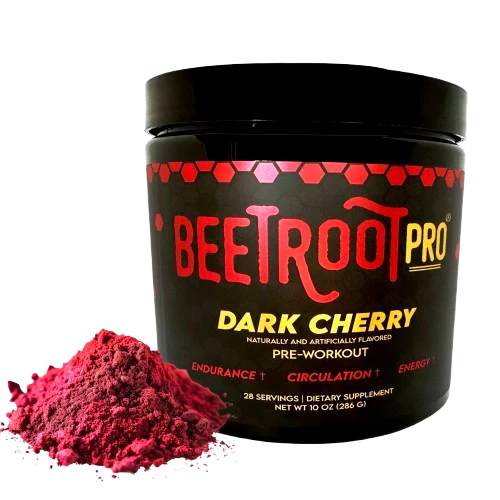
Two ingredients already on the shelf carry a deeper evidence base than exogenous lactate. Dietary nitrate is one of the five supplements the IOC's 2018 consensus statement places in its good-to-strong evidence group, and beta-alanine is the best-studied intramuscular buffer for the burn this article is about. Beetroot Pro® supplies nitrate (about 160 mg a serving, below the 310 to 560 mg used in trials) and Endurance360® includes beta-alanine.
Dietary nitrate's oxygen-cost benefit is one of the most replicated findings in endurance nutrition, decades of trials deep, a different evidence tier entirely from the lactate research above.
Our Product
Technical
Beetroot Pro
- Patented betaine nitrate
- Acute Oxygen Efficiency
- 30 Calories Per Serving
Beta-alanine works on a completely different mechanism from exogenous lactate: rather than adding fuel, it raises muscle carnosine over weeks of daily loading (the IOC protocol runs about 65 mg/kg a day for 10 to 12 weeks), buffering the hydrogen ions behind the burn in efforts of roughly 30 seconds to 10 minutes.
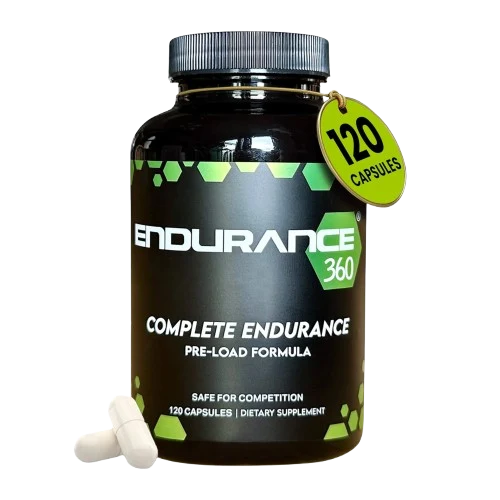
Endurance360® includes beta-alanine and creatine in a 2,000 mg Endurance Blend whose per-ingredient split is not printed. Full comparison against sodium bicarbonate and exogenous lactate salts: Best Supplements for Lactic Acid, Ranked by Evidence.
Our Product
Complete
Endurance 360
- Chronic Lactic Acid Buffering
- ATP & Cellular Saturation
- Cordyceps & Adaptogen Matrix
Which lactate gels can you actually buy?
Two commercial lactate gels dominate the conversation, and they take opposite approaches. FLF's ExoLactate pairs 5 g of lactate from several mineral sources with 40 g of carbohydrate per serving, while Enervit's C2:1PRO Lactate Gel Mix pairs 10 g of lactate from sodium lactate with 90 g of carbohydrate. Neither brand has published a performance trial on its own formula.
| ExoLactate (FLF) | Enervit C2:1PRO Lactate Gel Mix | DIY with calcium lactate | |
|---|---|---|---|
| Lactate per serving | 5 g | 10 g | Your choice; trials used about 120 mg/kg as one dose |
| Lactate source | Lactic acid, magnesium lactate and calcium lactate, with sodium and potassium bicarbonate | Sodium lactate | Food-grade calcium lactate powder |
| Carbohydrate | 40 g, 1:1 ratio | 90 g, 2:1 glucose to fructose | Whatever base gel you already tolerate |
| Price | About €5.16 per gel (€30.95 for six) | Announced for sale after La Vuelta 2026 | About $0.12 of calcium lactate per 5 g of lactate |
| Published performance trial on the formula | None | None | The 2024 trials above used lactate salts |
For product-level detail, read ExoLactate gels: the honest evidence and the ExoLactate ingredient teardown. To test the mechanism before buying either, the DIY Energy Gel calculator adds calcium lactate to a carbohydrate gel you already know your gut handles.
What dose and form do the studies use?
Trials use food-grade lactate salts, most commonly calcium lactate, in the range of roughly 120 mg/kg of body weight, though the pilot trial above used a much lower combined calcium-magnesium dose of about 19 mg/kg. For a 70 kg athlete, 120 mg/kg is about 8 g of calcium lactate. Calcium lactate is a cheap, widely available food-grade powder (it is used in cheesemaking and as a firming agent), which is what makes a do-it-yourself version feasible. Sodium lactate, the form sometimes referenced in commercial race gels, is usually sold as a liquid solution and adds a meaningful sodium load.
| Factor | What the research shows |
|---|---|
| Form | Calcium lactate (powder), sodium lactate (liquid), or blended salts |
| Typical trial dose | ~120 mg/kg body weight (about 8 g for a 70 kg athlete) |
| Established benefit | Mild acid-base buffering, lower perceived effort |
| Performance benefit | Inconsistent: one pilot showed +4% TT, a trained-cyclist study showed none |
| Main downside | Dose-dependent GI distress (flatulence, cramps, urgency) |
| WADA status | Not prohibited (lactate is an endogenous metabolite) |
Why does the choice of lactate salt matter so much?
Lactate never arrives on its own. It comes attached to a mineral, and at the doses these products use that mineral becomes the limiting factor. Five grams of lactate from calcium lactate carries about 1,130 mg of calcium; from magnesium lactate it carries roughly 682 mg of magnesium, near twice the 350 mg supplemental upper limit and a frank laxative dose mid-race.
This is why the commercial gels blend their lactate sources rather than picking one, and it is the single most useful thing to understand before you buy any lactate product or build one yourself:
| Lactate source | Amount for 5 g lactate | Counter-ion delivered | Practical verdict |
|---|---|---|---|
| Calcium lactate | 6.13 g | 1,130 mg calcium | 87% of the daily value in one serving |
| Magnesium lactate | 5.68 g | 682 mg magnesium | ~2x the 350 mg supplemental UL, laxative |
| Sodium lactate | 6.29 g | 1,290 mg sodium | Viable, but a very salty single serving |
| Potassium lactate | 7.19 g | 2,190 mg potassium | Too much potassium to repeat hourly |
(Figures are for anhydrous salts; the hydrated forms you actually buy contain less mineral per gram and so need more powder.) The commercial products split the difference in opposite directions: FLF's ExoLactate spreads the load across several minerals, while Enervit's C2:1PRO Lactate Gel Mix accepts a single large sodium load in exchange for double the lactate. Our ExoLactate ingredient teardown walks the full declared formula and explains each choice.
Want to test lactate supplementation yourself? These are the food-grade forms used in the research. Start at half the studied dose and trial in training first.
As an Amazon Associate we earn from qualifying purchases. Price and availability may vary.
Is lactate supplementation safe and legal?
Lactate is not on the WADA, NCAA, or USADA prohibited lists because it is a substance your body produces naturally. Food-grade calcium lactate is generally recognized as safe. The real-world risk is gastrointestinal, not regulatory: studies report dose-dependent flatulence, stomach cramps, belching, and bowel urgency that get worse as exercise duration increases. As with any new race fuel, the rule is absolute: never trial it for the first time on race day. Test it in training, start at half the studied dose, and confirm your gut tolerates it under race-intensity efforts before it ever goes in a start-line bottle.
Should you add lactate to your own gel?
If you want to experiment, you can add food-grade calcium lactate to a homemade gel for a few cents per serving, far cheaper than any commercial lactate product. Just hold realistic expectations: you are testing a mild buffer with mixed performance data, not buying speed. Our free DIY Energy Gel and Flask Emulsifier now includes calcium lactate as an optional, clearly-labeled experimental add-on. It is off by default, dosed to roughly 120 mg/kg with a scale-to-bodyweight note, and paired with the same honest caveat you just read. The core of the tool remains built on the well-established science: the dual-transport maltodextrin-to-fructose ratio for carbohydrate absorption and the alginate-pectin hydrogel matrix for faster gastric emptying.
The smarter marginal gain for most athletes is not lactate. It is nailing the fundamentals that actually have deep evidence behind them: 90 to 120 g of carbohydrate per hour from a dual-transport blend, a hydration and sodium plan matched to your sweat rate, and an oxygen-efficiency layer from dietary nitrate, one of the five IOC-recognized supplements. Lactate is an interesting frontier worth watching. It is not yet a reason to change your race-day plan.
Related Reading
These related guides cover the established, higher-confidence marginal gains, carb fueling, sodium, dietary nitrate, and acid-base buffering, that sit above lactate on the evidence hierarchy.
- The 5 IOC-Recognized Endurance Supplements: lactate is notably not on the list, here is what cleared the evidence bar.
- Best Supplements for Lactic Acid, Ranked by Evidence: where oral lactate sits against beta-alanine and bicarbonate.
- Beetroot vs. Sodium Bicarbonate: how the two main acid-base buffering strategies compare.
- ExoLactate and Exogenous Lactate Gels: the honest evidence on the commercial lactate gel pro riders are using.
- Lactate Gel Ingredients: The ExoLactate Teardown: the full declared formula, the counter-ion math, and what the lactate actually costs.
- Lactaat Gels: Wat Zegt de Wetenschap?: de Nederlandstalige versie van dit artikel.
- Lactate vs Bicarbonate vs Beta-Alanine: how lactate compares against the two established buffers.
- Beetroot and Caffeine Stacking: pairing two supplements with real, independent evidence.
- DIY Energy Gel and Flask Emulsifier: build your own gel, with calcium lactate as an optional experimental add-on.
- Homemade Maurten Gel Recipe: full kitchen walkthrough for the maltodextrin and fructose hydrogel base, including the alginate and pectin ratios that actually set the gel.
- Carb Fueling Plan: the dual-transport carbohydrate math that actually moves race-day performance.
References
The evidence summarized above draws on two 2024 randomized trials, a 2025 metabolic study, and the foundational lactate shuttle research, cited in full below.
- Ewell et al. (2024). The Influence of Acute Oral Lactate Supplementation on Responses to Cycle Ergometer Exercise: A Randomized, Crossover Pilot Clinical Trial. Nutrients.
- Bordoli et al. (2024). Effects of Oral Lactate Supplementation on Acid-Base Balance and Prolonged High-Intensity Interval Cycling Performance. Journal of Functional Morphology and Kinesiology.
- Seike, Takahashi and Hatta (2025). Effects of acute oral lactate supplementation on energy metabolism in humans. Journal of Physical Fitness and Sports Medicine.
- Brooks GA (2018). The Science and Translation of Lactate Shuttle Theory. Cell Metabolism.
This article is educational and not medical or anti-doping advice. The active ingredients discussed are not on current prohibited-substance lists, but the products themselves are not independently certified; drug-tested athletes should confirm with their governing body before use.
Technical FAQ Extension
Is lactate a real fuel or just a waste product?
Lactate is a genuine, usable fuel, not a waste product. The lactate shuttle, established by Dr. George Brooks at UC Berkeley, showed that muscle, heart, and brain tissue oxidize lactate directly for energy and that it also acts as a cell-signaling molecule. During hard exercise your body already produces and reuses large amounts of lactate continuously; this part of the science is settled and decades old.
Do lactate energy gels actually make you faster?
The performance evidence is mixed and modest. A 2024 randomized, double-blind crossover pilot trial found no change in VO2peak, lactate threshold, or ventilatory threshold and only a 4% increase in work rate during a 20-minute time trial, while a trained-cyclist study using 120 mg/kg of calcium lactate found no time-trial benefit at all. The most consistent finding is that it behaves like a mild buffer, not a reliable speed booster.
Is lactate supplementation safe and allowed in competition?
Lactate is not on the WADA, NCAA, or USADA prohibited lists because it is a substance your body produces naturally, and food-grade calcium lactate is generally recognized as safe; the products themselves are not independently certified. The real risk is gastrointestinal: studies report dose-dependent flatulence, cramps, belching, and bowel urgency that worsen with longer exercise. Never trial it for the first time on race day.
What is a lactate energy gel?
A lactate energy gel is a carbohydrate gel with added lactate, usually from food-grade salts such as calcium, magnesium or sodium lactate. The idea is that lactate adds an extra fuel stream and a mild buffer alongside the carbohydrate. The two best-known products are FLF ExoLactate, with 5 g of lactate and 40 g of carbohydrate per serving, and Enervit C2:1PRO Lactate Gel Mix, with 10 g of lactate and 90 g of carbohydrate.
How much lactate do the studies use?
Most trials use food-grade calcium lactate at roughly 120 mg per kg of body weight, about 8 g for a 70 kg athlete, taken as a single dose. One 2024 pilot trial used a much lower combined calcium and magnesium lactate dose of about 19 mg/kg. Commercial gels instead split smaller amounts, 5 to 10 g of lactate, across repeated servings alongside carbohydrate.
Can I make a lactate gel at home?
Yes. Food-grade calcium lactate is inexpensive, about $0.12 of powder for 5 g of lactate, and can be added to a homemade carbohydrate gel. Start at half the studied dose, trial it only in training, and judge gut tolerance before performance, since dose-dependent GI distress is the most consistent finding in the research.
Continue reading
Related Articles
Aug 20, 2026
Pre-Workout Without Beta-Alanine: What Works
Beta-alanine does nothing on the day you take it, so a pre-workout without it loses no acute benefit. What to look for instead on a tingle-free label.
Aug 12, 2026
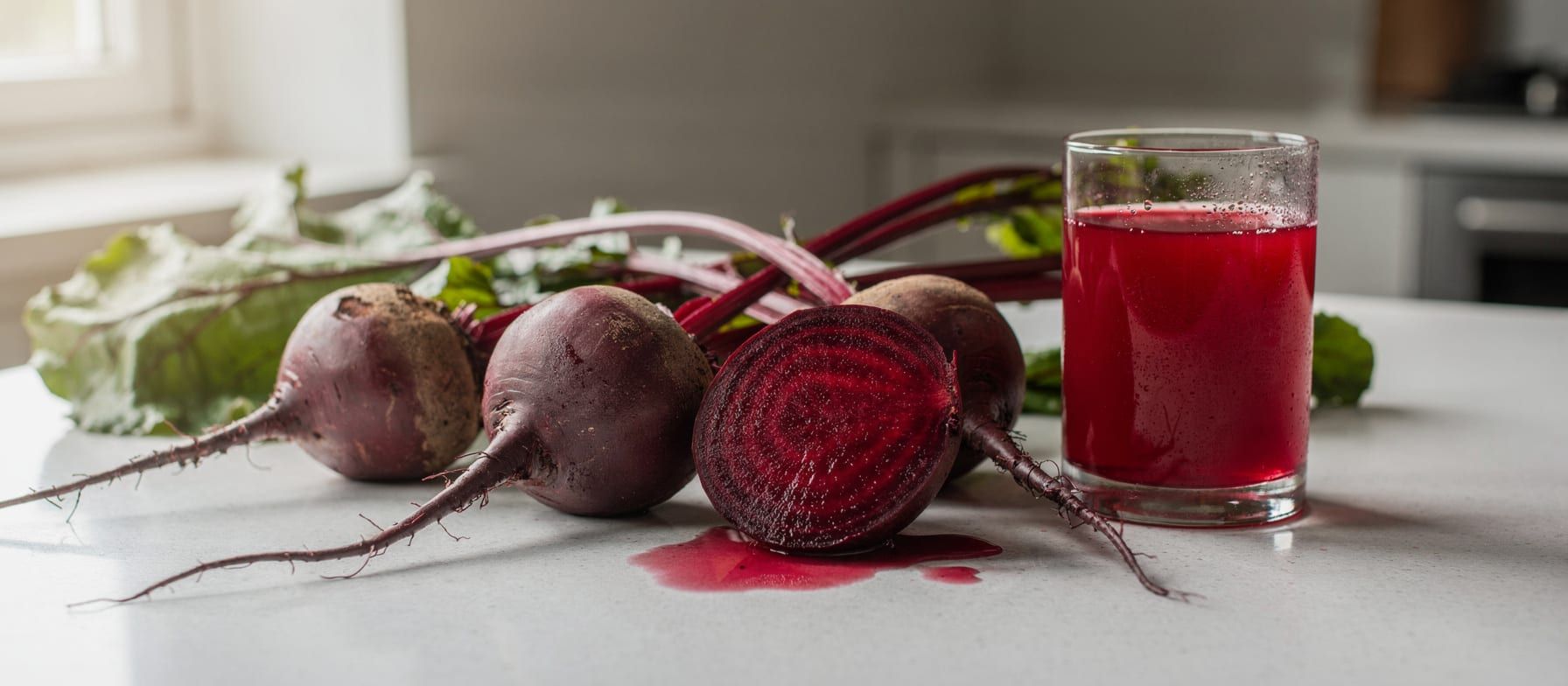
Why Beets Turn Your Pee Pink (And What It Means)
Beeturia, pink urine after eating beets, affects 10 to 14 percent of people. The cause is not genetics. It is stomach acid, oxalate, and your gut bacteria.
Jun 3, 2026
How Much Beetroot Powder Per Day? 300-600mg (2026)
Dose by milligrams of nitrate, not grams of powder: nitrate varies about 100x between brands. Target 300 to 600mg daily, with tables by goal and body weight.
*Technical citations and PubMed references are provided for performance education only. These statements have not been evaluated by the FDA.